Spinning and yarn07 · Spinning and windingPinnedAnswered

Ring-spun or open-end — which yarn do I actually need?

Answered by BHR · Spinning technologistSpinning mill, Navoiy8 posts · 5 sources

  1. QuestionSpinning and yarn#1

    The question

    Cotton fibre is twisted into yarn, then checked.

    Step 07 of 12Spinning and winding
  2. BHR · Spinning technologistSpinning mill, Navoiy#2

    What happens

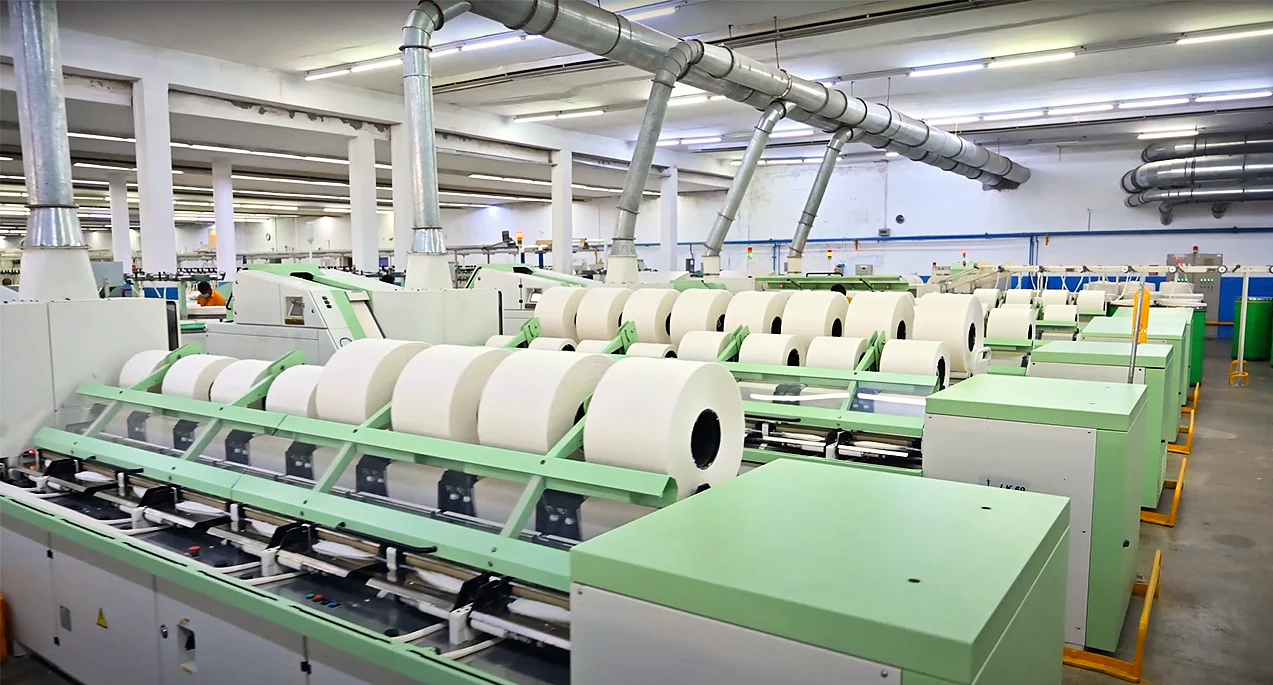
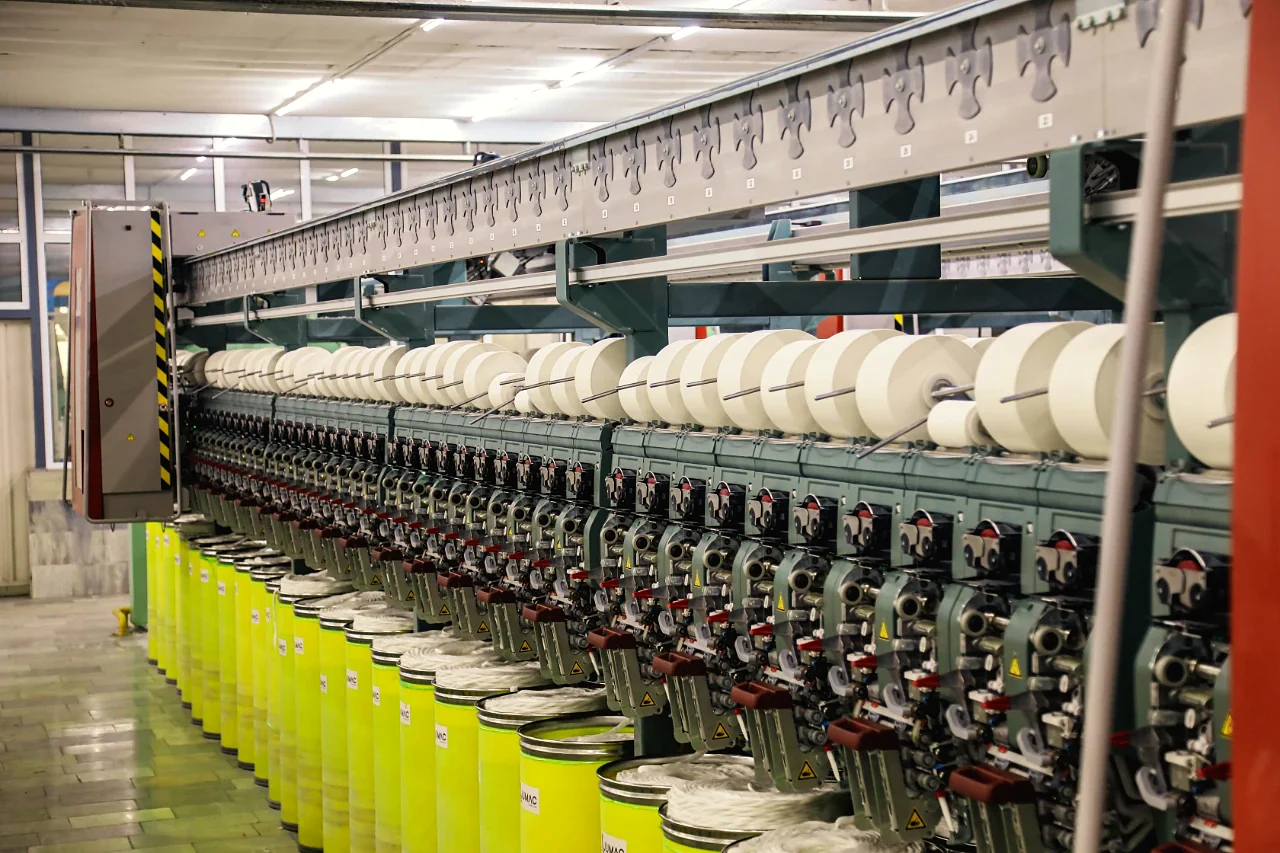
    Spinning draws out a strand of cleaned cotton and twists it so the fibres lock into yarn. Ring spinning uses a fast spindle: slower, but its yarn is stronger and can be finer. Open-end (rotor) spinning reassembles separated fibres in a spinning cup: much faster, suited to coarser yarns. Air-jet spinning wraps fibres round a parallel core with a swirling air jet. Ring yarn is rewound onto large cones; rotor and air-jet machines fill cones directly. An electronic clearer cuts out faults; the ends are rejoined. Lab samples are tested for evenness, faults, hairiness and strength.

  3. BHR · Spinning technologistSpinning mill, Navoiy#3

    Why it matters

    1. Uneven yarn makes fabric look cloudy or streaky. With Ne 36 cotton ring yarn, Uster found knitted fabric visibly better at the 30% evenness level than at 95%.
    2. Hairiness drives pilling, small fibre balls on the fabric surface. Yarn at Uster's 80% hairiness level or above pills clearly more than yarn at 40% or below.
    3. Hairy yarn also sheds more fly (loose fibre) in knitting, causing machine stops and fabric defects. Mixing yarns of different hairiness in one fabric causes barré: visible stripes.
    4. Faults not cut out (thick or thin places, coloured foreign or polypropylene fibres) show in the fabric. Uster says removal is then very costly, if possible at all.
    5. Twist drives skew: T-shirt side seams twisting after washing. Cotton Incorporated found single jersey from Z-twist ring yarn skewed 10.5–18.5% as twist rose; from Z-twist open-end yarn, 3.5–8.7%.
  4. BHR · Spinning technologistSpinning mill, Navoiy#4

    Best practice

    • Choose the spinning system for the end use. Open-end yarn is typically 10–30% weaker than ring yarn, but more even, less hairy and more abrasion-resistant. Ring spinning suits strong, fine yarn.cottoninc.com (opens in a new tab)
    • Air-jet spinning needs ring-quality cotton: medium to long, clean fibre with little short fibre. Its yarn is somewhat weaker than ring yarn but has fewer imperfections and resists pilling and abrasion.cottoninc.com (opens in a new tab)
    • Keep knitting-yarn twist no higher than strength requires, and balance torque. In Cotton Incorporated trials, alternating S- and Z-twist yarns on knitting feeds cut skew from 5.7–15.3% to 1.4–2.6%.cottoninc.com (opens in a new tab)
    • Fit an electronic clearer at every winding position and set its limits from fault-classification data, not guesswork. Include channels for coloured foreign fibres and polypropylene.uster.com (opens in a new tab)
    • Check splices (where cut ends are rejoined) regularly with a dedicated instrument. A sound splice usually keeps at least 70% of the yarn's strength and is under 130% of its thickness.uster.com (opens in a new tab)
    • Specify yarn as Uster Statistics percentiles, tested at 20 °C and 65% humidity (ISO 139), as humidity shifts results. An evenness level near 50% gives acceptable fabric; demanding fabrics, about 25%.uster.com (opens in a new tab)
  5. BHR · Spinning technologistSpinning mill, Navoiy#5

    At BHR

    • 12 000Yarn capacity, tonnes a year
    • Ne 7–50Yarn counts, Ne 7/1 to Ne 50/1
    • USTER TESTER 6Yarn laboratory equipment
    • OEKO-TEXSTANDARD 100, product class I, for raw 100% cotton open-end yarn (Hohenstein), April 2022 – February 2023
  6. BHR · Spinning technologistSpinning mill, Navoiy#6

    Did you know?

    No mill can spin fault-free yarn: depending on raw material and machines, Uster counts about 20 to 100 disturbing faults per 100 km, one every 1 to 5 km.

    uster.com (opens in a new tab)
  7. BHR · Spinning technologistSpinning mill, Navoiy#7

    The terms

    Yarn count (Ne)
    Number of 840-yard lengths in one pound of yarn; higher means finer.
    CVm%
    Coefficient of variation of yarn mass along its length; lower means more even.
    Uster Statistics Percentile (USP)
    Share of mills worldwide making equal or better yarn; lower is better.
    Barré
    Visible bands or stripes in fabric, for example from mixing unlike yarns.
    Skew
    Fabric distortion that makes T-shirt side seams twist after washing.
  8. BHR · Spinning technologistSpinning mill, Navoiy#8

    Sources

    1. Uster News Bulletin No. 49: USTER STATISTICS, the common quality language for the textile industry (opens in a new tab)uster.com
    2. Uster News Bulletin No. 48: Modern yarn clearing on winding machines (opens in a new tab)uster.com
    3. Cotton Incorporated TRI 2002: Knit fabrics and the reduction of torque (opens in a new tab)cottoninc.com
    4. Cotton Incorporated TRI 1004: Introduction to open-end spinning (opens in a new tab)cottoninc.com
    5. Cotton Incorporated TRI 1001: Air-jet spinning of cotton yarns (opens in a new tab)cottoninc.com

Spinning and yarn

More in this board

All 3 threads in this board

From cotton picking to finished garment in 12 steps

  1. 01Growing cotton
  2. 02Cotton picking
  3. 03Ginning
  4. 04Fibre testing and classing
  5. 05Opening, blending and cleaning
  6. 06Carding and drawing
  7. 07Spinning and winding
  8. 08Knitting and weaving
  9. 09Dyeing and finishing
  10. 10Pattern making and cutting
  11. 11Sewing and printing
  12. 12Inspection, packing and delivery

Still have a question on this?

Did not find the answer here? Send us your question.

Send a question