Cotton and fibres04 · Fibre testing and classingPinnedAnswered

How do I read an HVI result, and which numbers matter?

Answered by BHR · Fibre laboratoryGinnery8 posts · 6 sources

  1. QuestionCotton and fibres#1

    The question

    Measuring the fibre before it becomes yarn.

    Step 04 of 12Fibre testing and classing
  2. BHR · Fibre laboratoryGinnery#2

    What happens

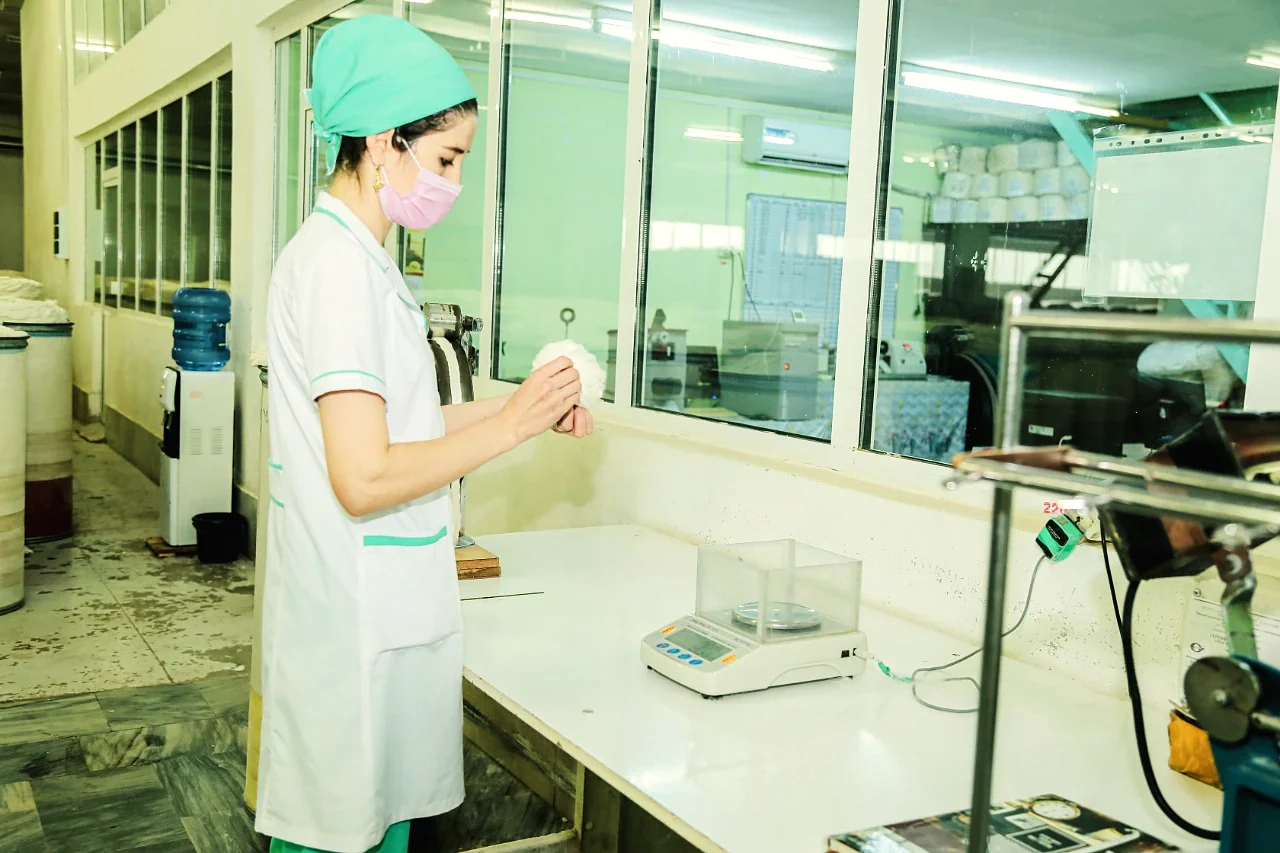
    No two cotton bales are exactly alike, because every field and season grows slightly different fibre. A sample is cut from each bale, rested in a laboratory held at fixed temperature and humidity, and tested on a High Volume Instrument (HVI). Within seconds it measures fibre length, length uniformity, strength, micronaire (fineness and maturity), colour and trash. Each bale gets its own data record. A spinning mill uses these records to plan each laydown, the group of bales opened and blended, so every mix has the same average properties and a narrow spread, lot after lot.

  3. BHR · Fibre laboratoryGinnery#3

    Why it matters

    1. Stripes in dyed fabric (barré): bales of different micronaire or maturity dye differently. A 1997 Uster paper attributed at least 70% of barré causes to fibre variation.
    2. White specks: immature, thin-walled fibres tangle into knots (neps) that hold little dye. USDA research links immature cotton to weak places in yarn, spinning breaks and waste.
    3. Weak or uneven yarn: USDA notes fibre length affects yarn strength, evenness and spinning efficiency, and fibre strength is highly correlated with yarn strength.
    4. Visible trash: leaf particles are pure waste, and USDA notes small ones cannot always be removed, so they can spoil the finished fabric.
    5. Predicting the yarn: Uster Technologies, which sells testing systems, says fibre quality has a major influence on yarn quality (about 70%) and processing performance (about 60%).
  4. BHR · Fibre laboratoryGinnery#4

    Best practice

    • Test every bale. The ICAC/ITMF guideline recommends sampling 100% of bales, at least 200 g each, ideally from both sides, tagged with gin and bale number for traceability.itmf.org (opens in a new tab)
    • Keep a standard atmosphere. Moisture affects results, strength most, so the lab holds 21 °C and 65% relative humidity day and night. Samples rest at least 12 hours, ideally 24–48.itmf.org (opens in a new tab)
    • Calibrate and compare. HVI length, strength and micronaire are checked against USDA calibration cottons three times per shift, and results are compared with other labs in quarterly ICAC CSITC round trials.itmf.org (opens in a new tab)
    • Control each laydown. Cotton Incorporated lists three fibre causes of barré: micronaire drift between laydowns, too wide a micronaire spread within one, and uncontrolled colour. Bales are selected within set limits.cottoninc.com (opens in a new tab)
    • Measure maturity directly when mixing origins. Micronaire only indicates maturity: same-micronaire cottons from different regions or varieties can dye differently, so single-fibre tests such as AFIS are advised.cotton.org (opens in a new tab)
  5. BHR · Fibre laboratoryGinnery#5

    At BHR

    • USTER TESTER 6Yarn testing laboratory at the BHR spinning mill
  6. BHR · Fibre laboratoryGinnery#6

    Did you know?

    One pound (about 450 g) of cotton can hold 100 million or more fibres. Each is a single cell that grew from the surface of a cottonseed.

    depts.ttu.edu (opens in a new tab)
  7. BHR · Fibre laboratoryGinnery#7

    The terms

    HVI (High Volume Instrument)
    Laboratory system measuring a cotton sample's length, strength, micronaire, colour and trash in seconds.
    Micronaire
    Airflow measure combining fibre fineness and maturity; closely linked to how evenly cotton dyes.
    Laydown
    The set of bales opened and blended together to feed one spinning mix.
    Barré
    Faint repeating stripes in dyed fabric, often caused by uneven fibre properties.
  8. BHR · Fibre laboratoryGinnery#8

    Sources

    1. USDA Agricultural Handbook 566: The Classification of Cotton (opens in a new tab)depts.ttu.edu
    2. Yankey (Zellweger Uster), Beltwide Cotton Conferences 1997: fibre variation and barré (opens in a new tab)cotton.org
    3. Thibodeaux & Rajasekaran, Journal of Cotton Science 3:188-193 (1999): immature cotton (opens in a new tab)cotton.org
    4. Uster Technologies: USTER Fiber2Yarn (opens in a new tab)uster.com
    5. ICAC CSITC / ITMF Guideline for Standardized Instrument Testing of Cotton, v3.0 (opens in a new tab)itmf.org
    6. Cotton Incorporated TRI-1002: Barré (opens in a new tab)cottoninc.com

Cotton and fibres

More in this board

All 10 threads in this board

From cotton picking to finished garment in 12 steps

  1. 01Growing cotton
  2. 02Cotton picking
  3. 03Ginning
  4. 04Fibre testing and classing
  5. 05Opening, blending and cleaning
  6. 06Carding and drawing
  7. 07Spinning and winding
  8. 08Knitting and weaving
  9. 09Dyeing and finishing
  10. 10Pattern making and cutting
  11. 11Sewing and printing
  12. 12Inspection, packing and delivery

Still have a question on this?

Did not find the answer here? Send us your question.

Send a question