Dyeing and finishing09 · Dyeing and finishingPinnedAnswered

Why does fabric shrink after the first wash?

Answered by BHR · Dyeing and finishingFinishing floor7 posts · 11 sources

  1. QuestionDyeing and finishing#1

    The question

    Where fabric gets its colour and final size.

    Step 09 of 12Dyeing and finishing
  2. BHR · Dyeing and finishingFinishing floor#2

    What happens

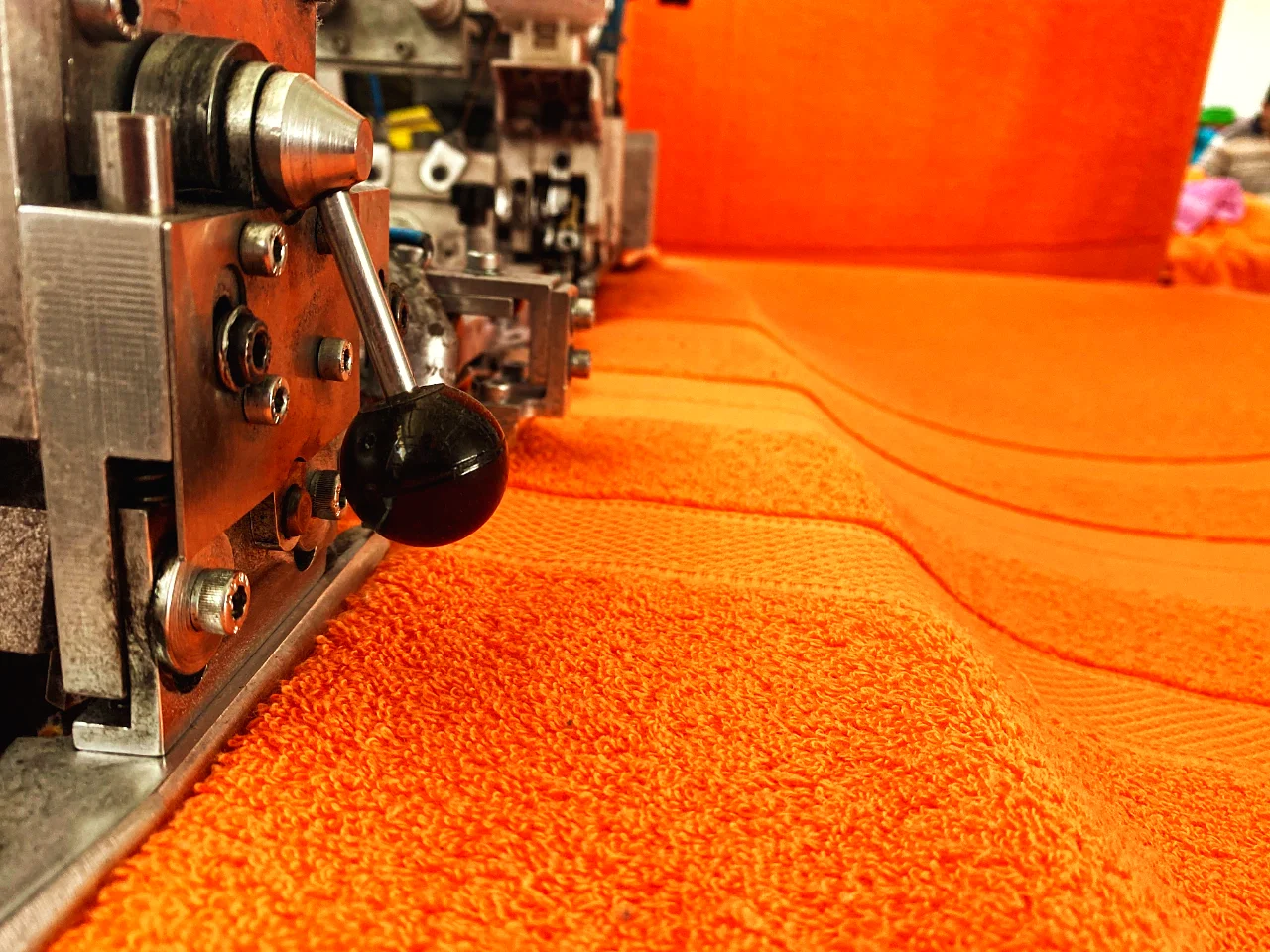
    Unfinished fabric arrives waxy, off-white and slow to absorb water. Woven fabric is first desized, stripping the coating added for weaving. Scouring in hot alkali removes waxes, pectins and processing oils; bleaching, usually with hydrogen peroxide, lets the fabric take dye evenly. Most cotton is dyed with reactive dyes, which bond chemically to the fibre. Hot rinses and soap washes remove unbonded dye. The shade is checked against the buyer's standard by instrument and by eye. Finally the fabric is dried under low tension, compacted (knits) or compressively shrunk (wovens), and tested for colourfastness, shrinkage and restricted chemicals.

  3. BHR · Dyeing and finishingFinishing floor#3

    Why it matters

    1. Preparation decides whether colour comes out even. Raw cotton is about 88–96% cellulose; the wax, pectin, protein and minerals must be scoured out so fabric wets evenly.
    2. Peroxide bleaching must be controlled to keep the fibre strong. Traces of iron, manganese or copper speed up the formation of radicals that break down cellulose.
    3. Washing off decides whether a garment bleeds. Only about 60% of conventional reactive dye bonds; unfixed dye left in fabric stains other clothes in the wash.
    4. Finishing decides whether a garment keeps its size. In a Cotton Incorporated trial, relaxation drying and compaction cut a cotton knit's length shrinkage from 20% to 5%.
    5. Chemistry decides whether garments are safe and legal. For textiles worn against skin, the EU bans azo dyes releasing any of 22 carcinogenic amines above 30 mg/kg.
  4. BHR · Dyeing and finishingFinishing floor#4

    Best practice

  5. BHR · Dyeing and finishingFinishing floor#5

    Did you know?

    In conventional reactive dyeing, about 40% of the dye can fail to bond and ends up in wastewater. Bifunctional dyes roughly halve this; figures vary by dye and shade.

    eippcb.jrc.ec.europa.eu (opens in a new tab)
  6. BHR · Dyeing and finishingFinishing floor#6

    The terms

    Reactive dye
    A dye that forms a chemical (covalent) bond with cotton's cellulose.
    Colourfastness
    How well colour resists washing, rubbing, sweat and light without fading or staining.
    Compaction
    Mechanically pressing knit loops together so fabric shrinks in the factory, not at home.
    Scouring
    Hot alkaline washing that removes cotton's natural waxes and pectins.
    Metamerism
    When two colours match under one light but differ under another.
  7. BHR · Dyeing and finishingFinishing floor#7

    Sources

    1. EU Best Available Techniques (BREF) Reference Document for the Textiles Industry, JRC 2023 (opens in a new tab)eippcb.jrc.ec.europa.eu
    2. ISO 105-C06: Colour fastness to domestic and commercial laundering (opens in a new tab)iso.org
    3. ISO 105-X12: Colour fastness to rubbing (opens in a new tab)iso.org
    4. ISO 105-E04: Colour fastness to perspiration (opens in a new tab)iso.org
    5. ISO 105-B02: Colour fastness to artificial light (xenon arc) (opens in a new tab)iso.org
    6. ISO 105-J03: Calculation of colour differences (CMC) (opens in a new tab)iso.org
    7. X-Rite: What is metamerism? (opens in a new tab)xrite.com
    8. Cotton Incorporated ISP 1009: Guide to Improved Shrinkage Performance of Cotton Fabrics (opens in a new tab)cottonworks.com
    9. Sanforized: What is Sanfor (compressive shrinkage) (opens in a new tab)sanforized.de
    10. ISO 5077: Determination of dimensional change in washing and drying (opens in a new tab)iso.org
    11. Danish EPA fact sheet: Azo dyes and pigments (REACH Annex XVII, entry 43) (opens in a new tab)eng.mst.dk

From cotton picking to finished garment in 12 steps

  1. 01Growing cotton
  2. 02Cotton picking
  3. 03Ginning
  4. 04Fibre testing and classing
  5. 05Opening, blending and cleaning
  6. 06Carding and drawing
  7. 07Spinning and winding
  8. 08Knitting and weaving
  9. 09Dyeing and finishing
  10. 10Pattern making and cutting
  11. 11Sewing and printing
  12. 12Inspection, packing and delivery

Still have a question on this?

Did not find the answer here? Send us your question.

Send a question