ProductionTerry weaving
Terry weaving
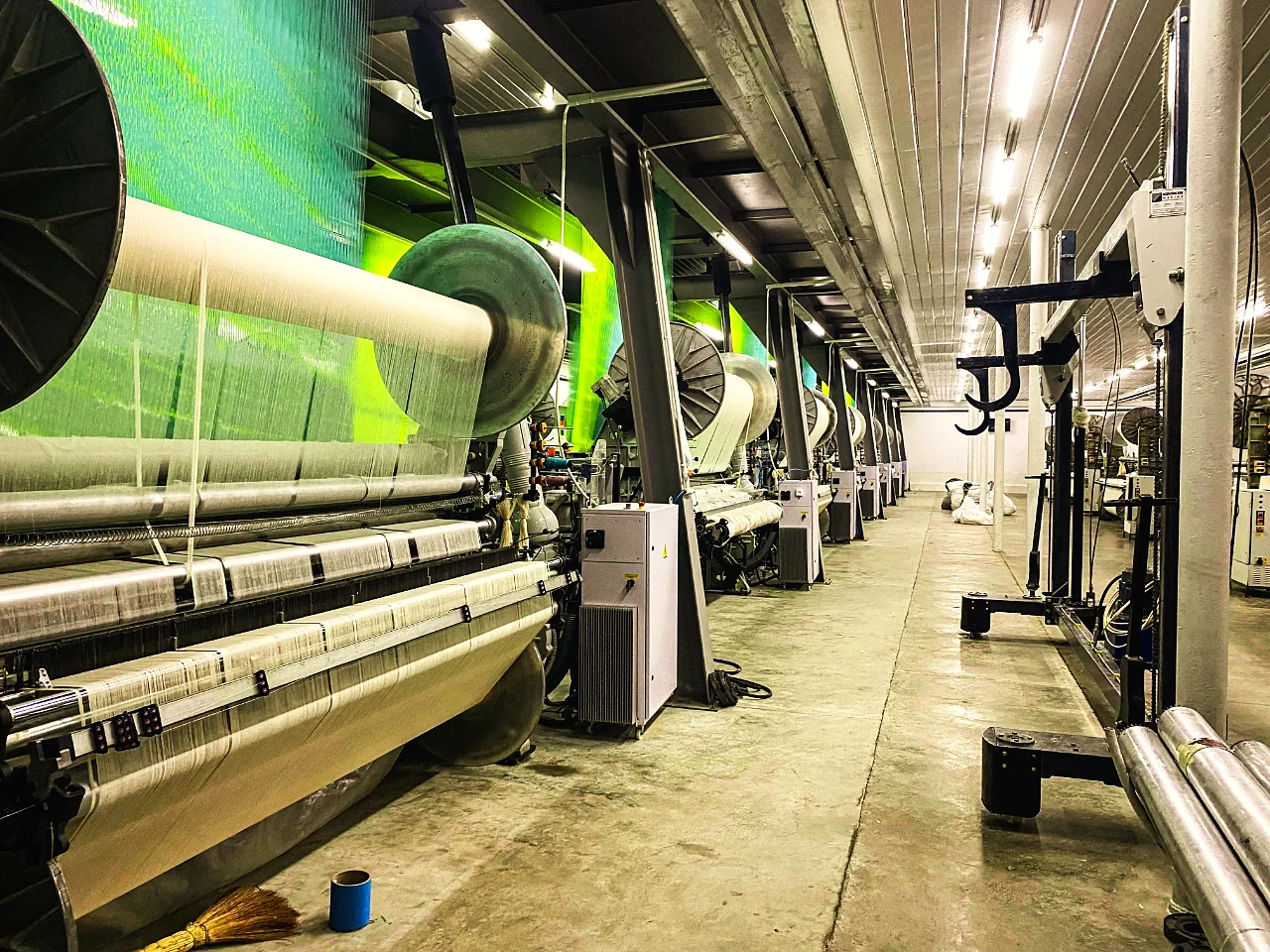
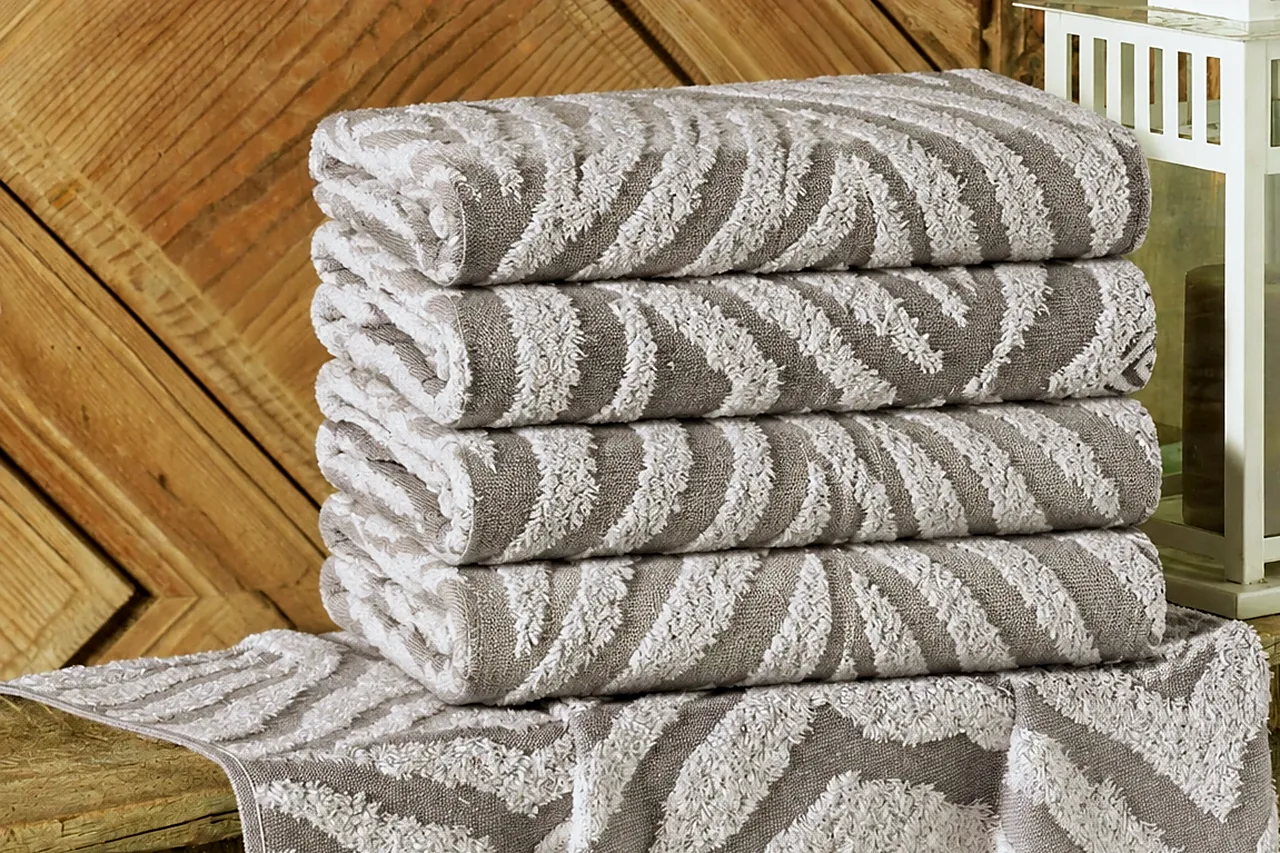
Towels, bathrobes and sheets in 100% cotton and blends, made on Italian and Turkish equipment.
2,400 t of terry a year
Step 8 of 12
Knitting and weaving
Where yarn becomes knitted fabric and terry cloth.
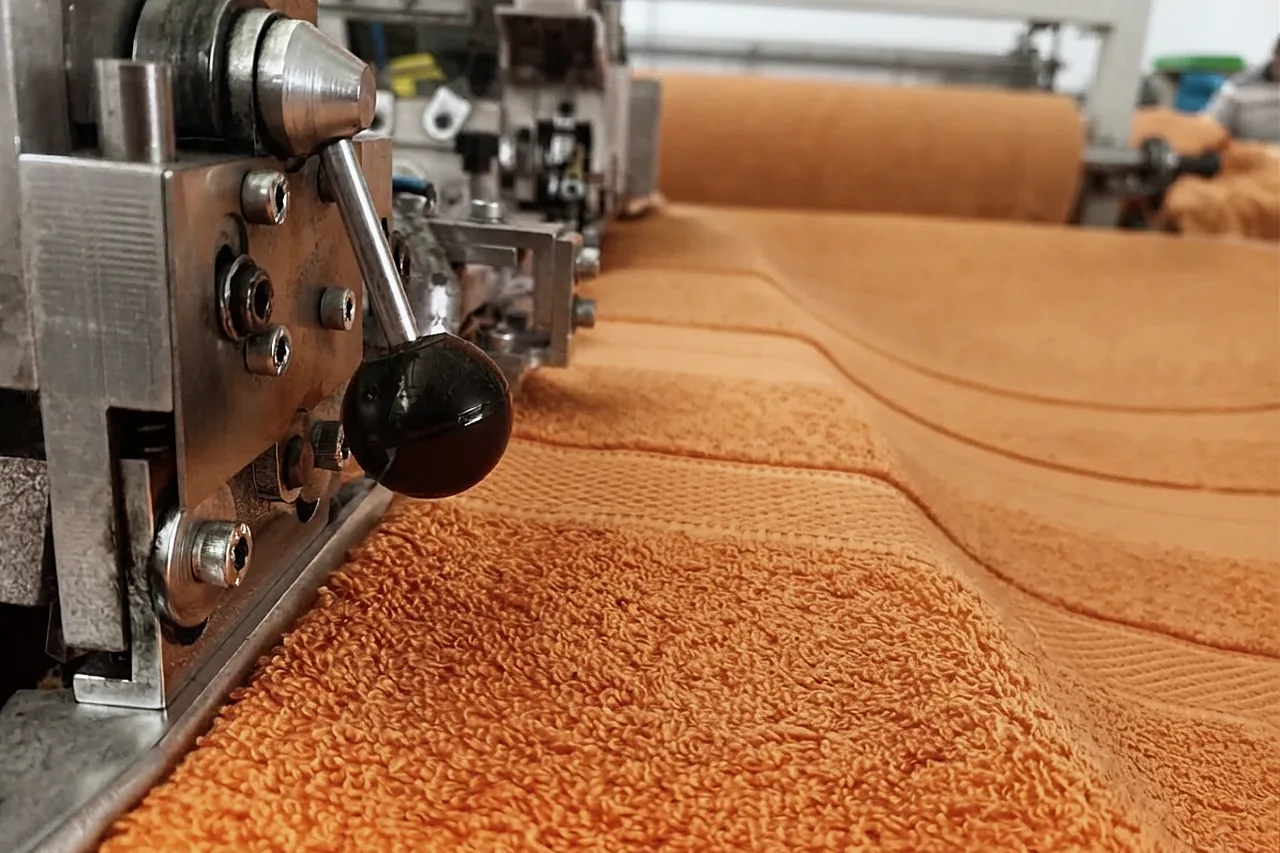
Yarn becomes cloth in one of two ways. For T-shirts, polos and sweatshirts, circular knitting machines draw yarn from dozens of cones and form interlocking loops, producing a continuous tube of fabric. Needle spacing (gauge) and the length of yarn in each loop largely decide the fabric's weight, width and shrinkage. Different set-ups give single jersey, rib, interlock or fleece. For towels and bathrobes, terry looms use two sets of lengthwise yarns (warps): a tightly tensioned ground warp forms the base, and a loosely tensioned pile warp is pushed up into loops. Rolls are then weighed and inspected for defects.
At BHR
- 2 400
- tonnes a year from the 20 000 m² terry weaving mill in Jondor, Bukhara region
Why it matters
What this step decides further down the chain.
- Cotton Incorporated calls the knitting set-up the single most important factor in shrinkage. With the same yarn, a shorter loop gives heavier, more stable fabric.
- Skewed fabric makes T-shirt side seams twist after washing. In Cotton Incorporated trials, single-jersey skew after five home launderings rose from 8.6% to 16.8% as stitches were loosened.
- Barré: unwanted bands across knitted fabric, often visible after dyeing. Causes include mixing yarn counts, suppliers or twist, and wrong stitch length or tension at one feed.
- Pile height strongly affects towel weight and also absorbency. In one industrial trial, raising it from 5.4 to 9.0 mm took weight from about 417 to 575 g/m².
Where it is made
Our own plant.
Terry mill
Jondor district, Bukhara region
- Floor area
- 20 000 m²
- Capacity
- 2,400 t a year
- Equipment
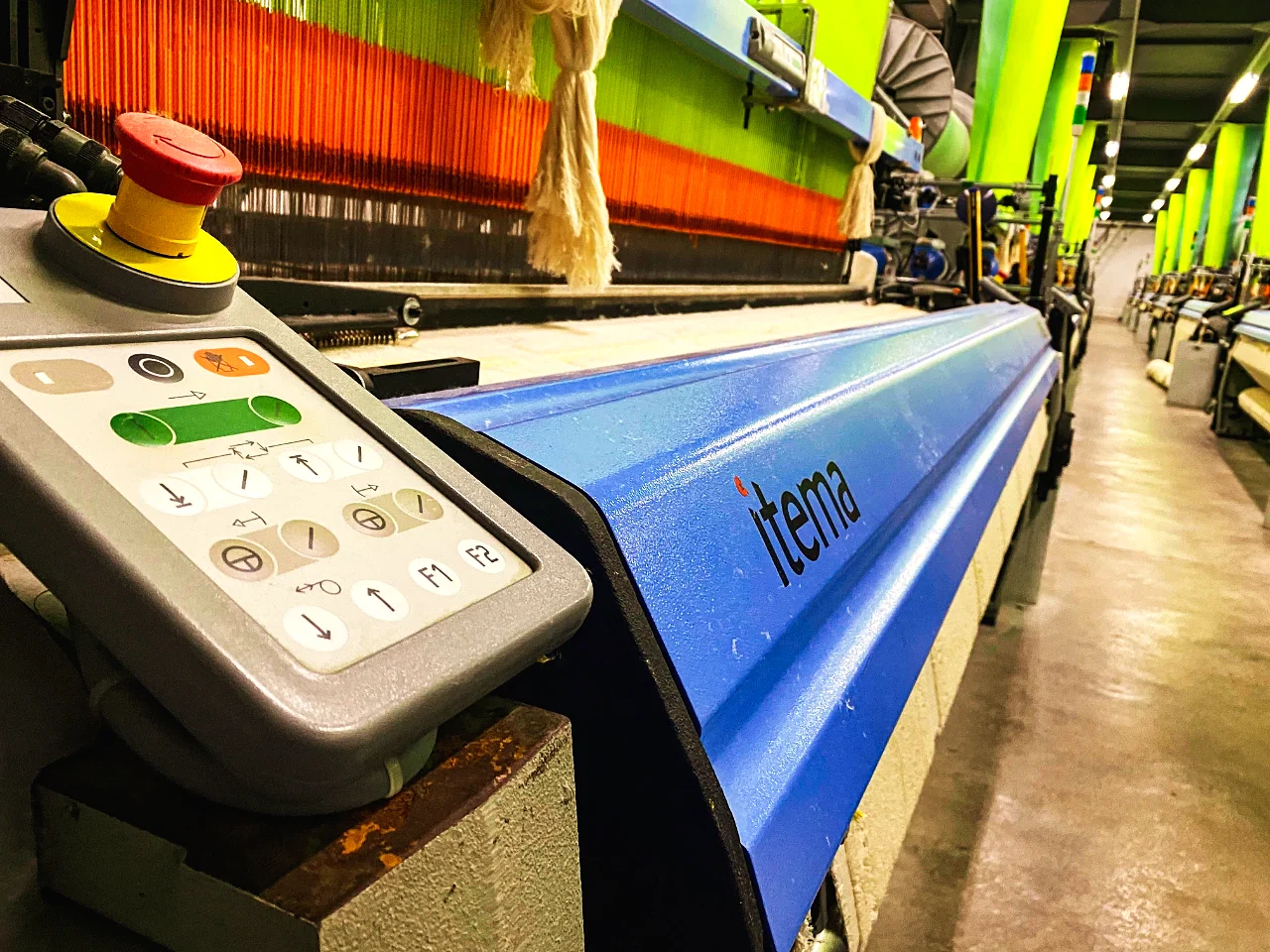
- Itema, Lafer, Canlar, Pivottex
Good practice
How it is done well.
Engineer the knit to the finished specification: choose yarn count, machine gauge, needle count and stitch length together to reach the agreed weight, width and shrinkage, rather than correcting later in finishing.
Source cottoninc.comPrevent barré: label and separate yarn lots; never mix counts, suppliers or twist on one machine; keep stitch length and tension equal at every feed; dye a trial sample before bulk runs.
Source cottoninc.comControl spirality at the source: match yarn twist direction to cylinder rotation, alternate S- and Z-twist feeds or use plied yarn, and measure skew after washing (AATCC TM179 or ISO 16322-2).
Source cottoninc.comOn terry looms, keep pile-warp tension constant and set pile height electronically so loops stay even along the roll. Test towel absorbency with a recognised method such as ASTM D4772.
Source picanol.beGrade rolls by visual inspection to ASTM D5430, usually its 4-point system: each defect scores 1–4 points by length, per 100 square yards, against a limit agreed with the buyer.
Source store.astm.orgTest weight (ASTM D3776) and wash shrinkage (ISO 6330 with ISO 5077) on samples first conditioned at 20 ± 2 °C and 65 ± 4% relative humidity (ISO 139).
Source store.astm.org
Terms 5
- Stitch length
- The length of yarn in one knitted loop; shorter loops make denser fabric.
- GSM
- Fabric mass in grams per square metre; higher usually means thicker, denser cloth.
- Gauge
- Needles per inch of a knitting machine's cylinder; also called 'cut'.
- Pile warp
- Loosely tensioned lengthwise yarn in terry cloth that forms the towel's loops.
- Spirality (skew)
- Slanting of knitted fabric after washing that twists garment side seams.
A question, or an order?
The sales contact for this line answers.
Send a request