ProductionSpinning
Spinning
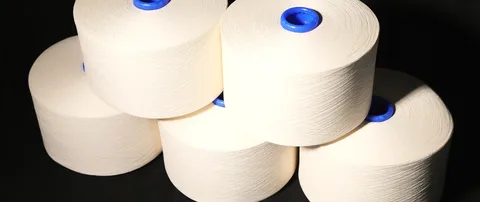
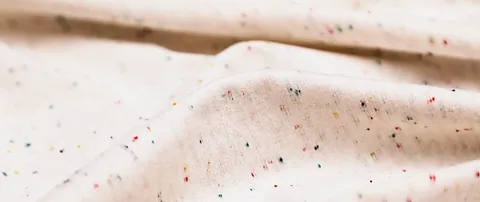
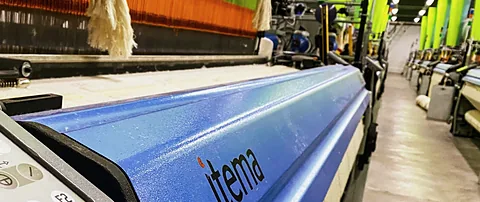
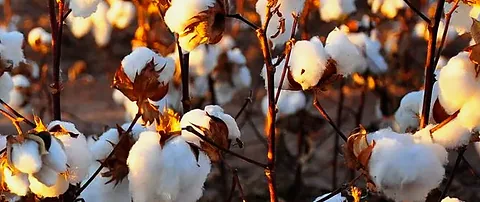
Yarn for knitting and weaving, spun from cotton and blends at two of our own mills.
At a glance
- 12,000 tof yarn a yearN-1209
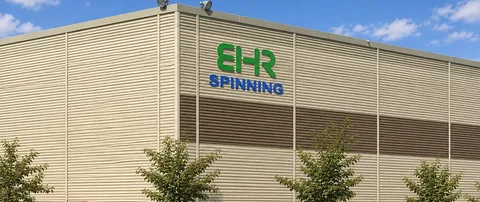
- 143,000 m²the BHR Spinning mill in BukharaN-7003
- Ne 7–50yarn countsNH-4104
- 155colours in our colour cardN-1208
- 5USTER instruments in our laboratory, cotton to yarnN-3303
- 100%of the yarn wound in Bukhara passes a USTER clearerN-1404
- Spinning systems
- Ring in Bukhara; open-end and air-jet in Navoiy
- Fibres
- Cotton, viscose, polyester, linen and their blends
- Machinery
- Rieter, Trützschler, Saurer Schlafhorst; Murata winders
- Markets
- Uzbekistan; exports to Russia, Belarus and Turkey
Certificates and audits
- Better Work Uzbekistan
The ILO and IFC programme lists BHR Spinning and Navbahor Tekstil among its participating factories.
Source betterwork.org - SMETA
Social audit of Navbahor Tekstil by TÜV SÜD in August 2022: labour standards, health and safety, environment and business ethics.
Photographs
BHR Spinning in Bukhara.
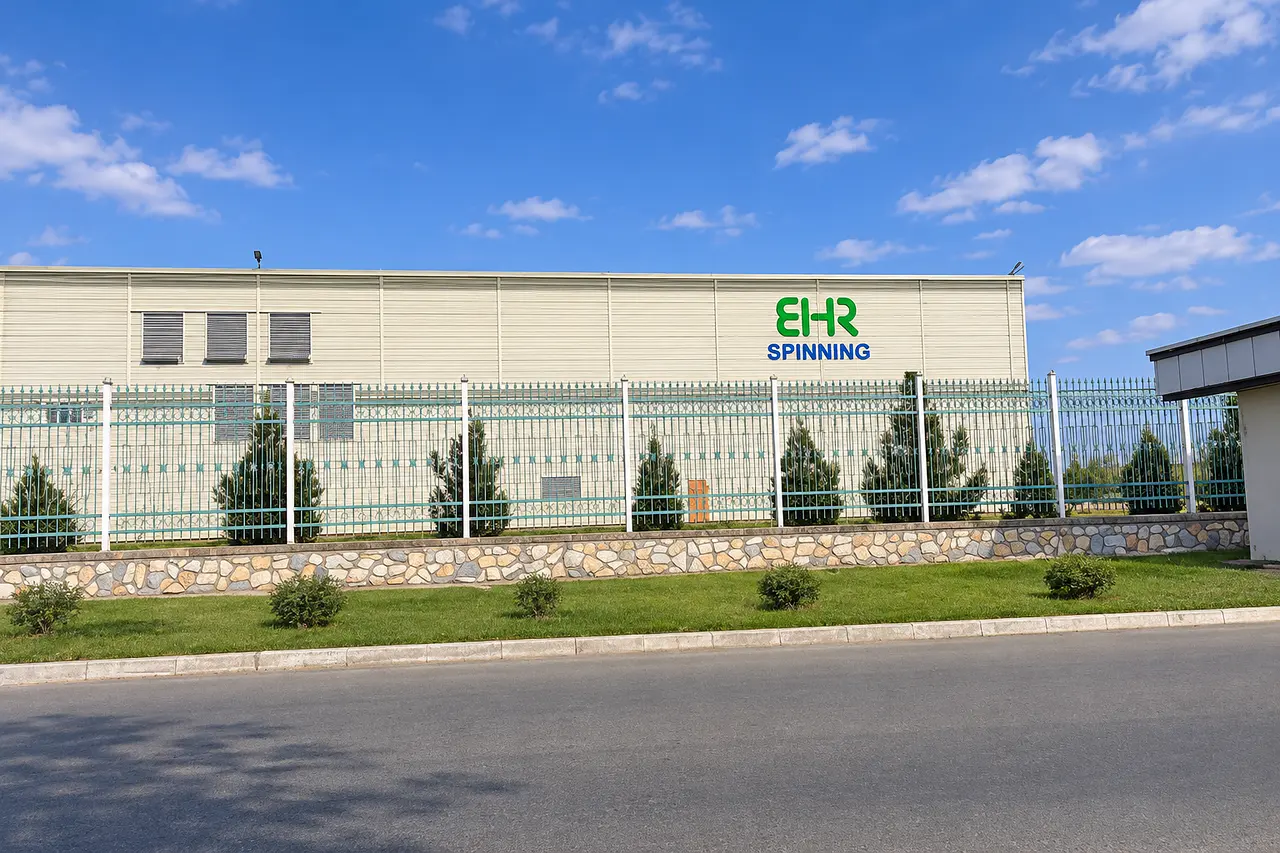
The mill from the street 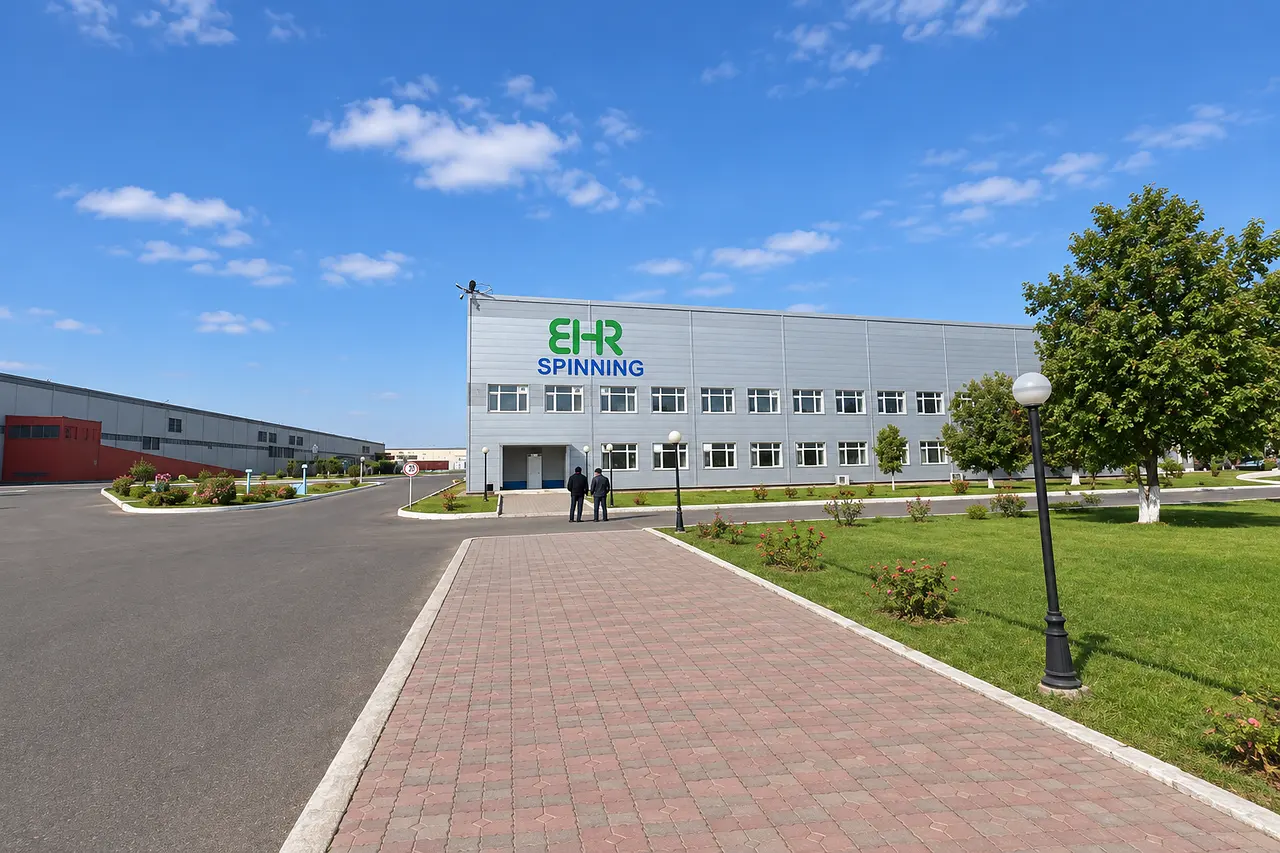
The entrance and the main building 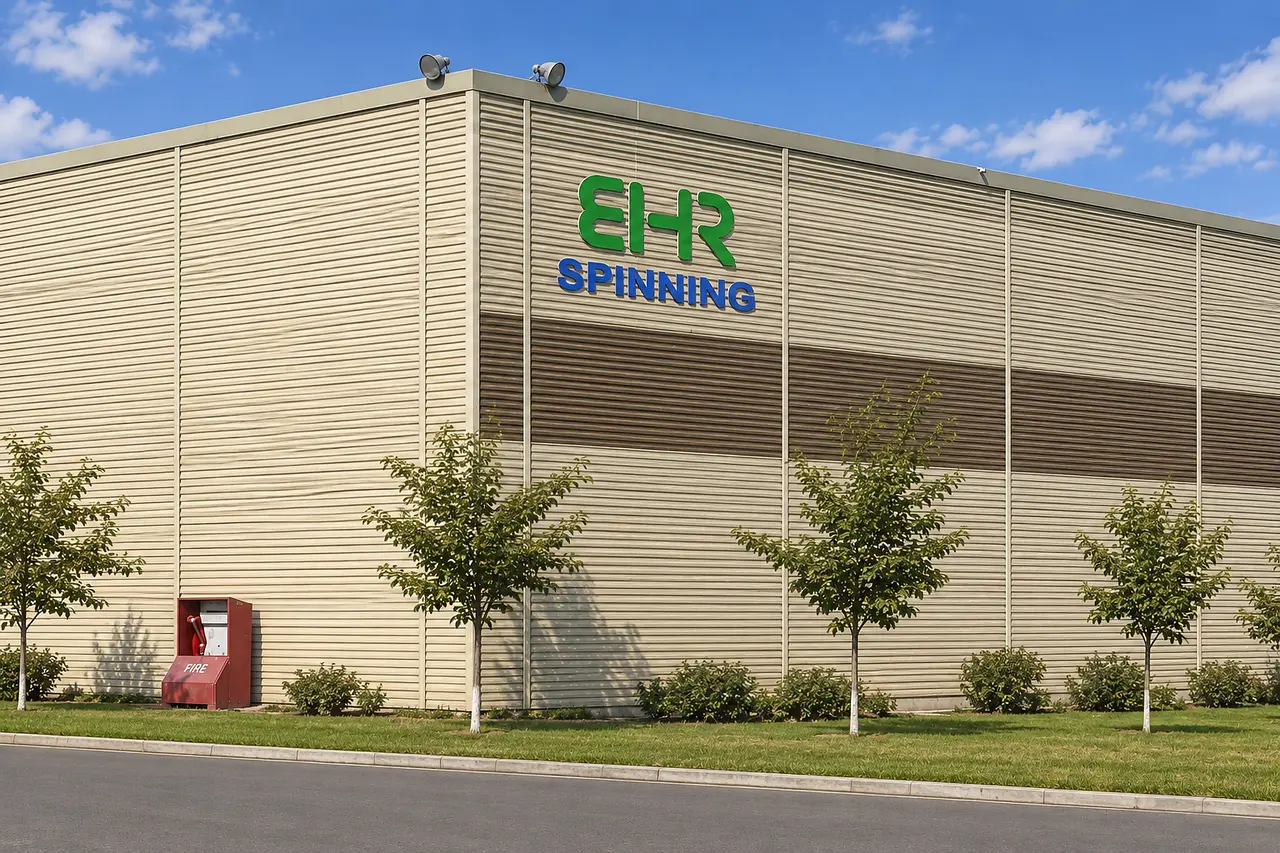
The production building 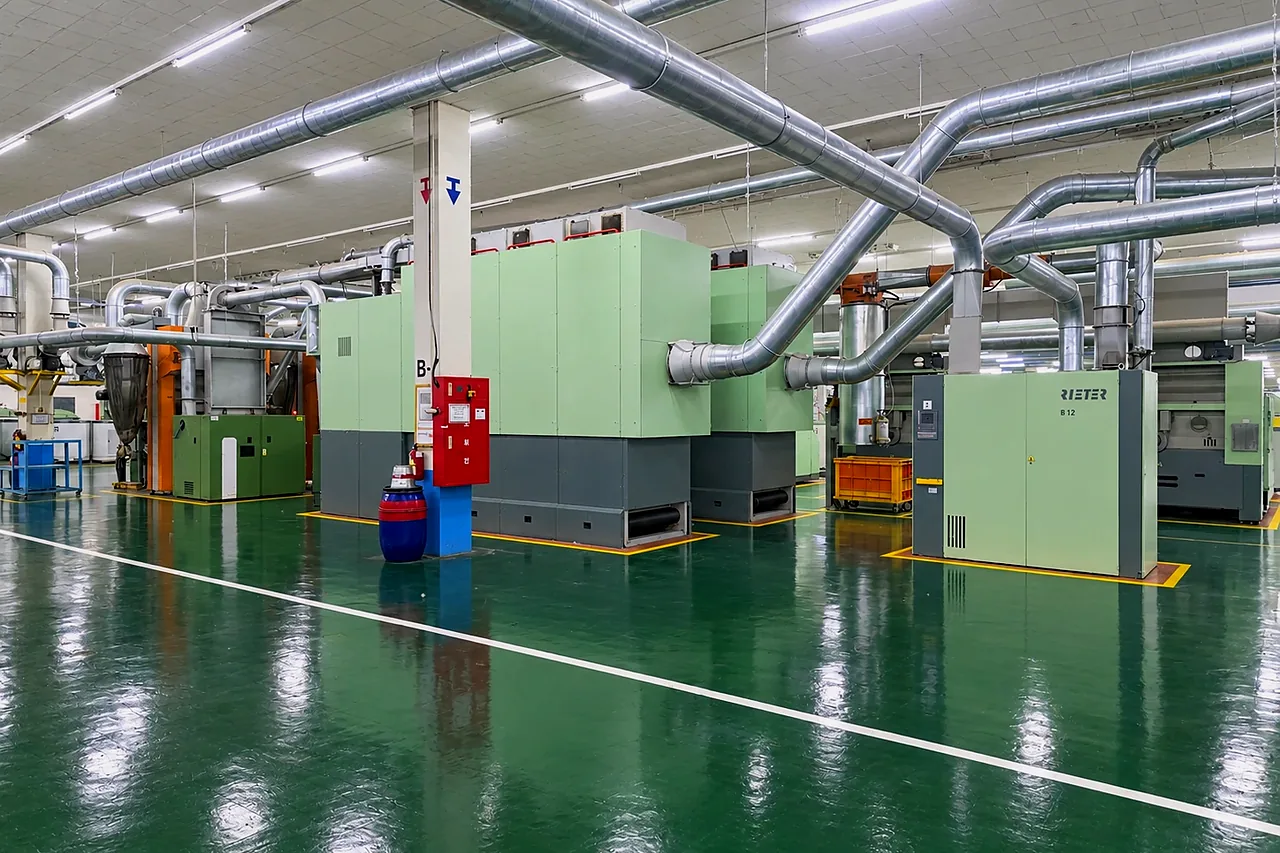
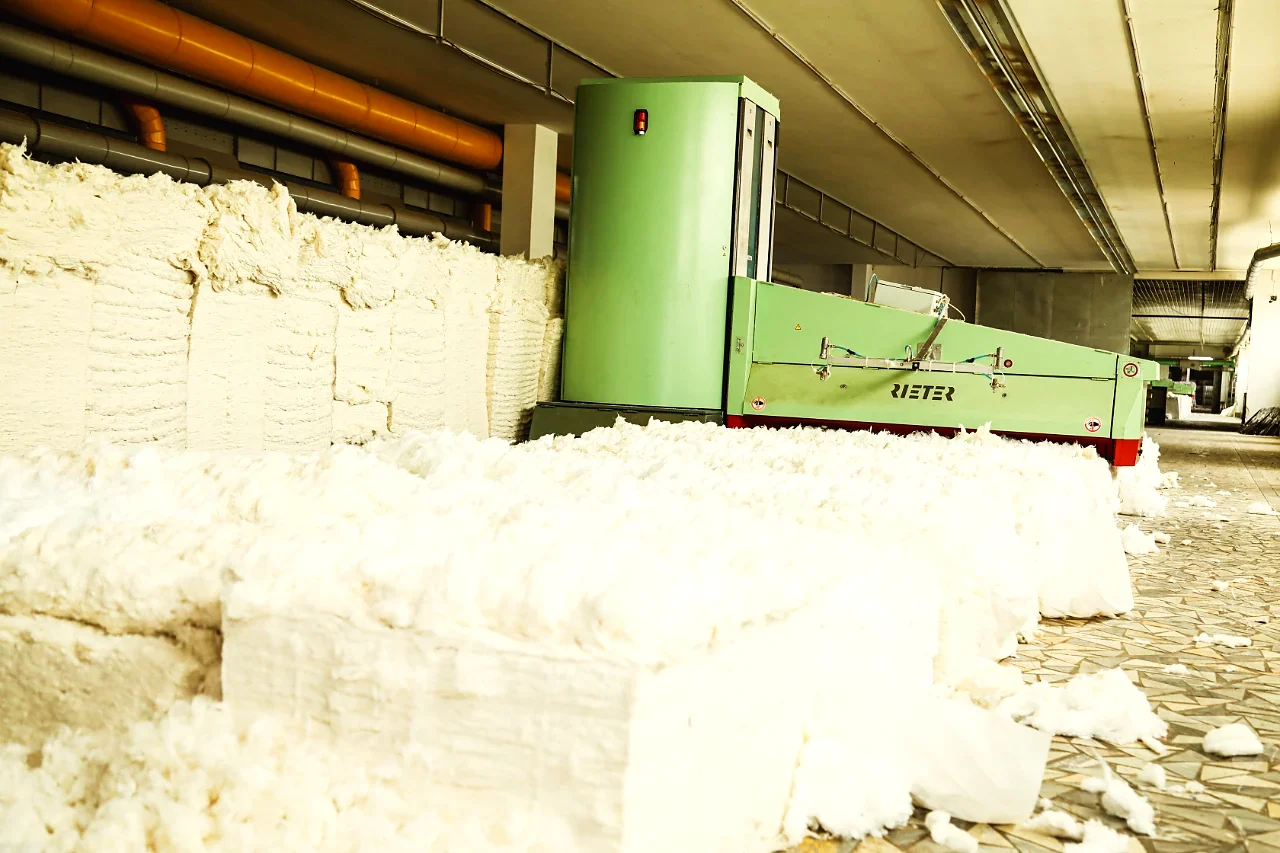
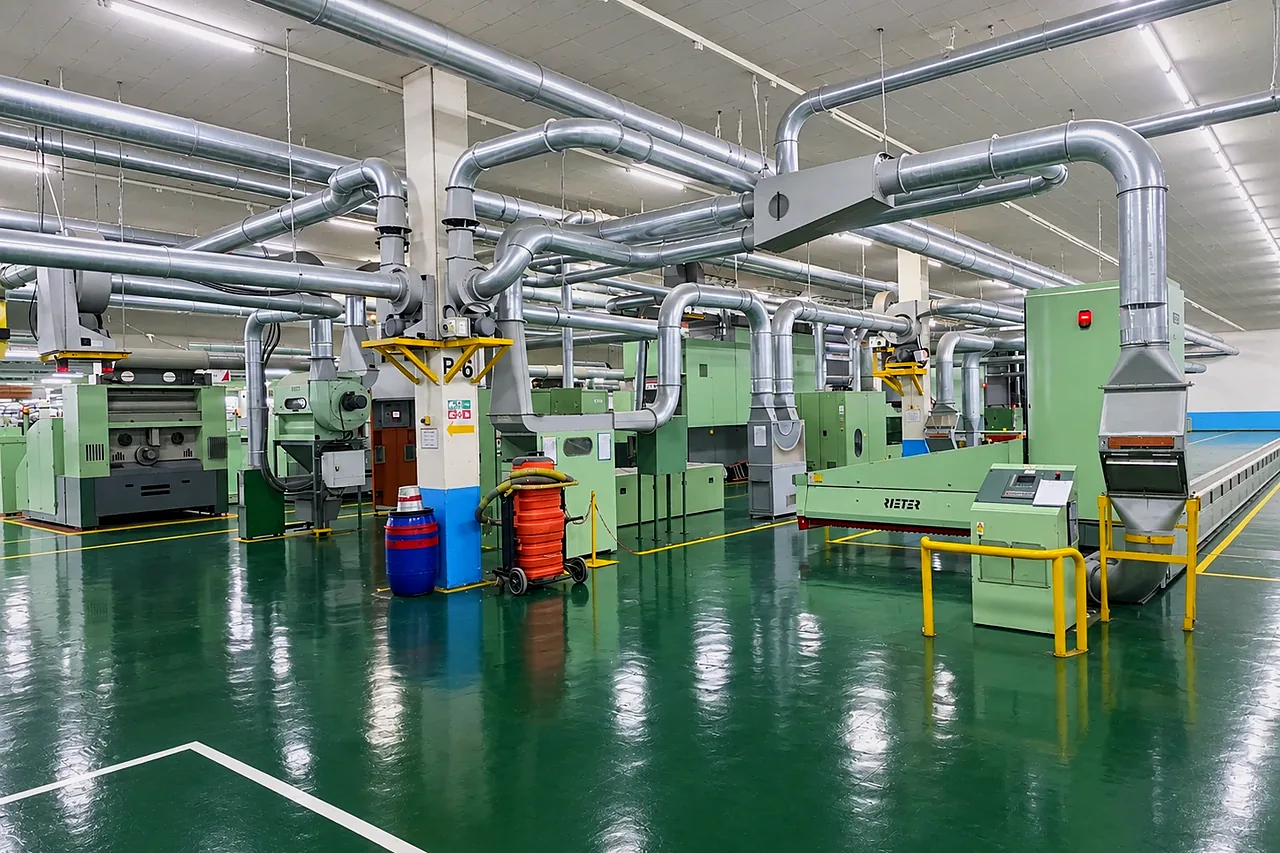
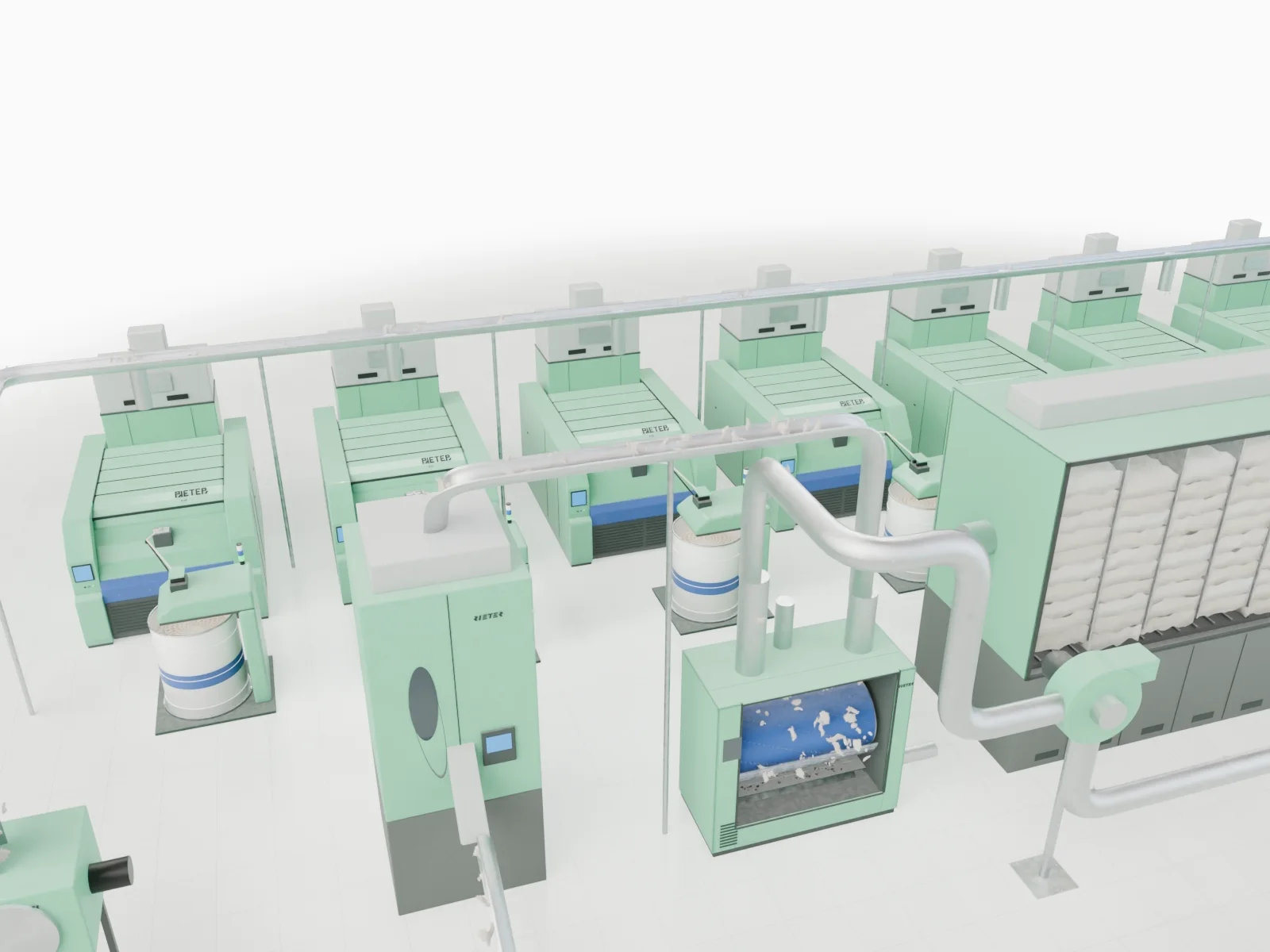
Rieter UNImix mixer and B 12 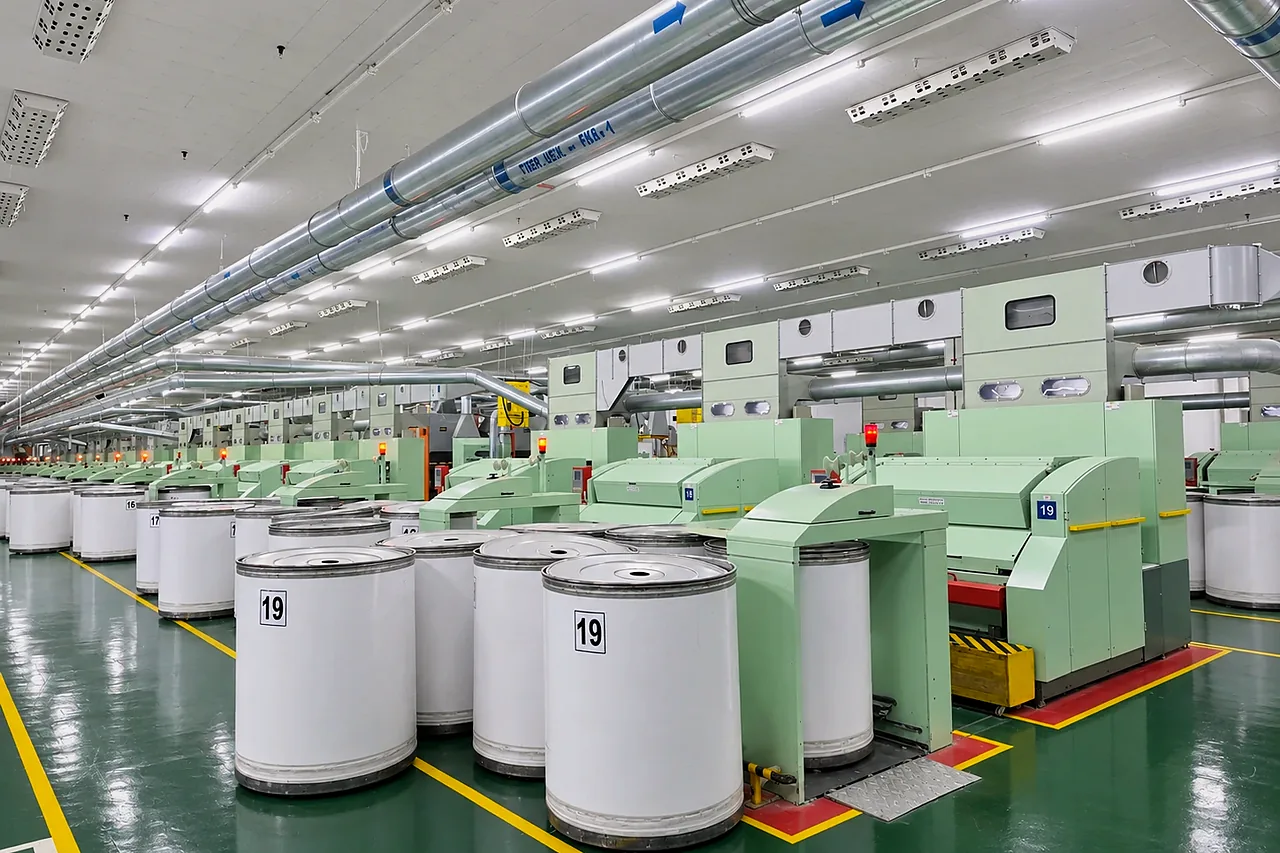
The card hall 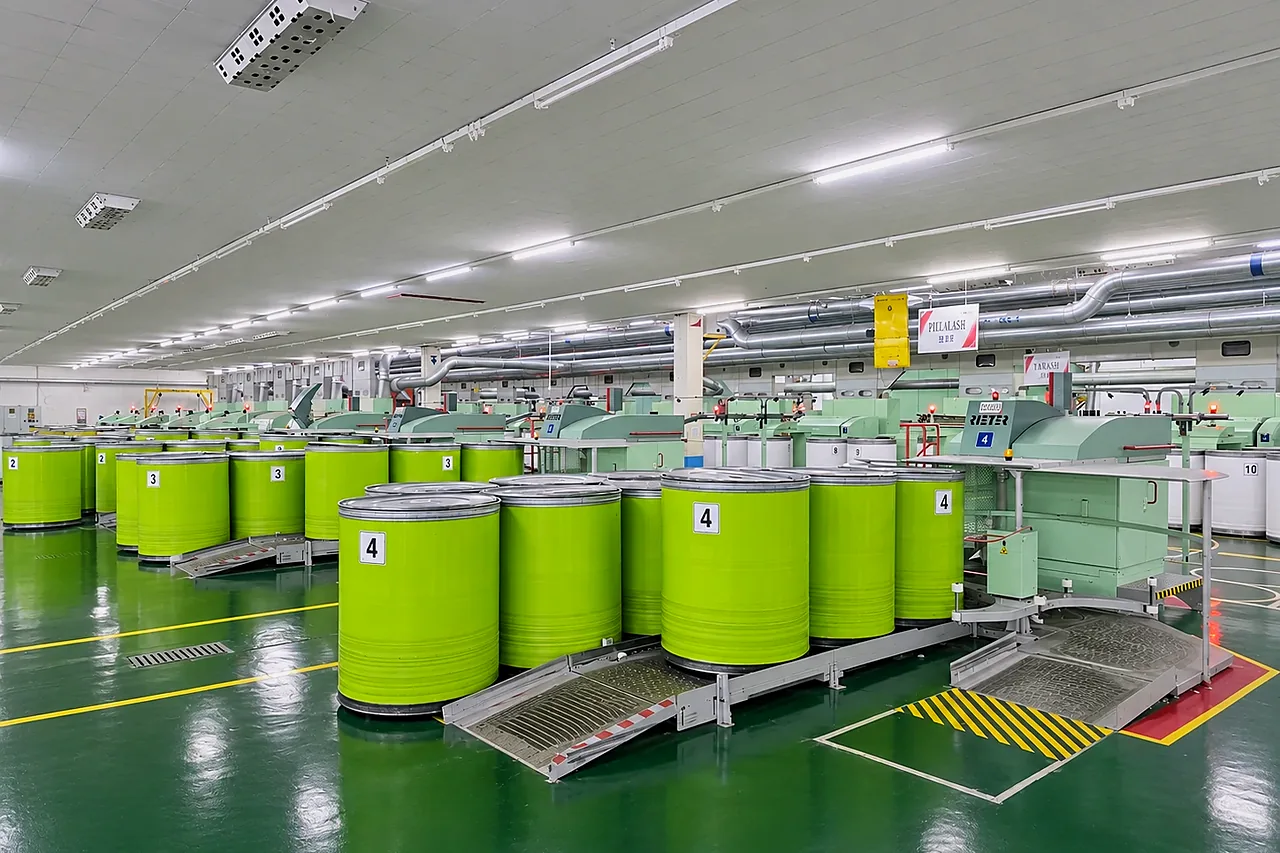
Rieter RSB-D 40 draw frames 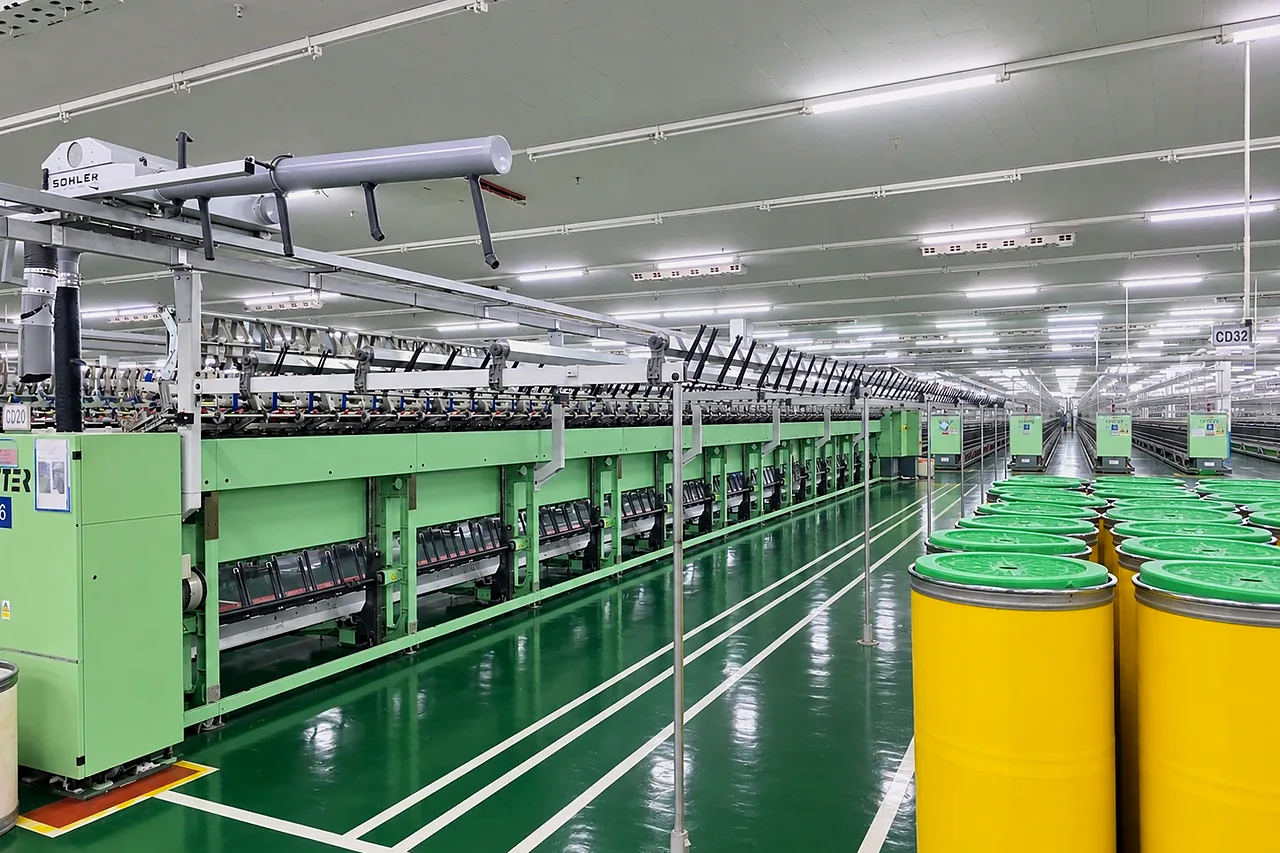
Rieter F 15 roving frames 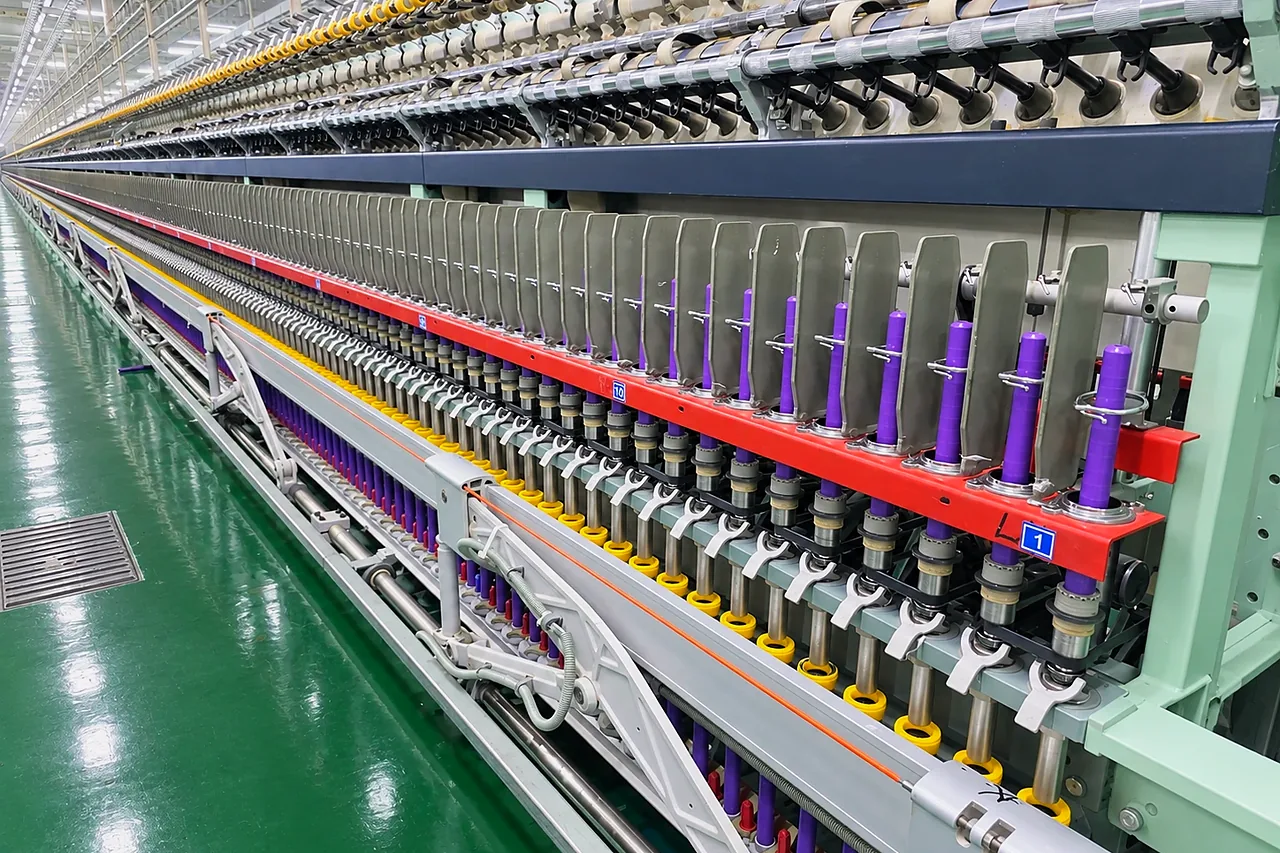
Rieter G 35 ring frames 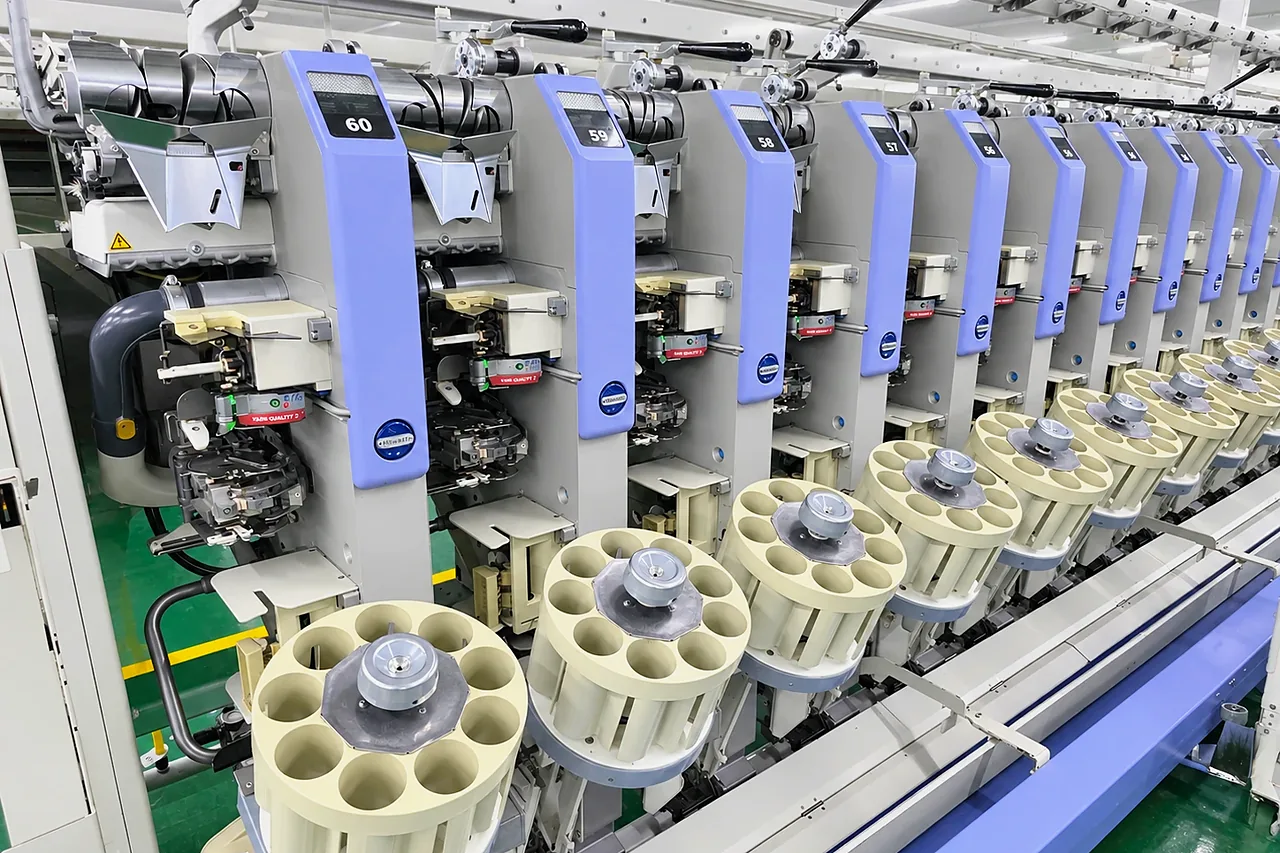
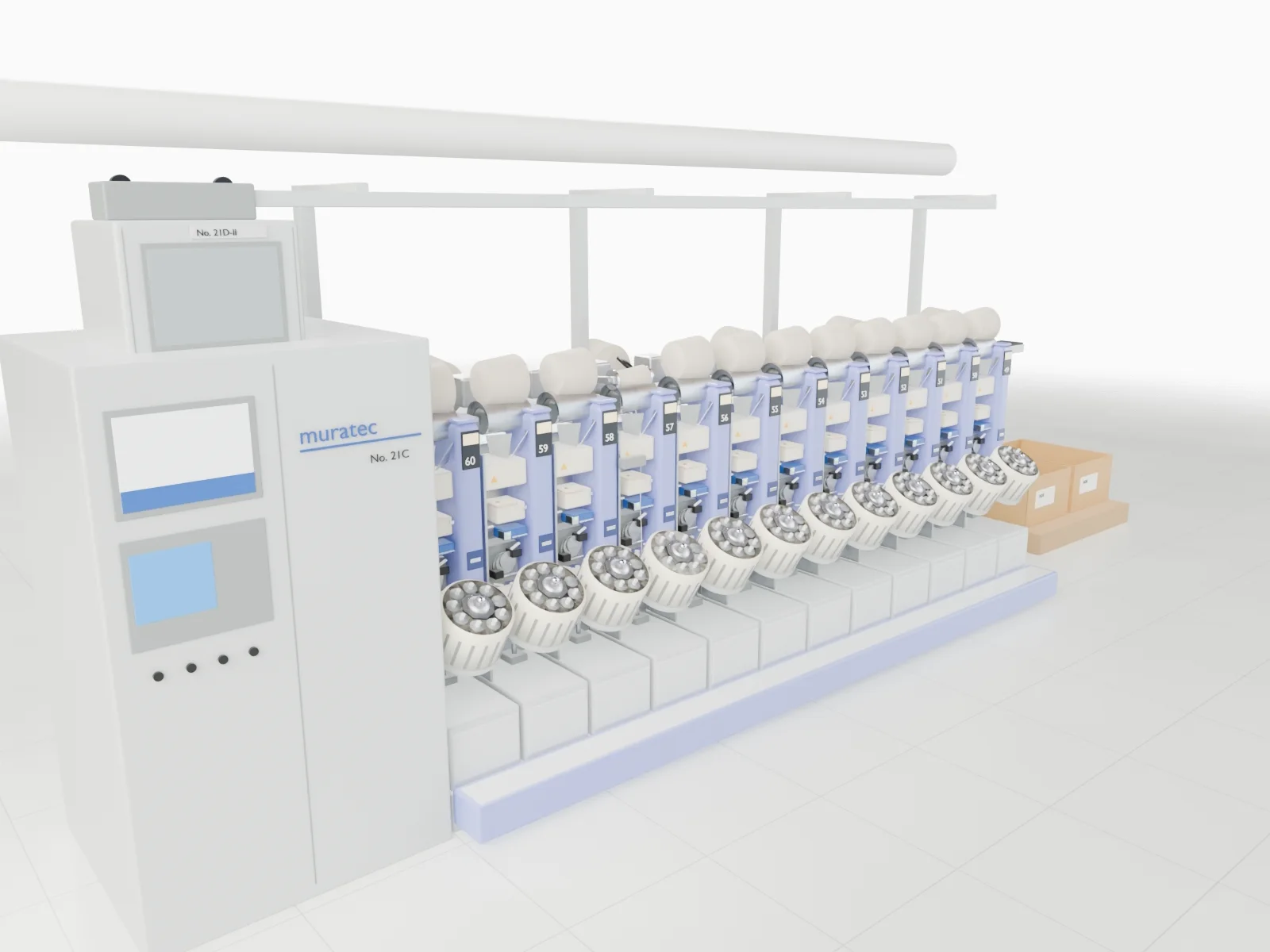
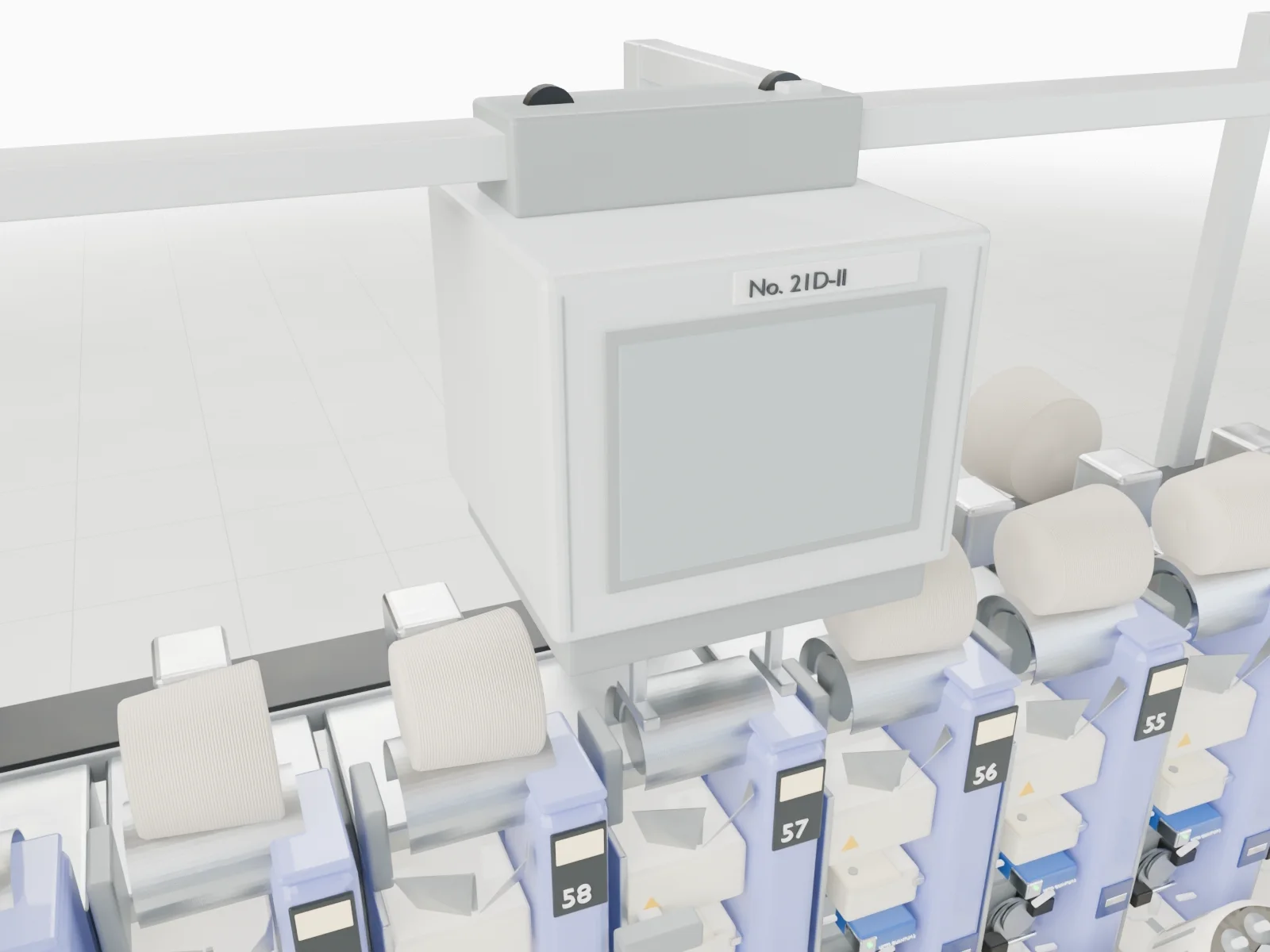
Murata No. 21C winders
How yarn is made
Seven stages, from bale to cone.
A guided tour of our spinning line, stage by stage: a 3D illustration of each machine beside photographs from our mills.
Or start at any stage
01
 Bale openingBales are selected by their test results and opened together, so every batch starts from the same fibre mix.Start here
Stage 1 of 7 · Bale opening
Bales are selected by their test results and opened together, so every batch starts from the same fibre mix.
3D illustration
Bale selection
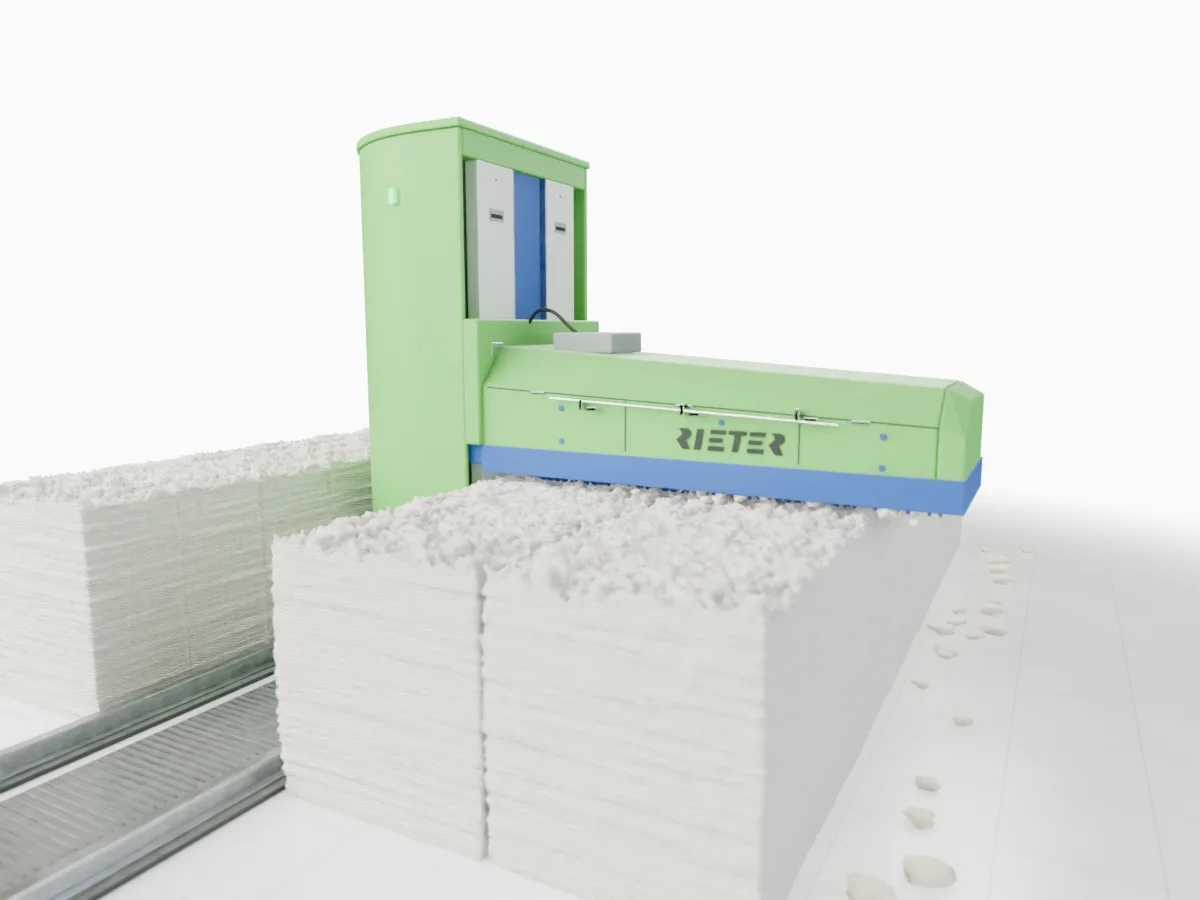
Fibre fineness varies from bale to bale; in trials, a difference of only 0.3 micronaire between yarns caused stripes after dyeing.
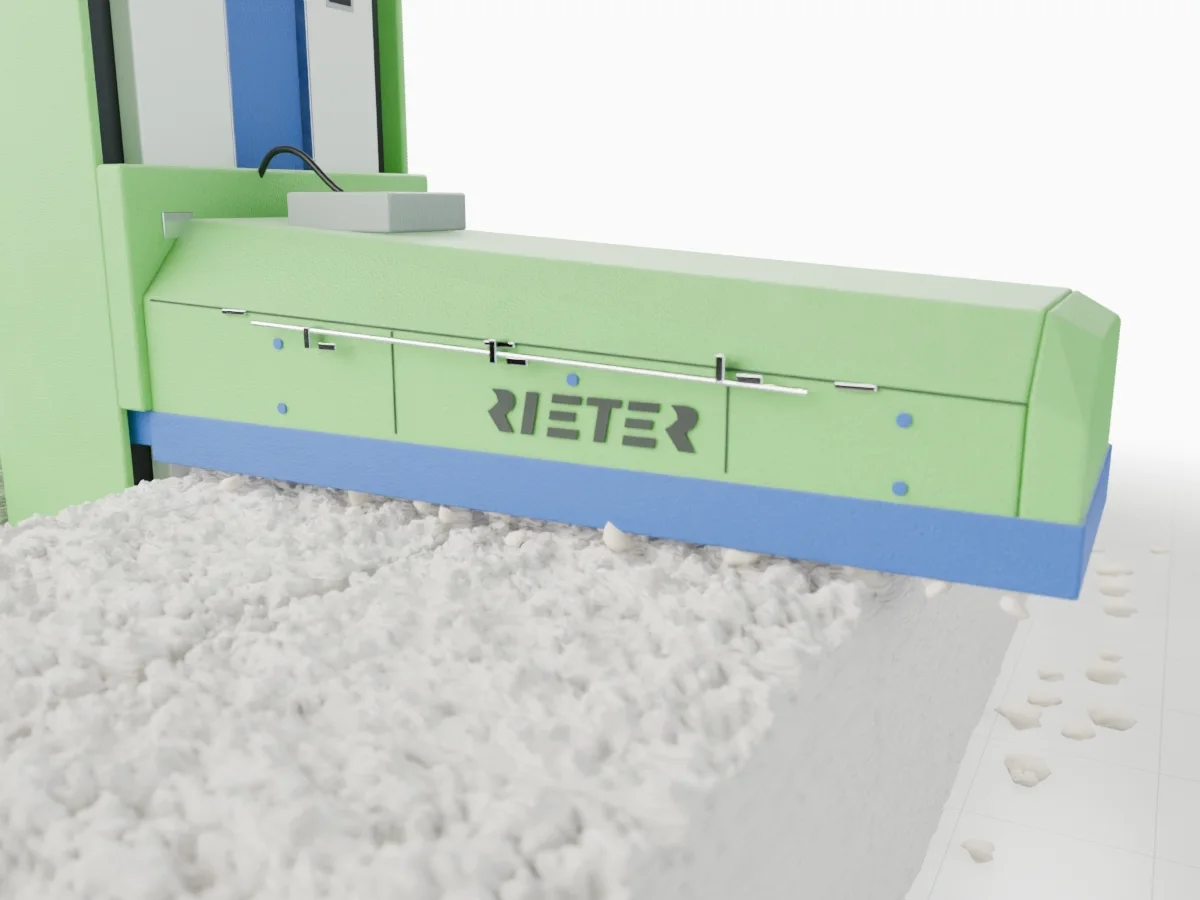
Every bale at once
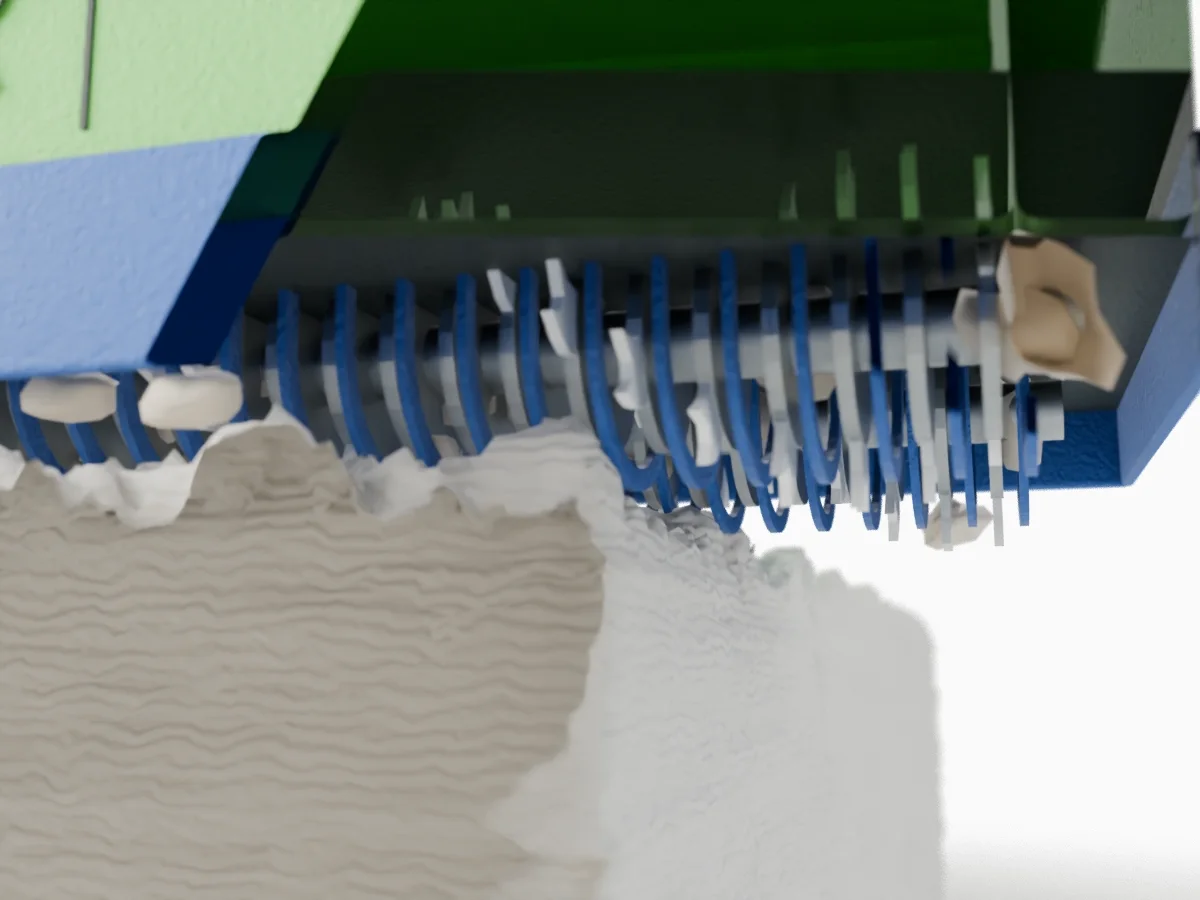
Each pass takes a thin layer from every bale, so all bales contribute to the mix at the same time.
Opening
The pressed fibre is opened into small tufts, the form in which it can be cleaned.
02
 Cleaning and blendingForeign matter, leaf and dust are removed, and the fibre is blended evenly before carding.Start here
Stage 2 of 7 · Cleaning and blending
Foreign matter, leaf and dust are removed, and the fibre is blended evenly before carding.
3D illustration
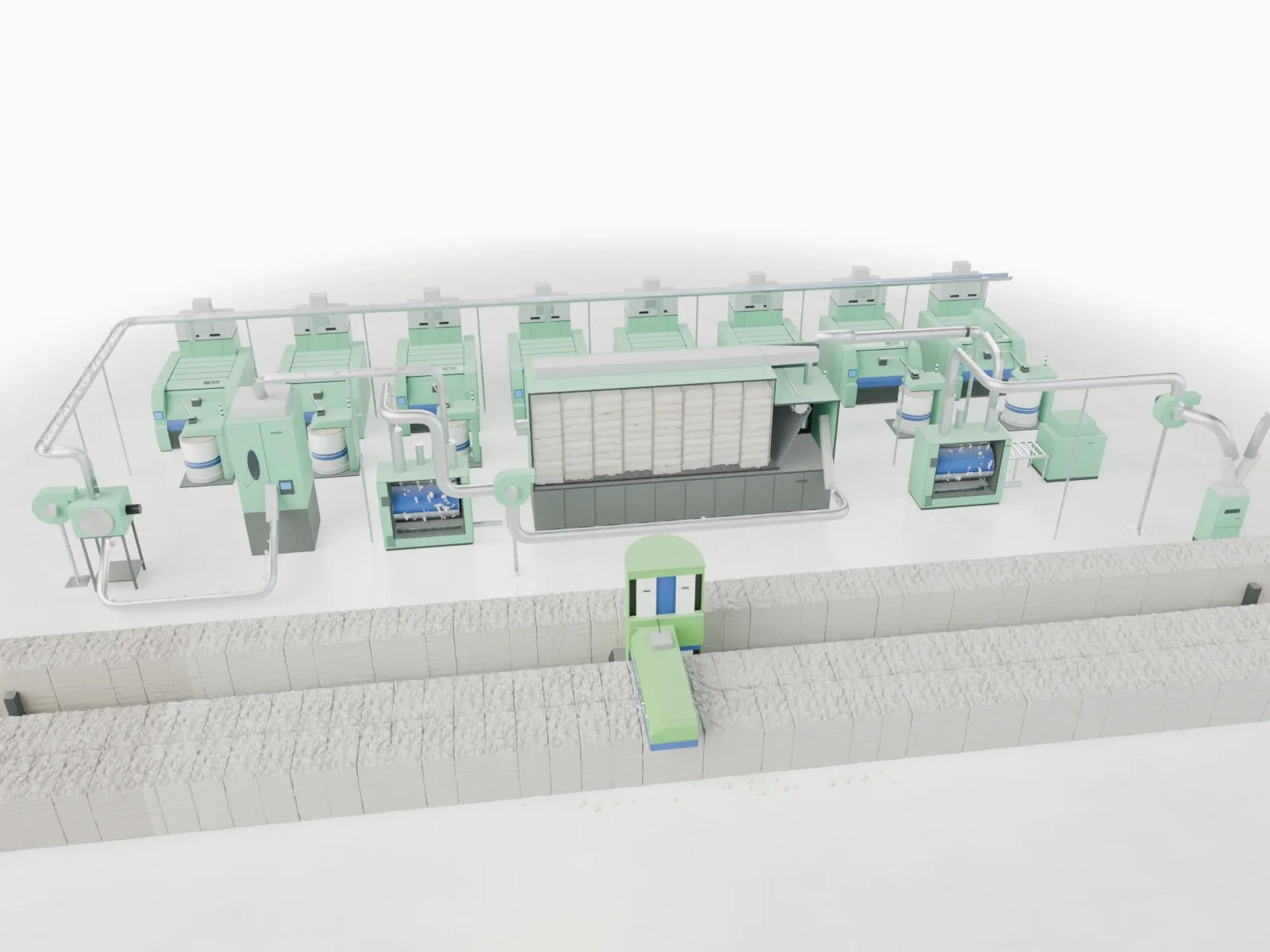
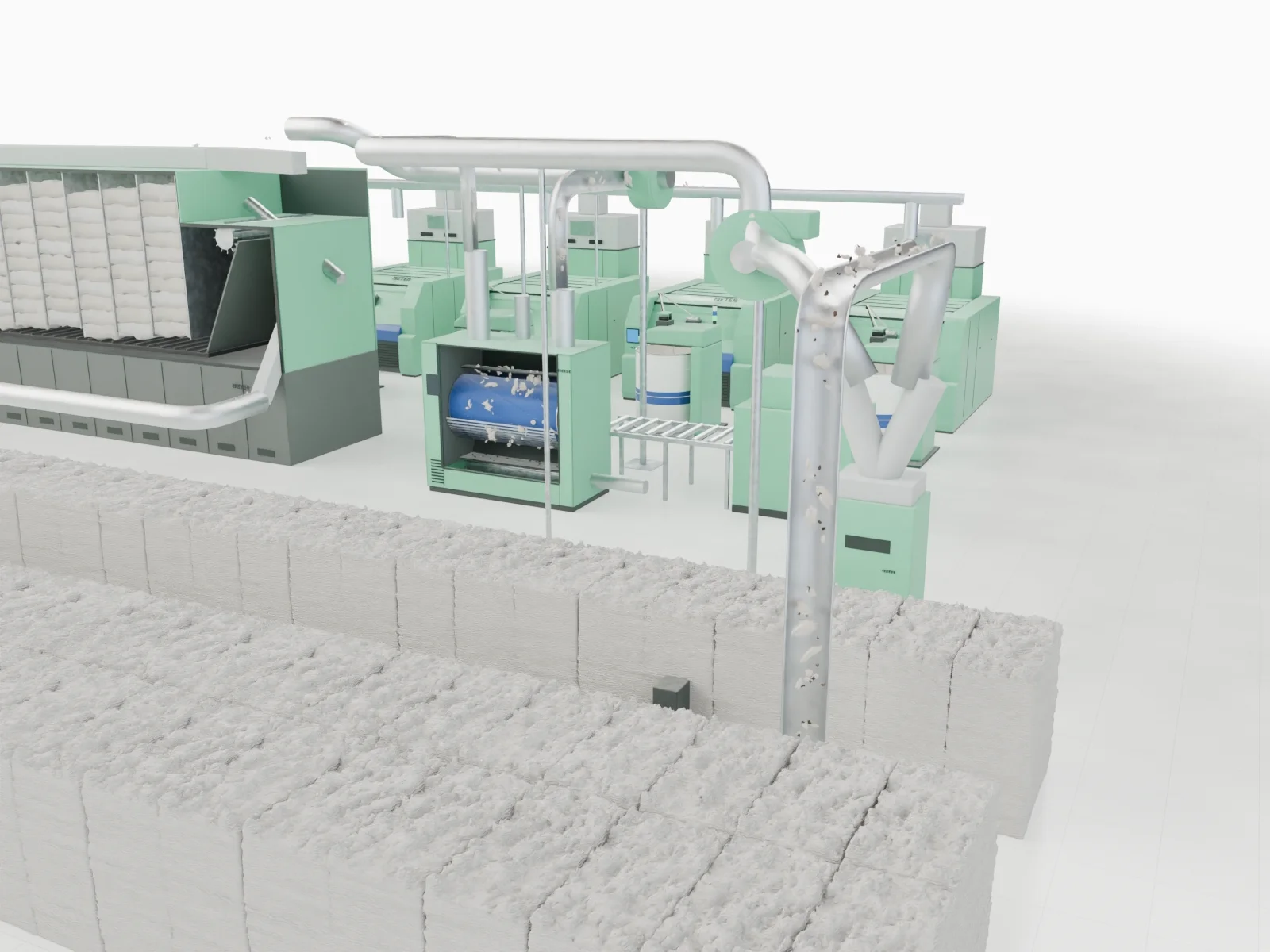
Closed transport
Fans move the fibre between machines through closed ducts, without manual handling.
Foreign matter
Metal, stones and other heavy objects are removed first, before they can damage machines or start a fire.
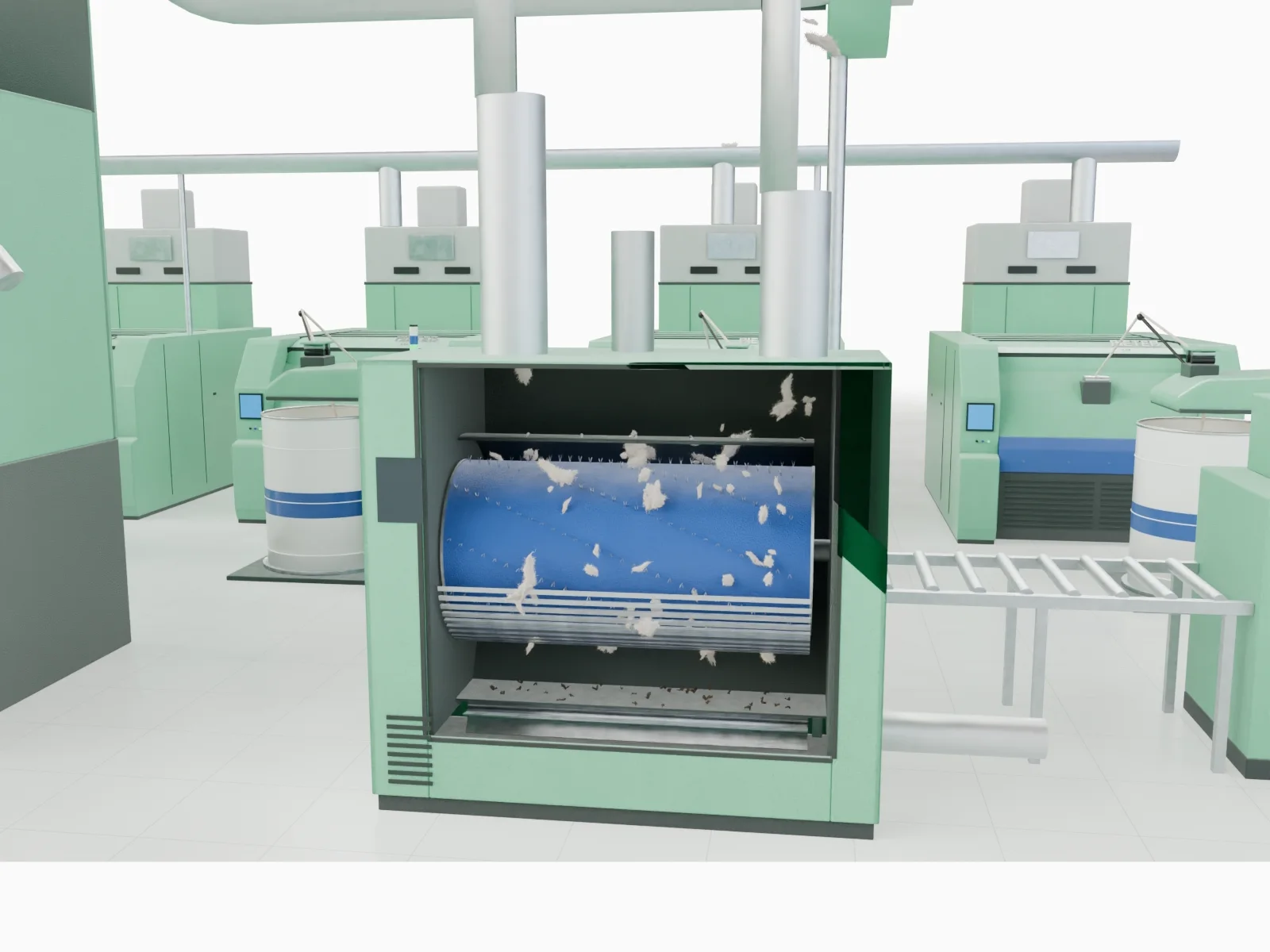
Pre-cleaning
Leaf, seed-coat fragments and dust are removed without clamping the fibre, which protects its length.
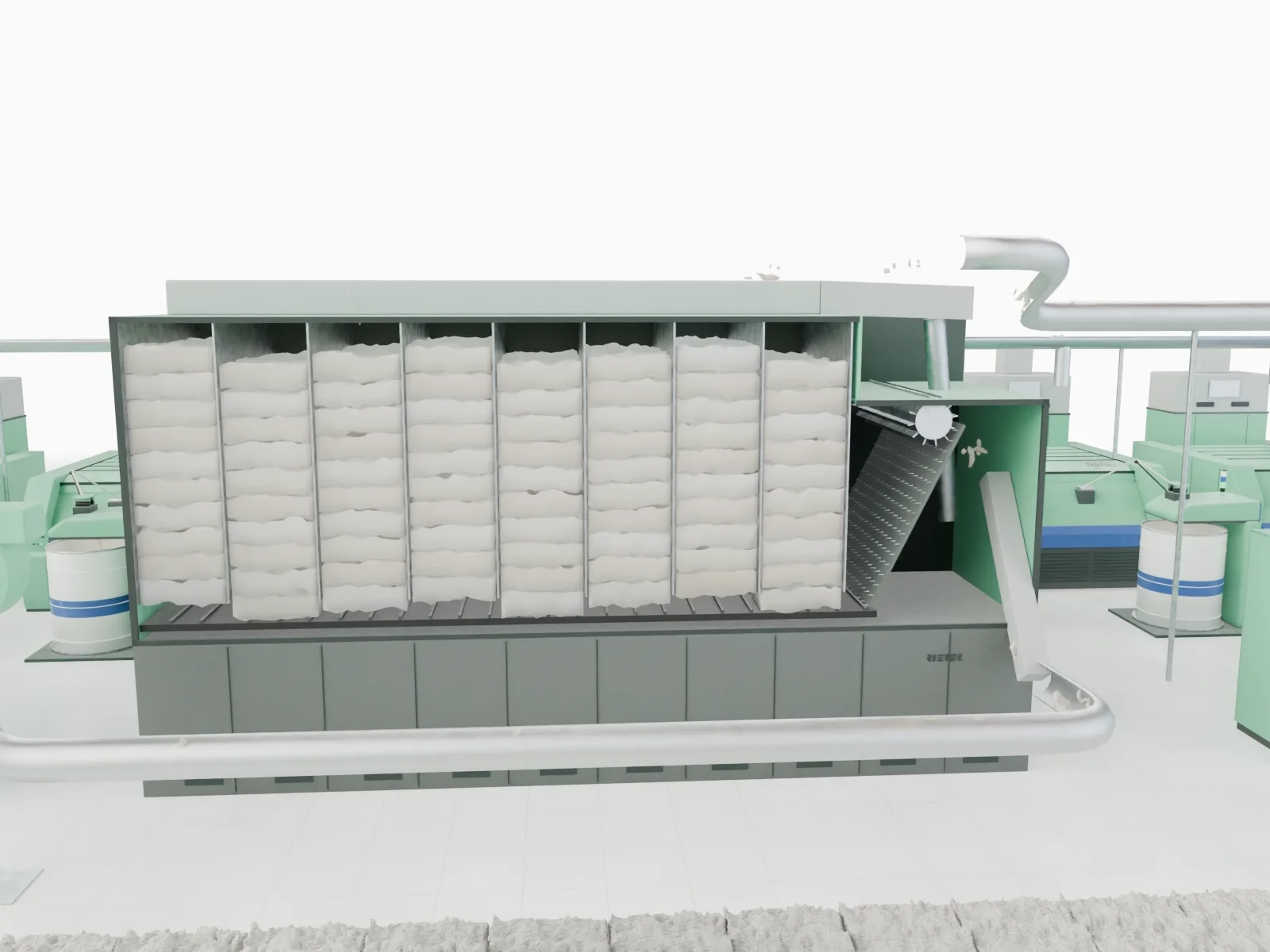
Mixing
Eight mixing chambers even out the remaining differences between bales.
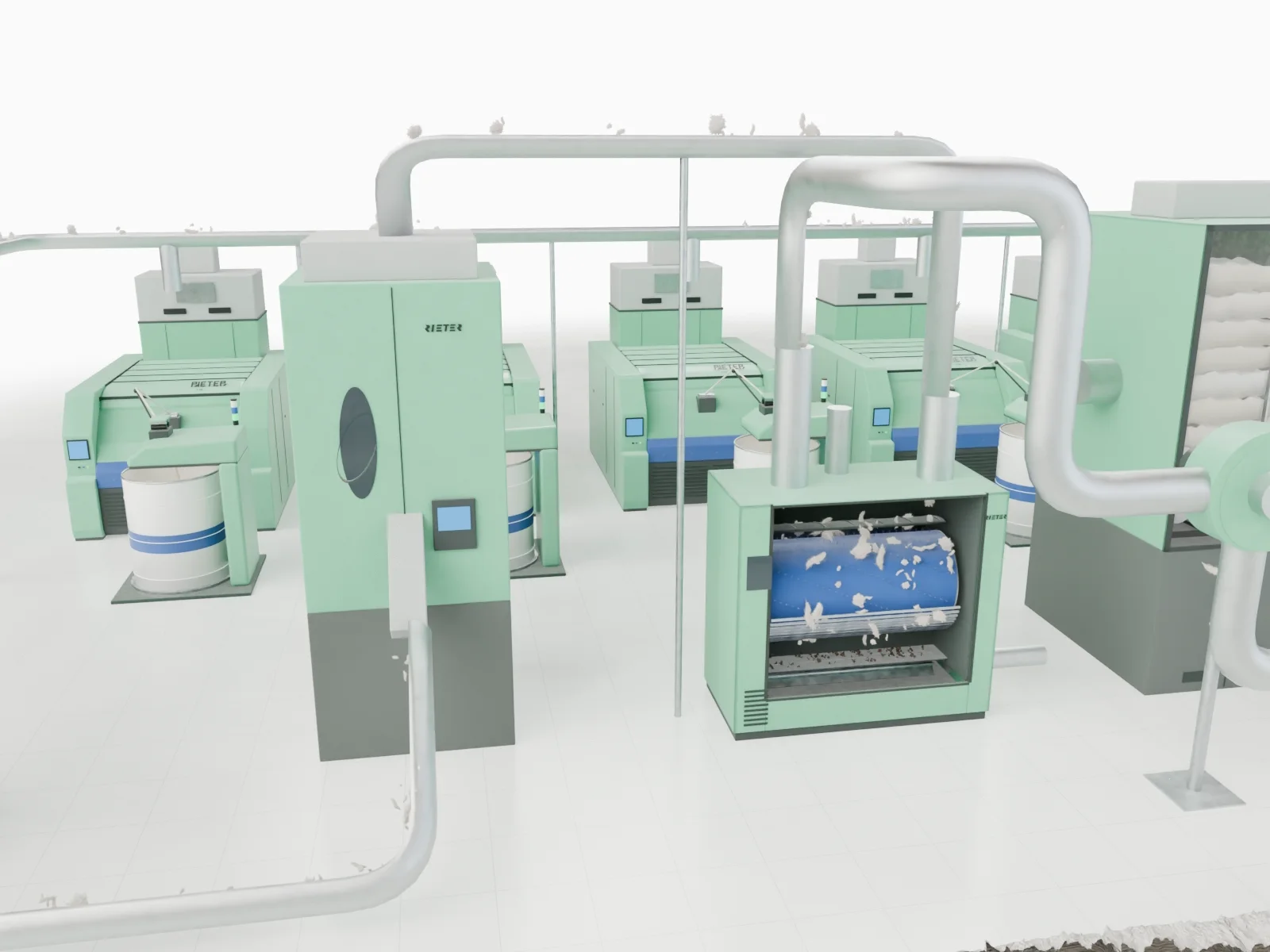
At BHRRieter UNImix mixer and B 12 pre-cleaner in Bukhara
Fine cleaning
A second cleaner removes finer trash, and a reserve store keeps the supply to the cards steady.
Feeding the cards
Each card takes fibre as it uses it, so its feed stays constant.
03
 CardingTufts are separated into single fibres, cleaned of neps and fine trash, and formed into sliver.Start here
Stage 3 of 7 · Carding
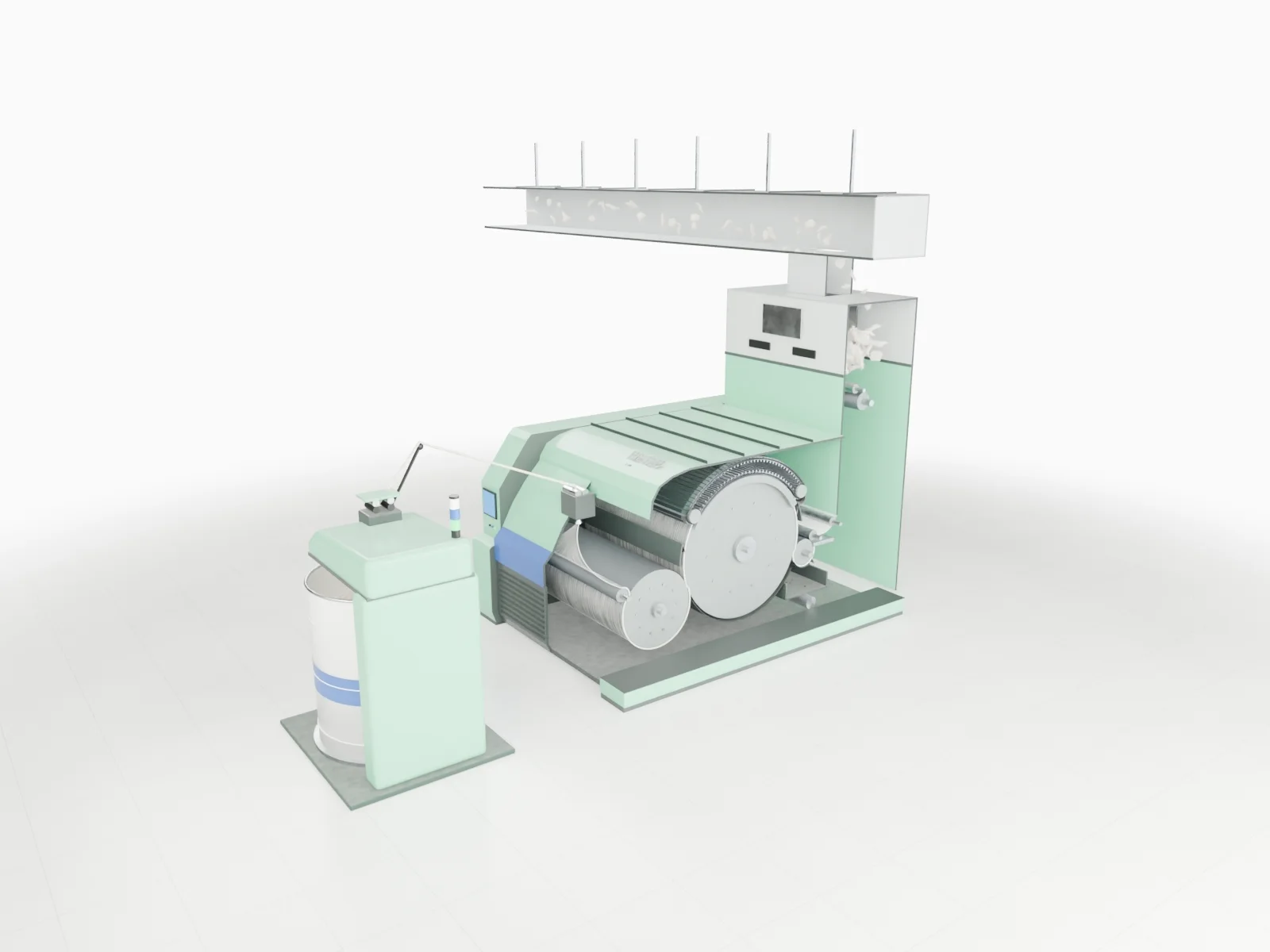
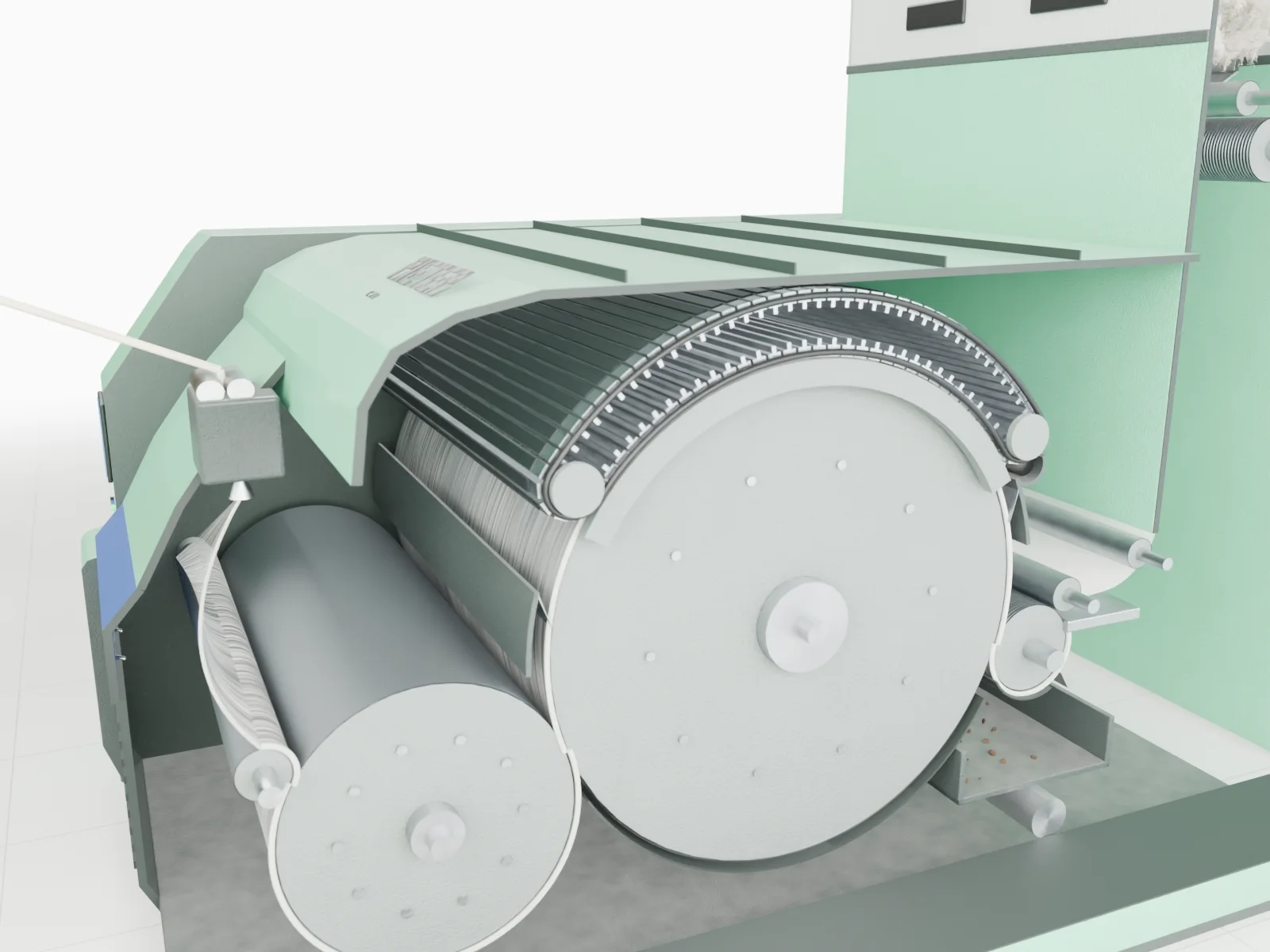
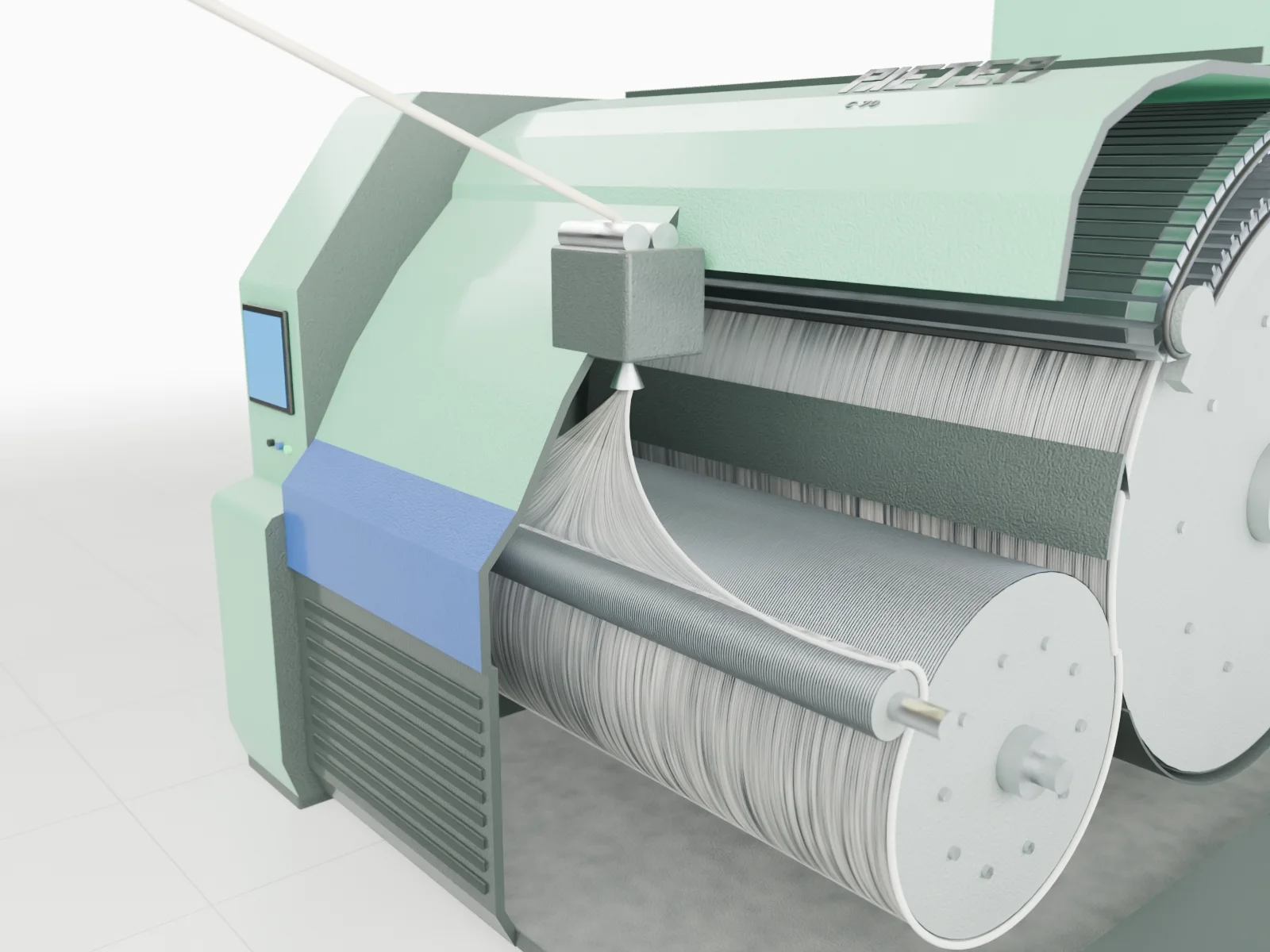
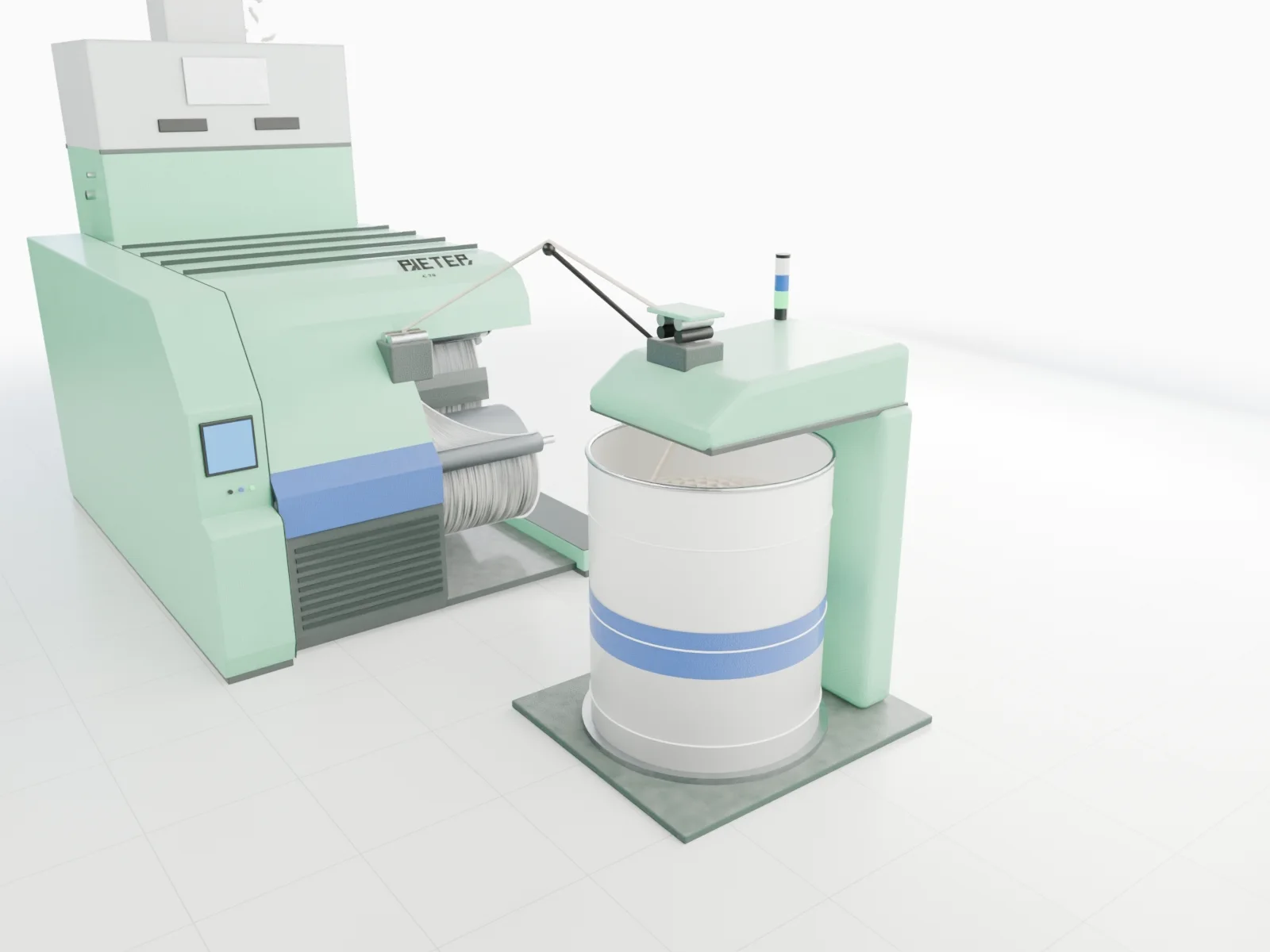
Tufts are separated into single fibres, cleaned of neps and fine trash, and formed into sliver.
3D illustration
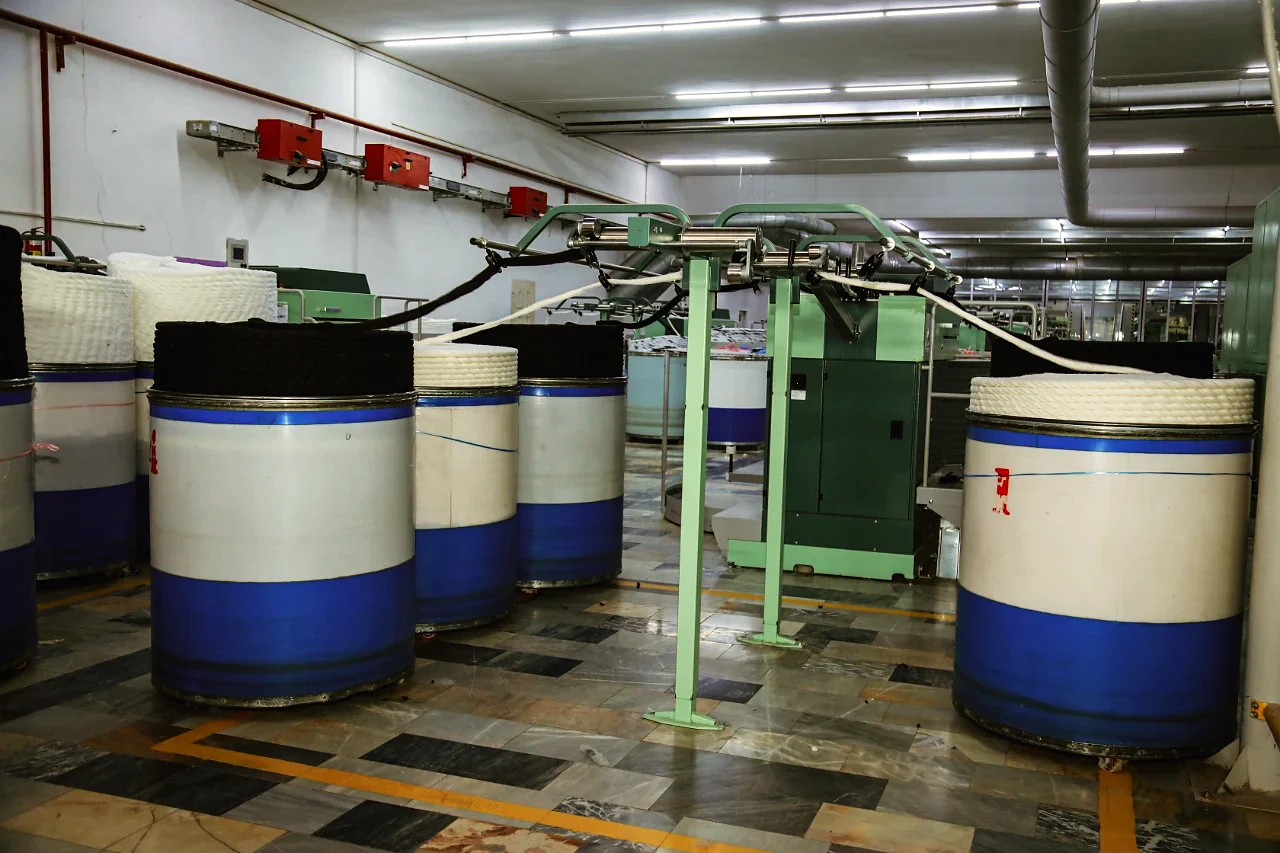
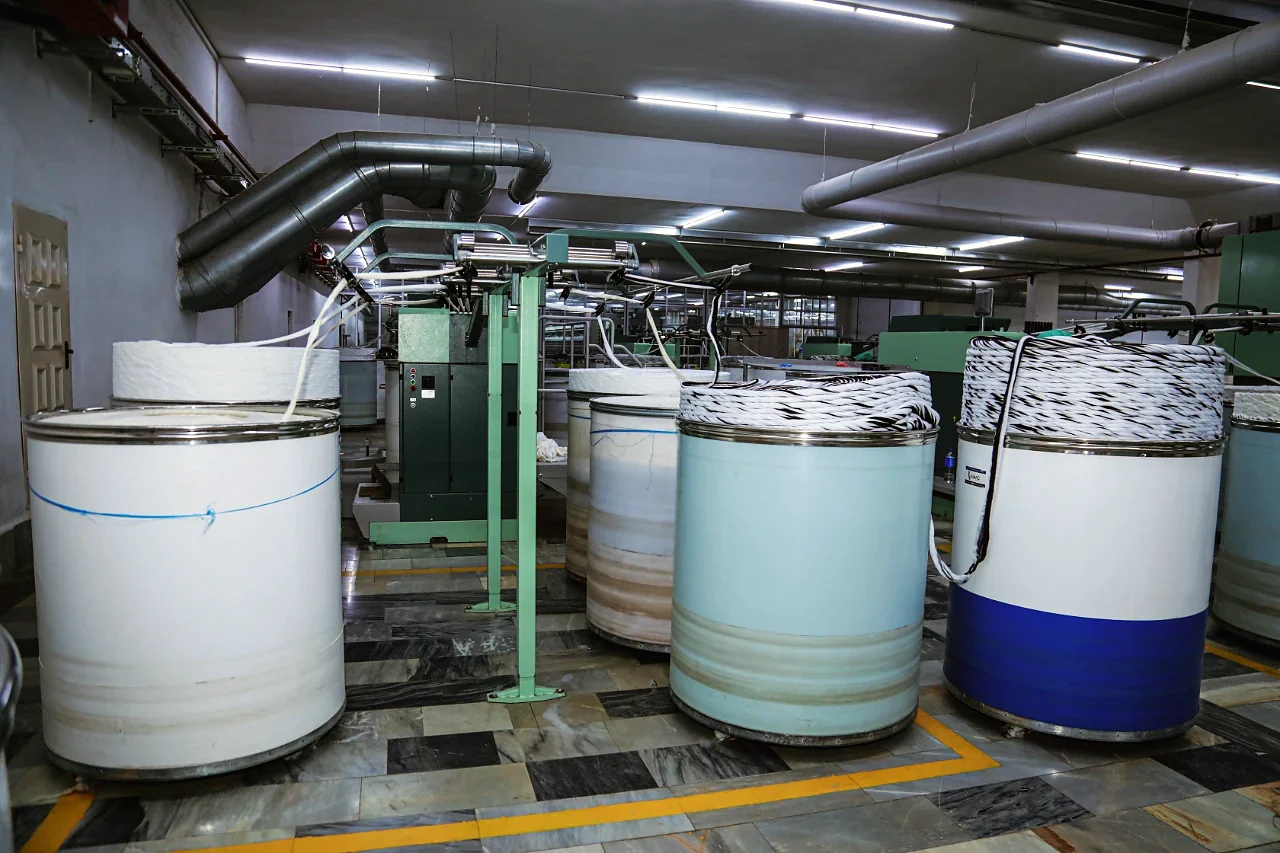
The card
The card is known as the heart of the spinning mill: its sliver largely decides the quality of the yarn.
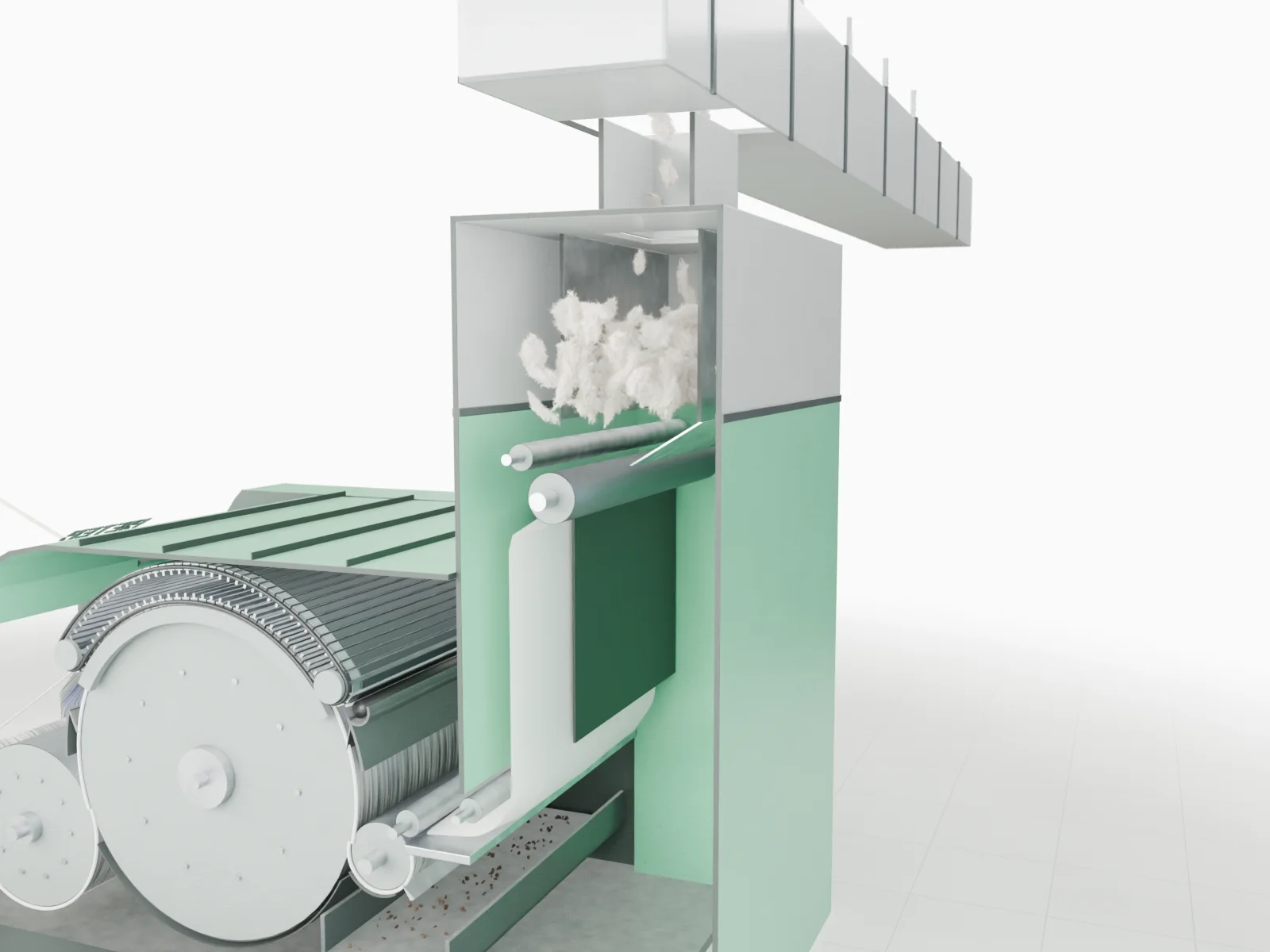
Even feed
The fibre enters the card as a layer of even thickness, the first condition for an even sliver.
The licker-in
The licker-in opens the layer into small tufts and removes heavier trash.
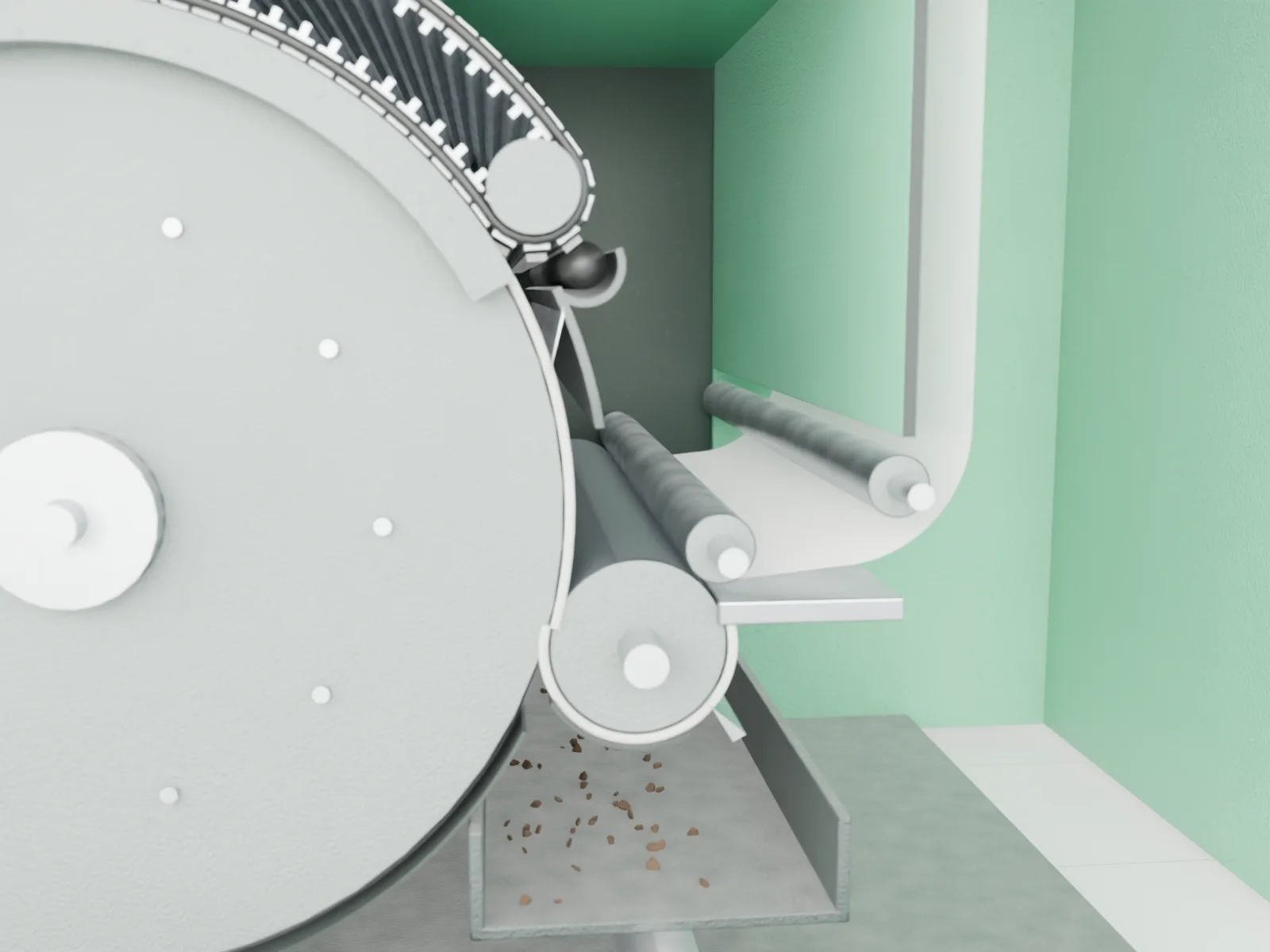
Cylinder and flats
Set about 0.075 mm apart, the cylinder and flats separate the fibres one by one and remove neps and short fibre.
Web into sliver
The fibres are taken off as a fine web and gathered into sliver, a soft, untwisted strand.
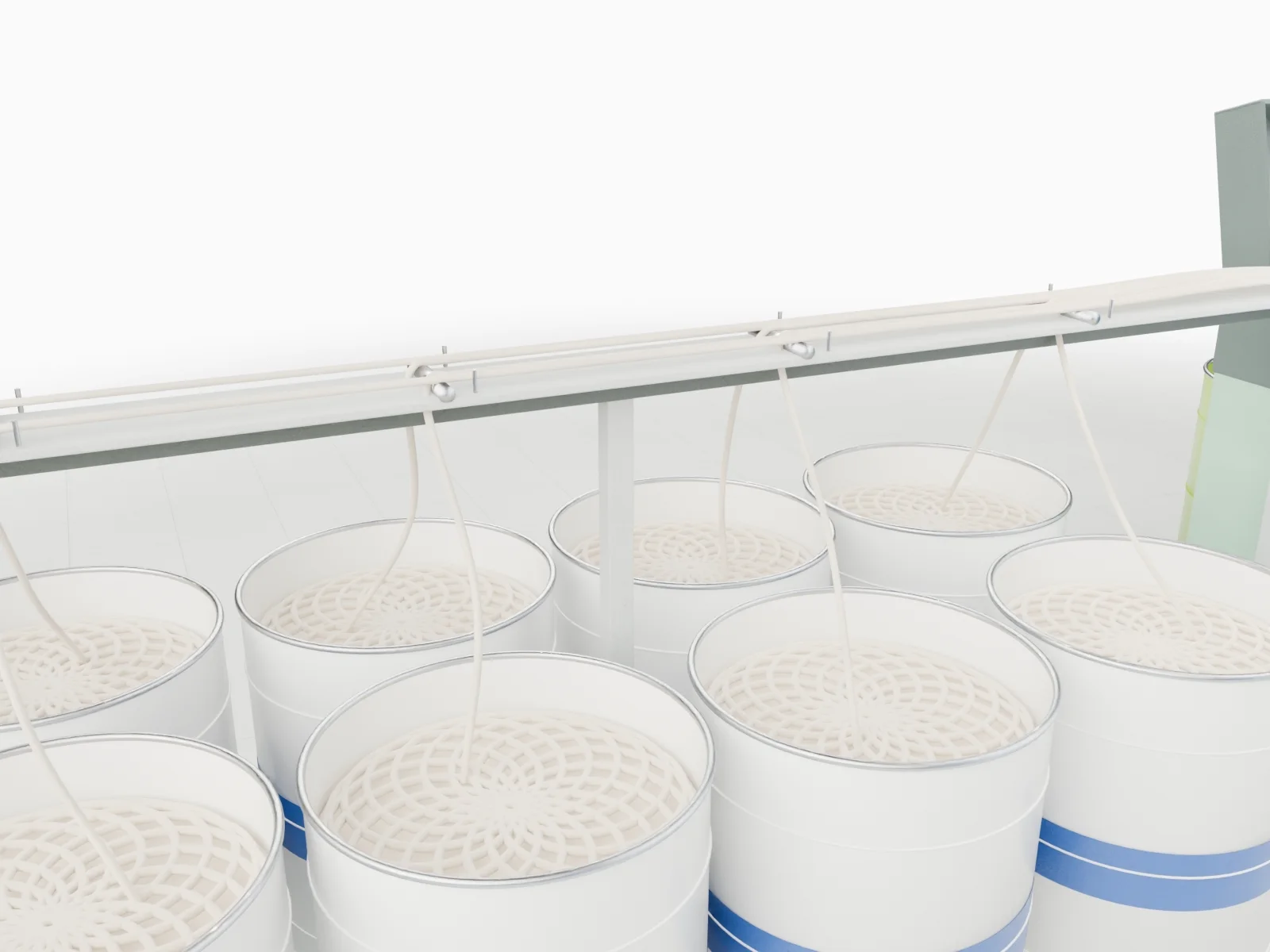
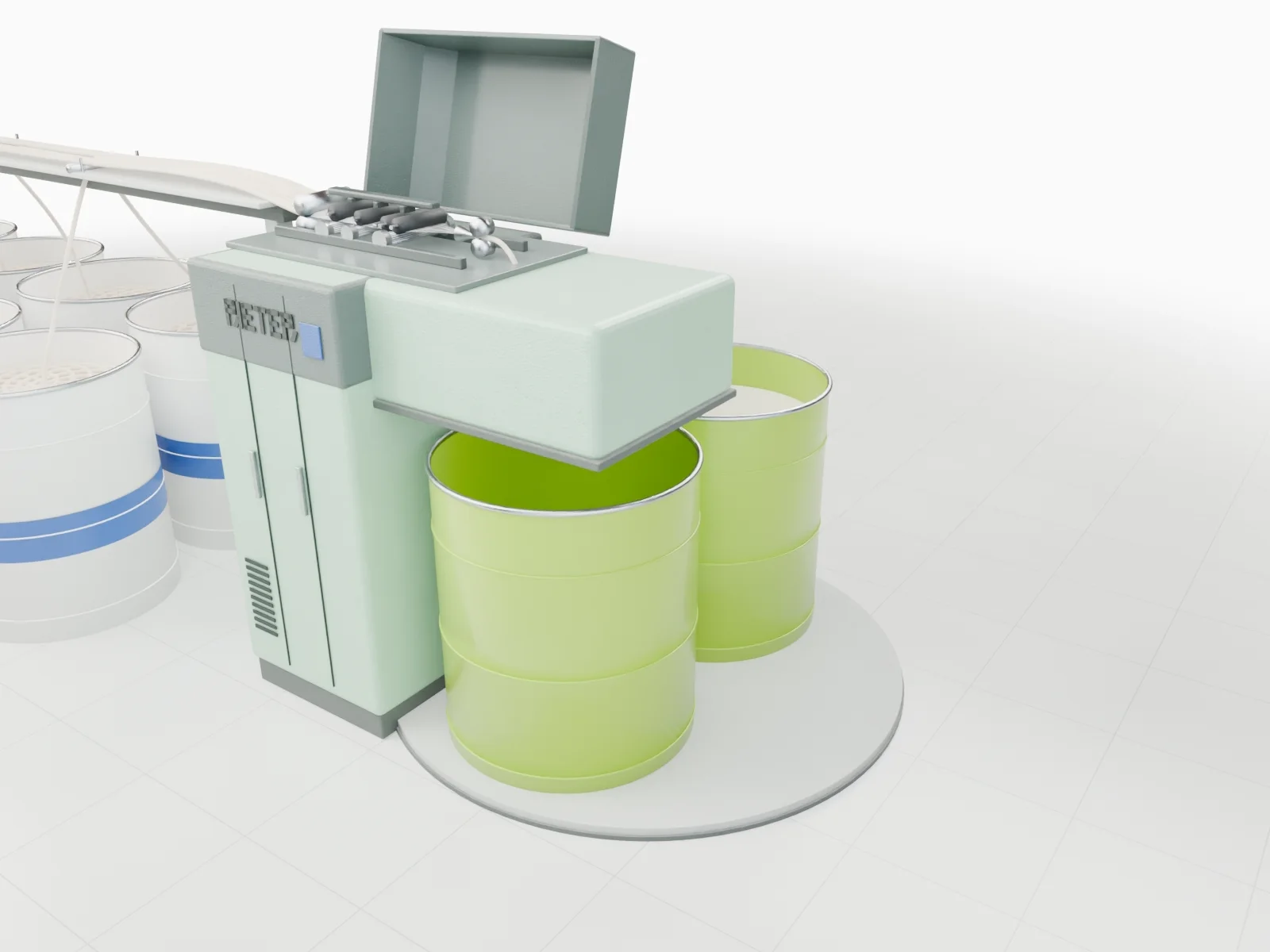
Into the can
The sliver is laid into cans and goes on to the draw frames.
04
 DrawingSeveral slivers are combined and drawn out into one, more even sliver.Start here
Stage 4 of 7 · Drawing
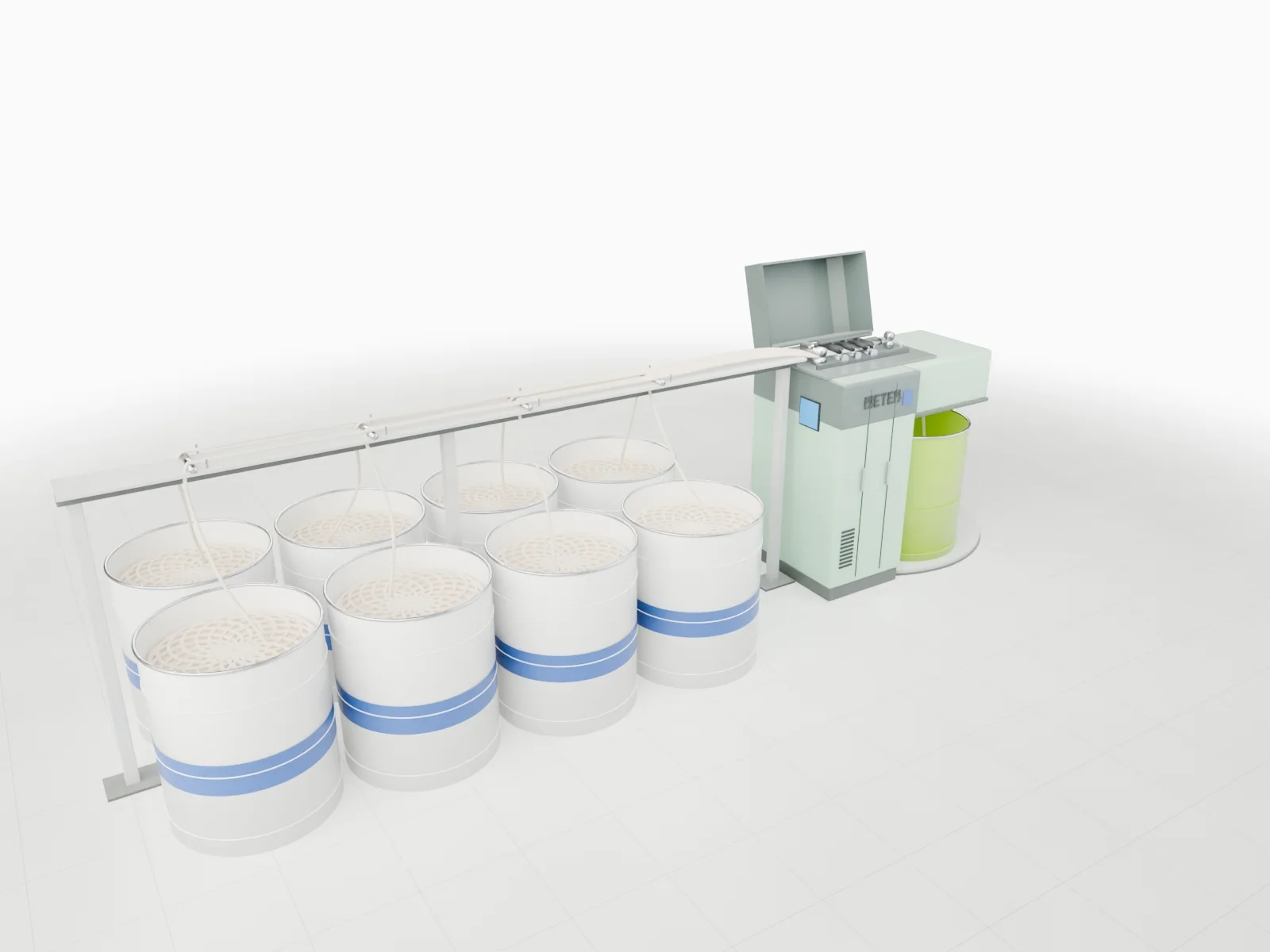
Several slivers are combined and drawn out into one, more even sliver.
3D illustration
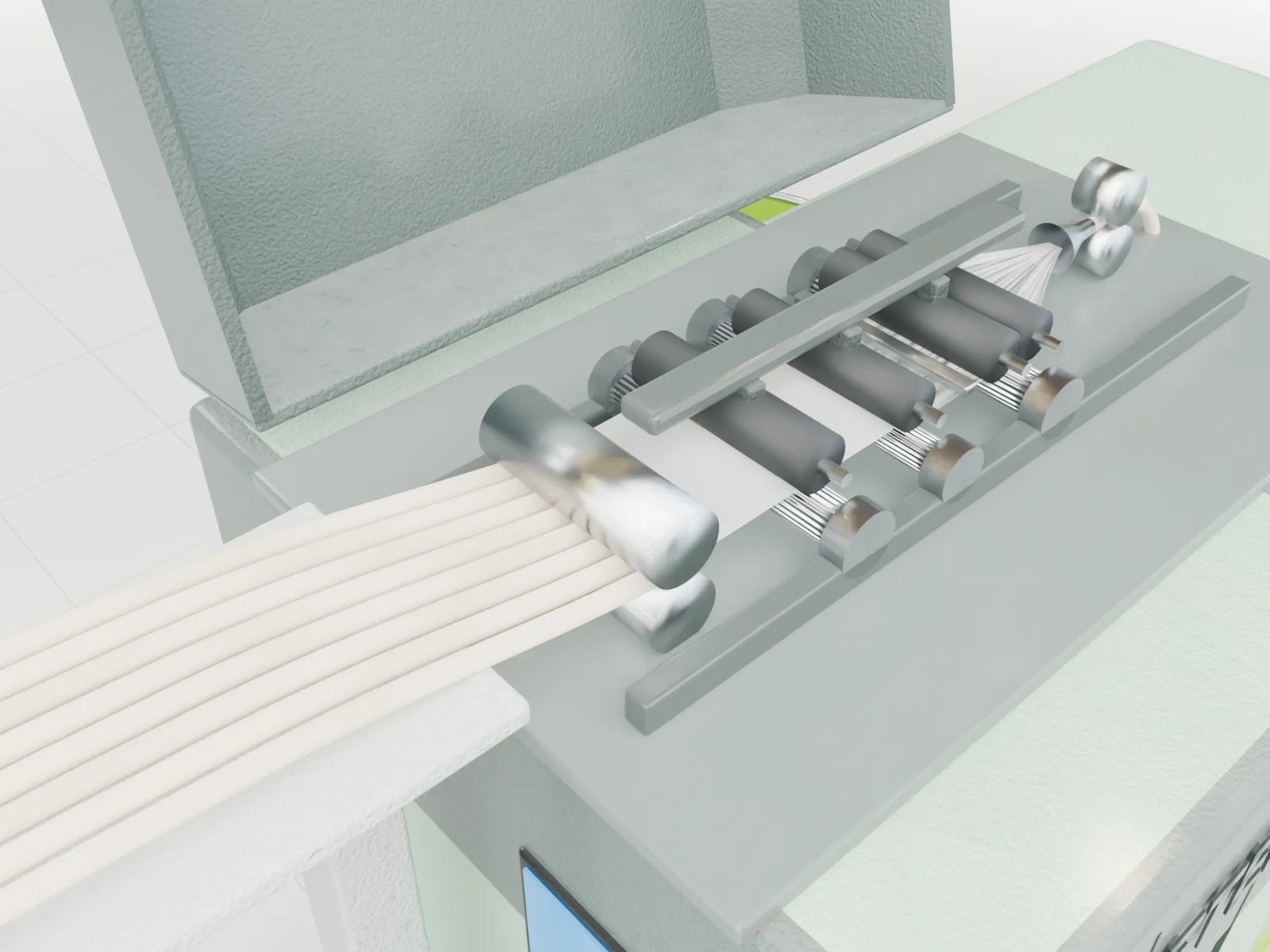
Doubling
Eight card slivers run together, so their thick and thin places average out.
The creel
The creel feeds the slivers in without stretching them before the drafting zone.
Autolevelling
An autoleveller measures the incoming slivers and adjusts the draft to keep the sliver weight constant.
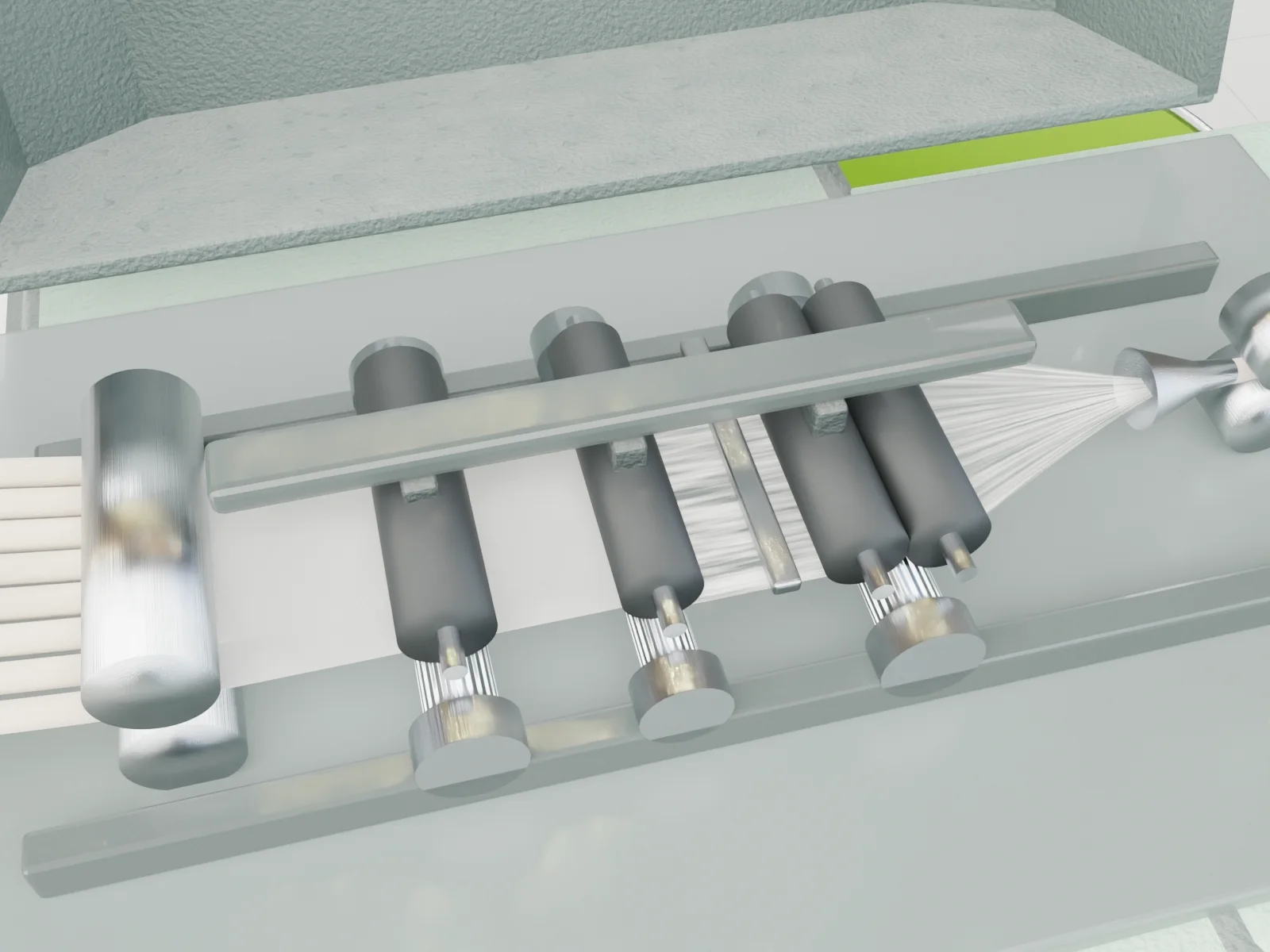
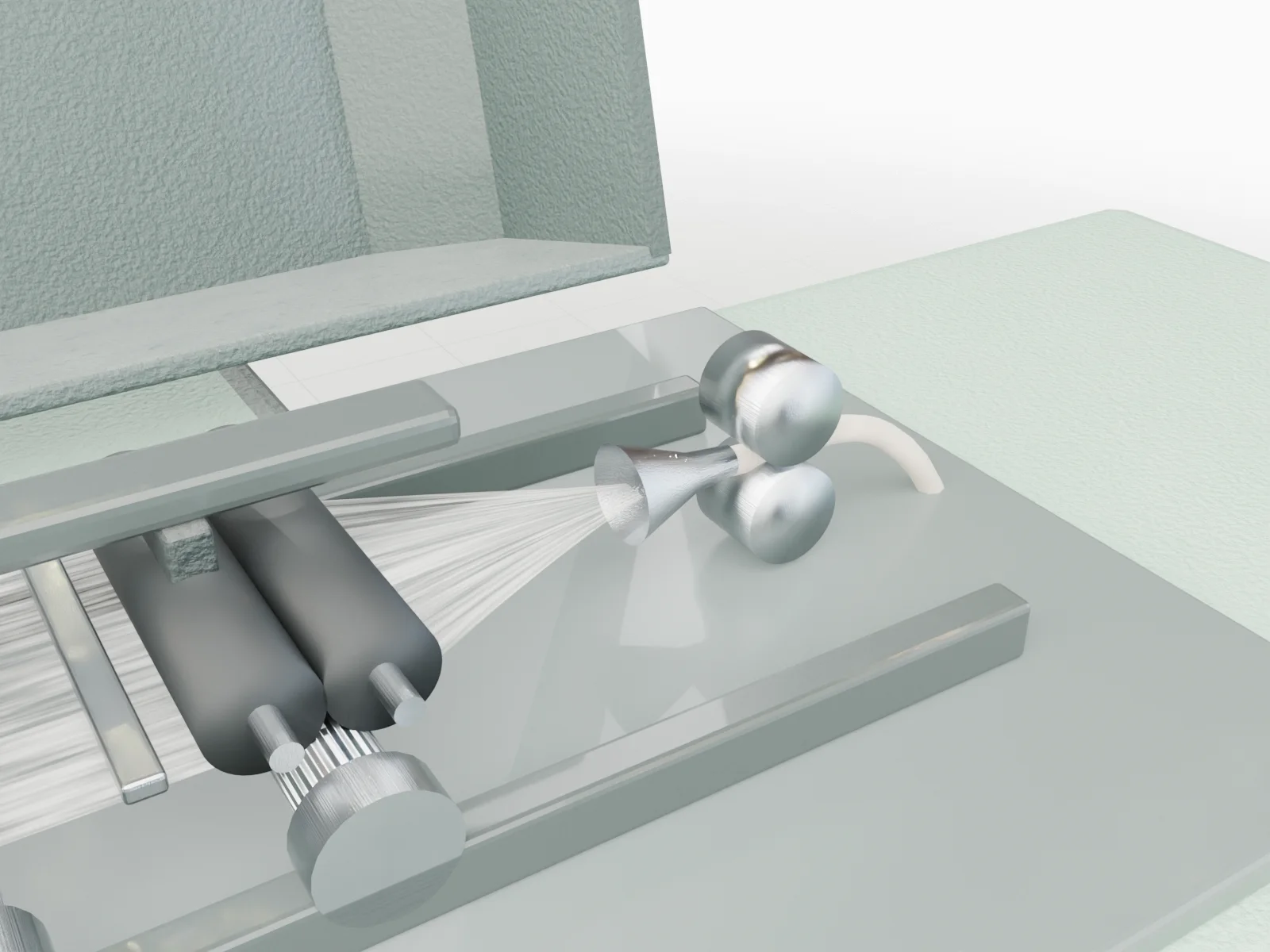
Drafting
Roller pairs, each running faster than the last, draw the slivers out and straighten the fibres.
One sliver again
The drafted fibres are gathered into a single sliver, more even than any of the eight.
At BHRRieter RSB-D 40 draw frames
Can change
Full cans are exchanged automatically and go on to the roving frames.
05
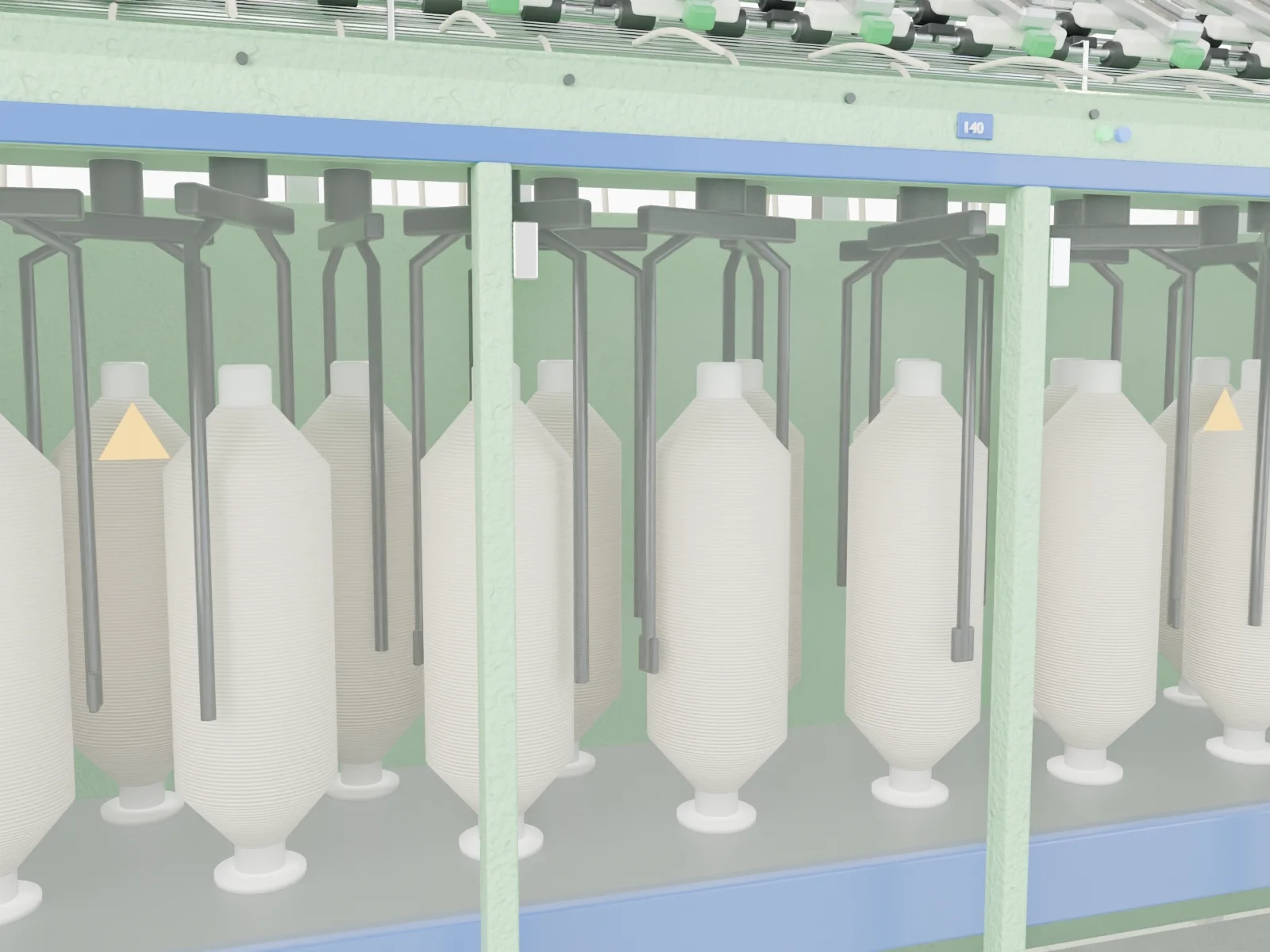
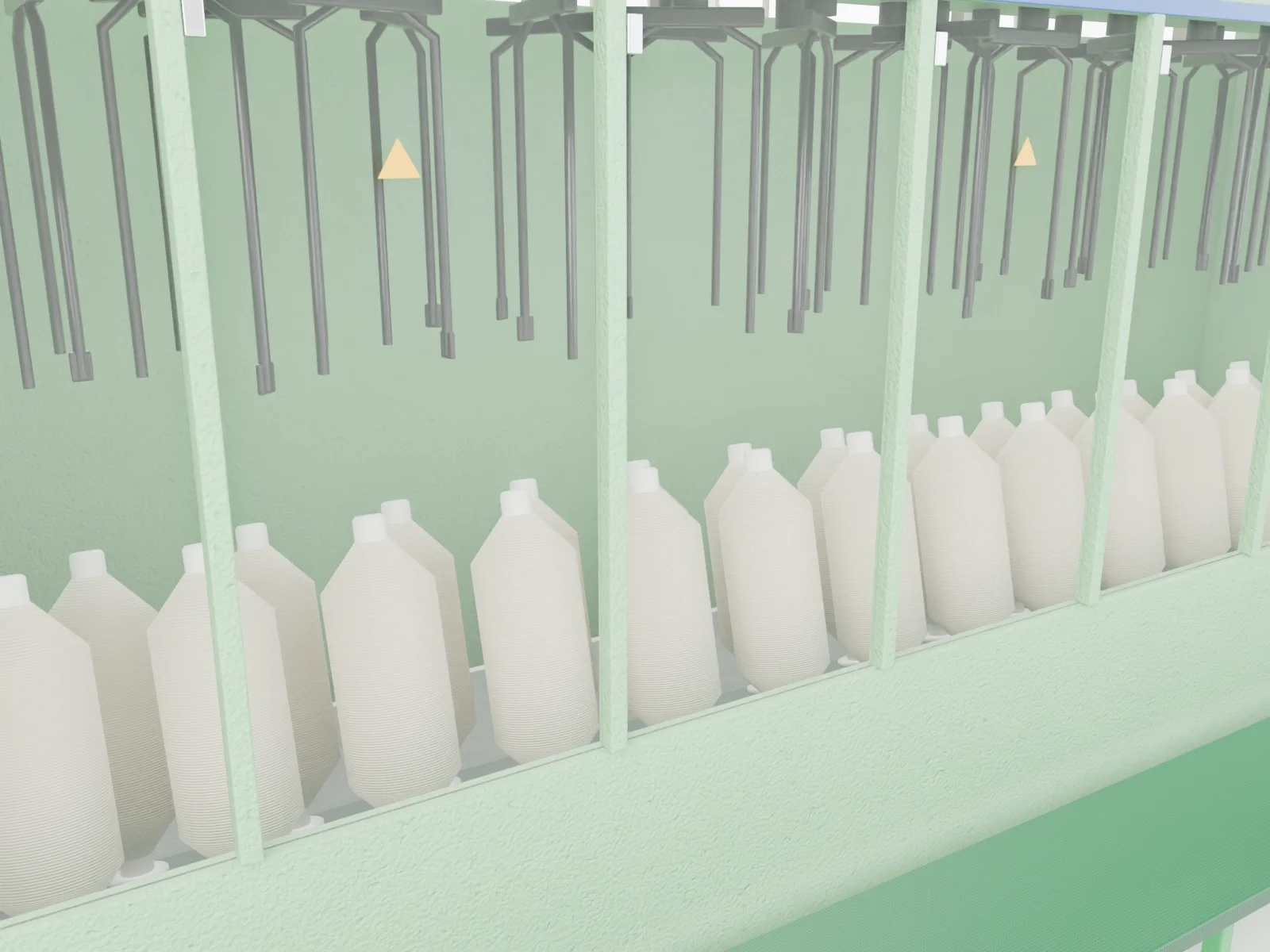
 RovingThe sliver is drawn finer and given a light twist for the ring frames.Start here
Stage 5 of 7 · Roving
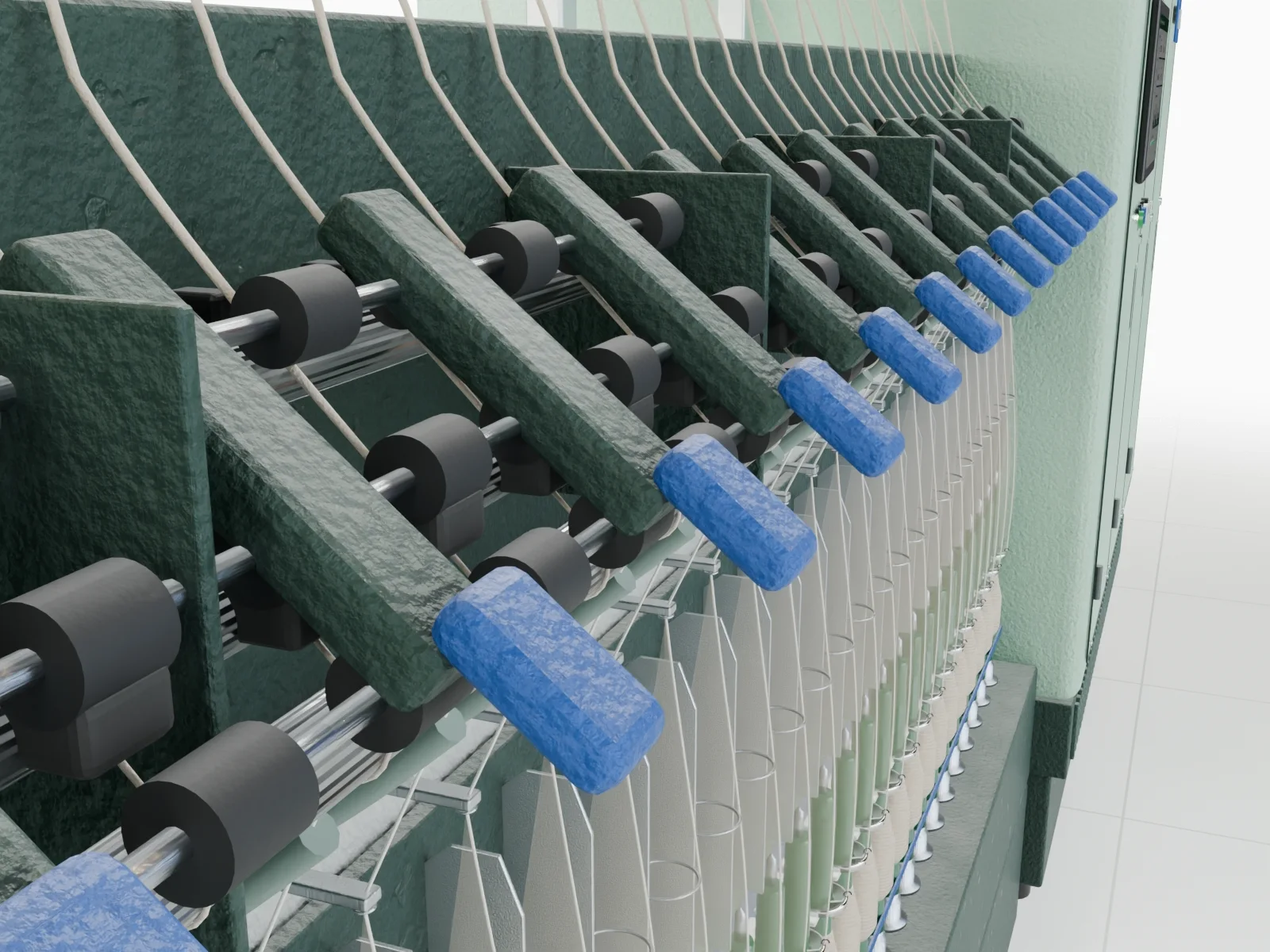
The sliver is drawn finer and given a light twist for the ring frames.
3D illustration
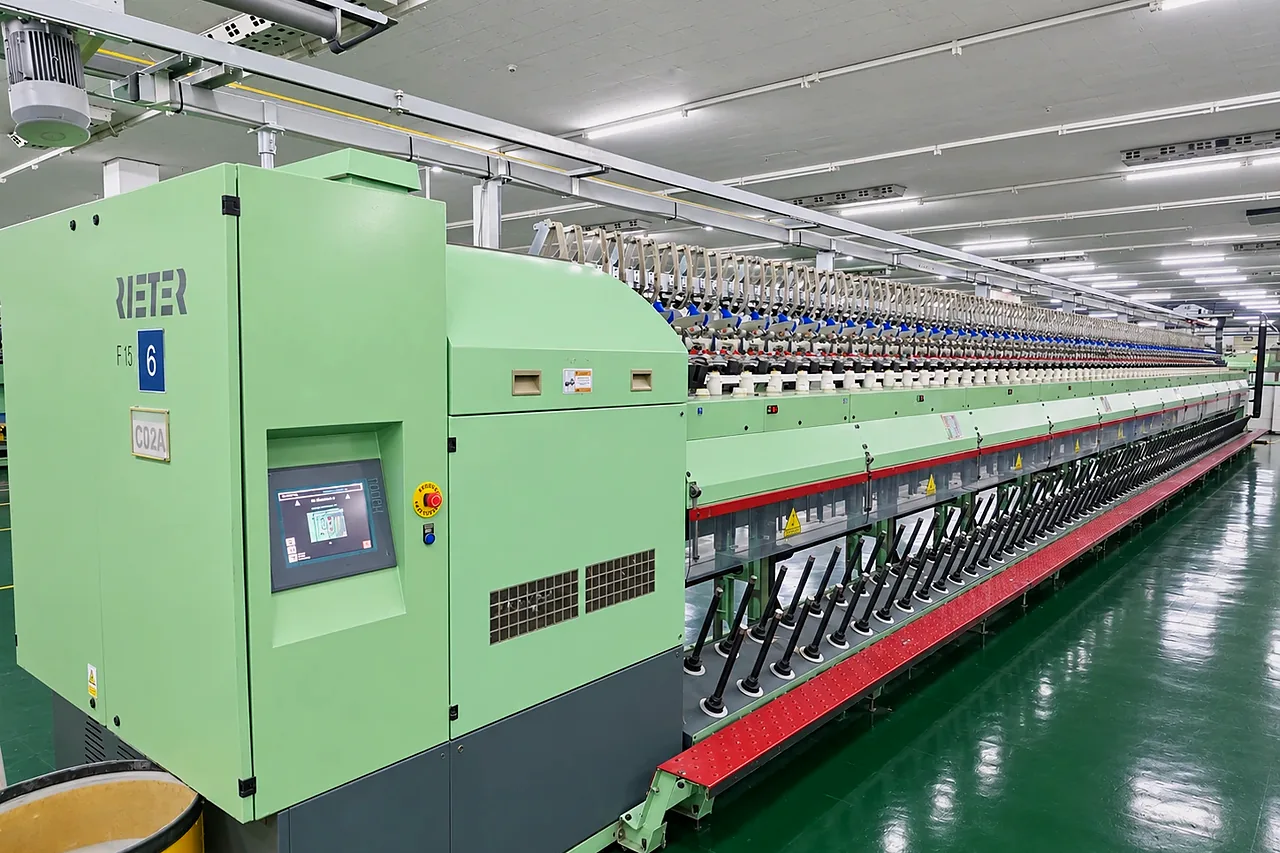
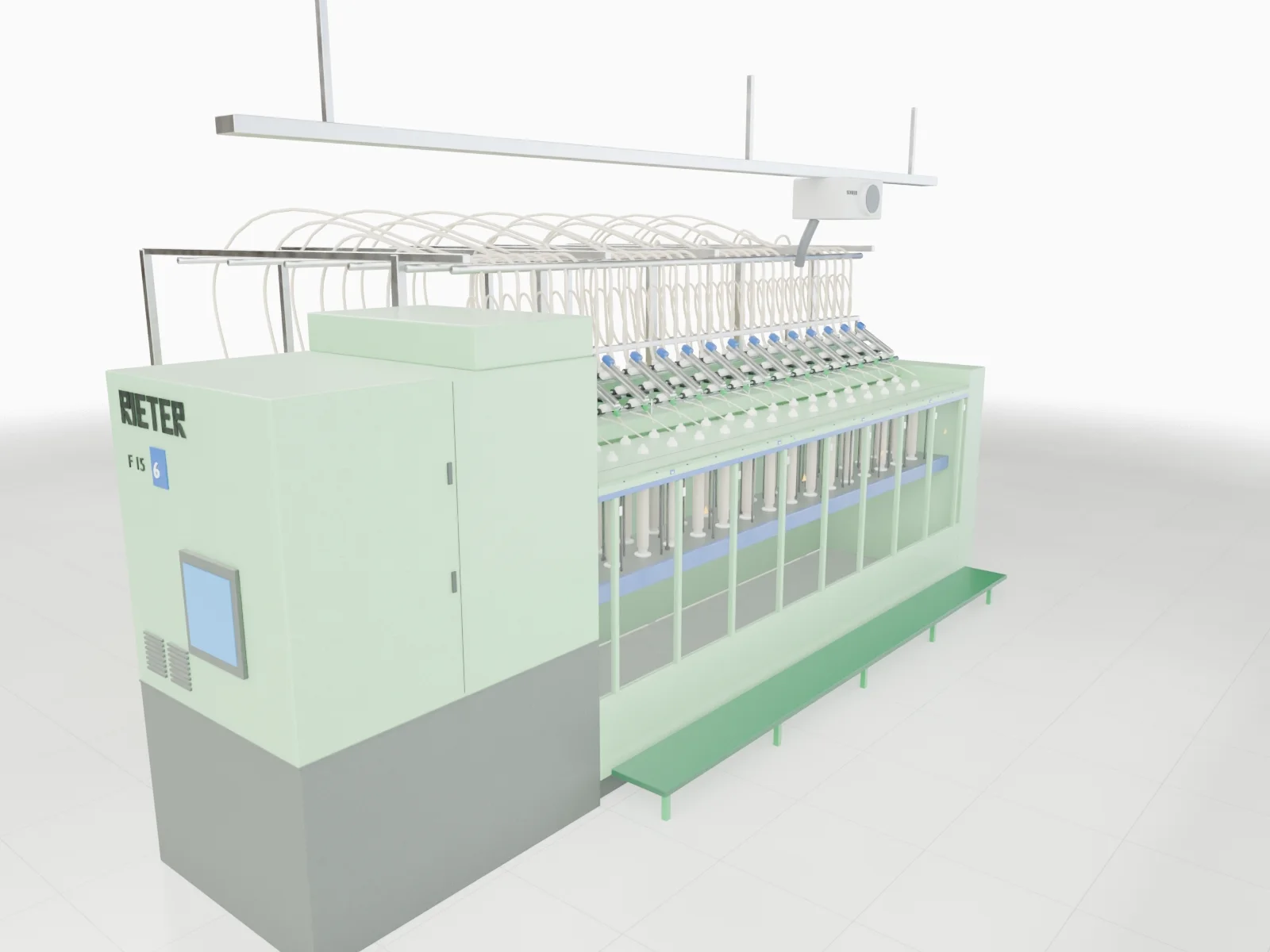
The roving frame
Sliver is too thick for the ring frame; the roving frame reduces it to an intermediate strand, roving.
At BHRRieter F 15 roving frames
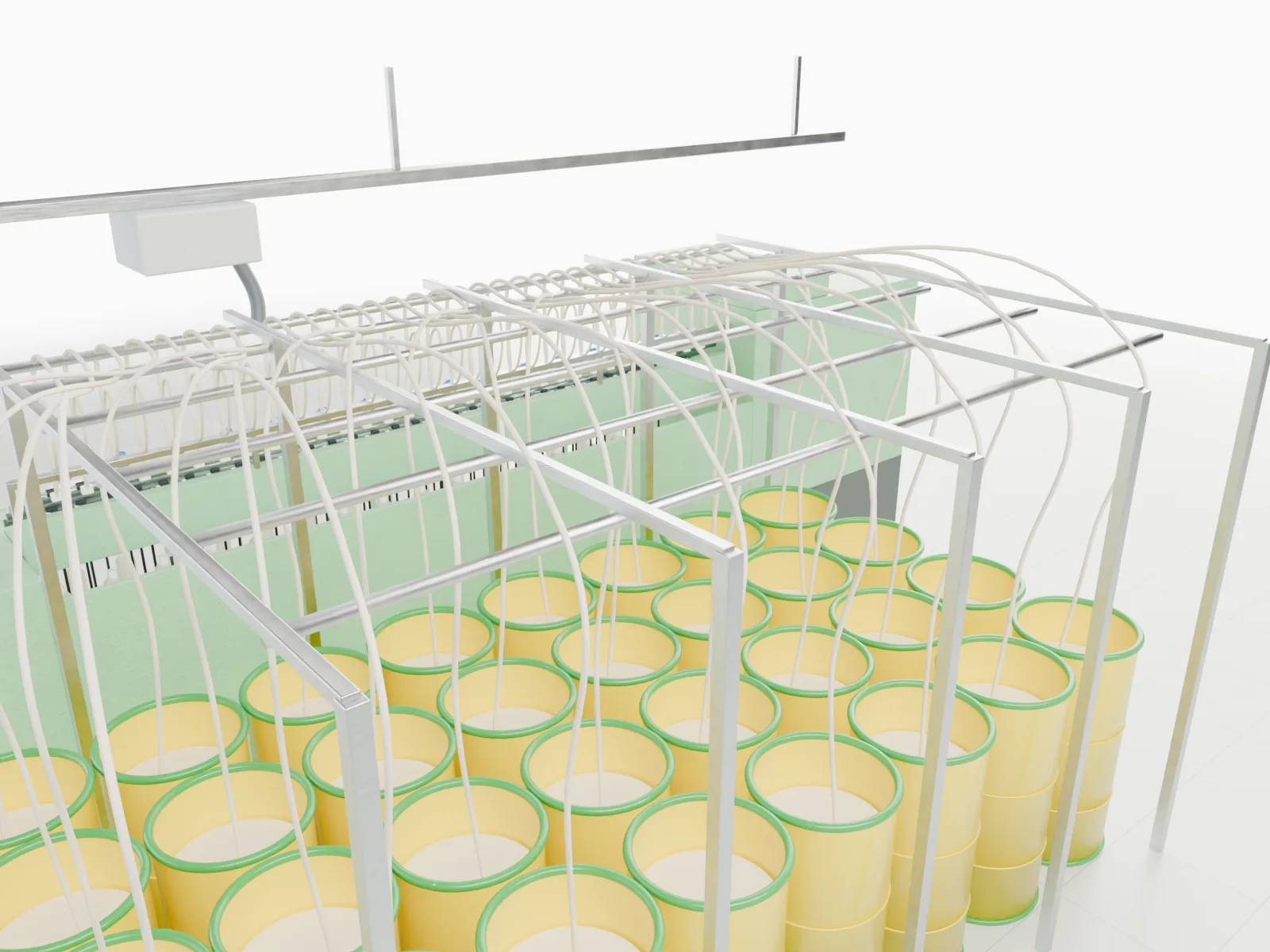
From the cans
Each spindle is fed from its own can of drawn sliver.
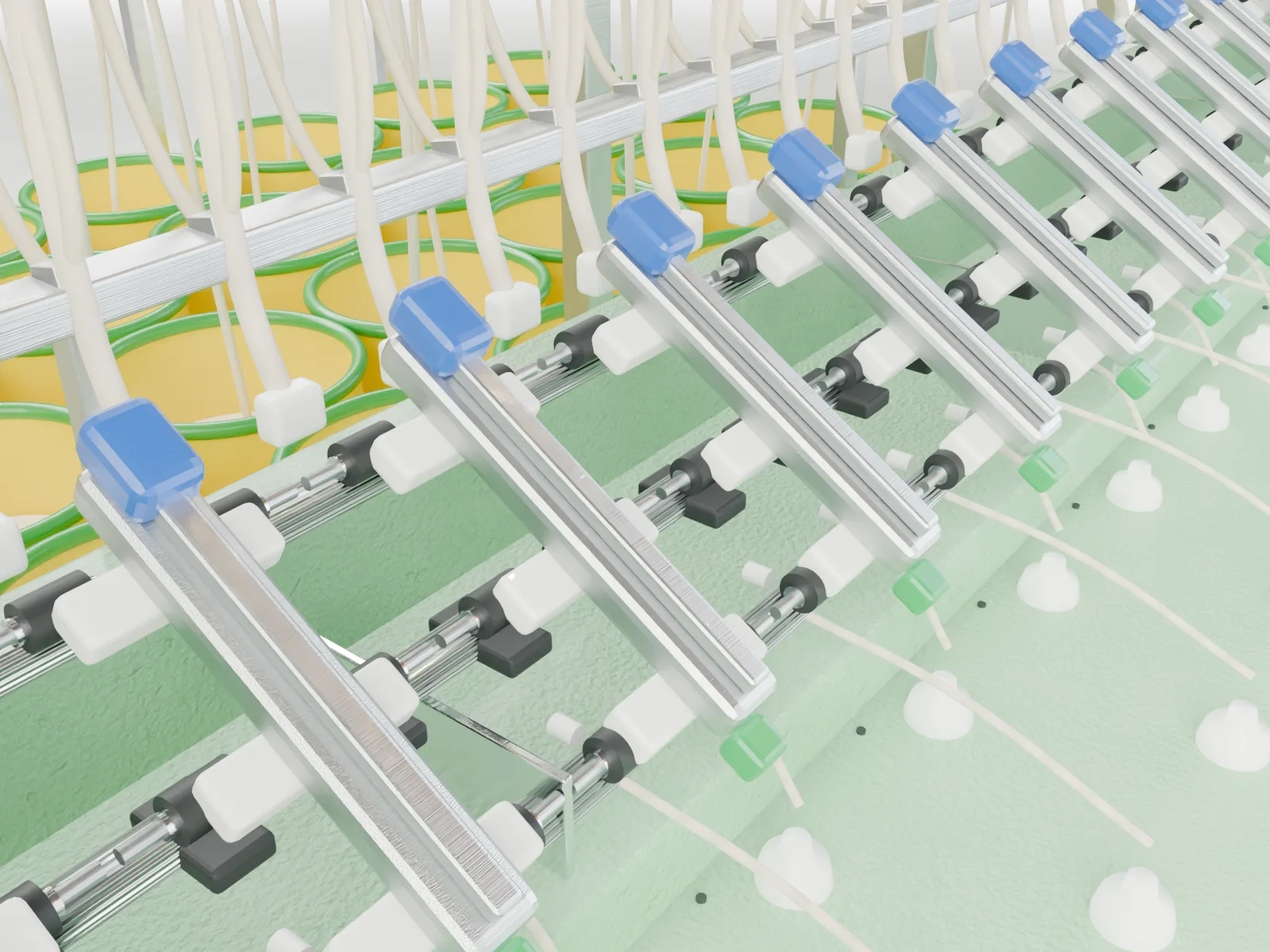
Drafting
An apron drafting system reduces the sliver many times while keeping the fibres under control.
The flyer
The flyer adds a light twist, enough to hold the roving together on its way to the ring frame.
Full bobbins
Full bobbins are doffed and taken to the ring frames.
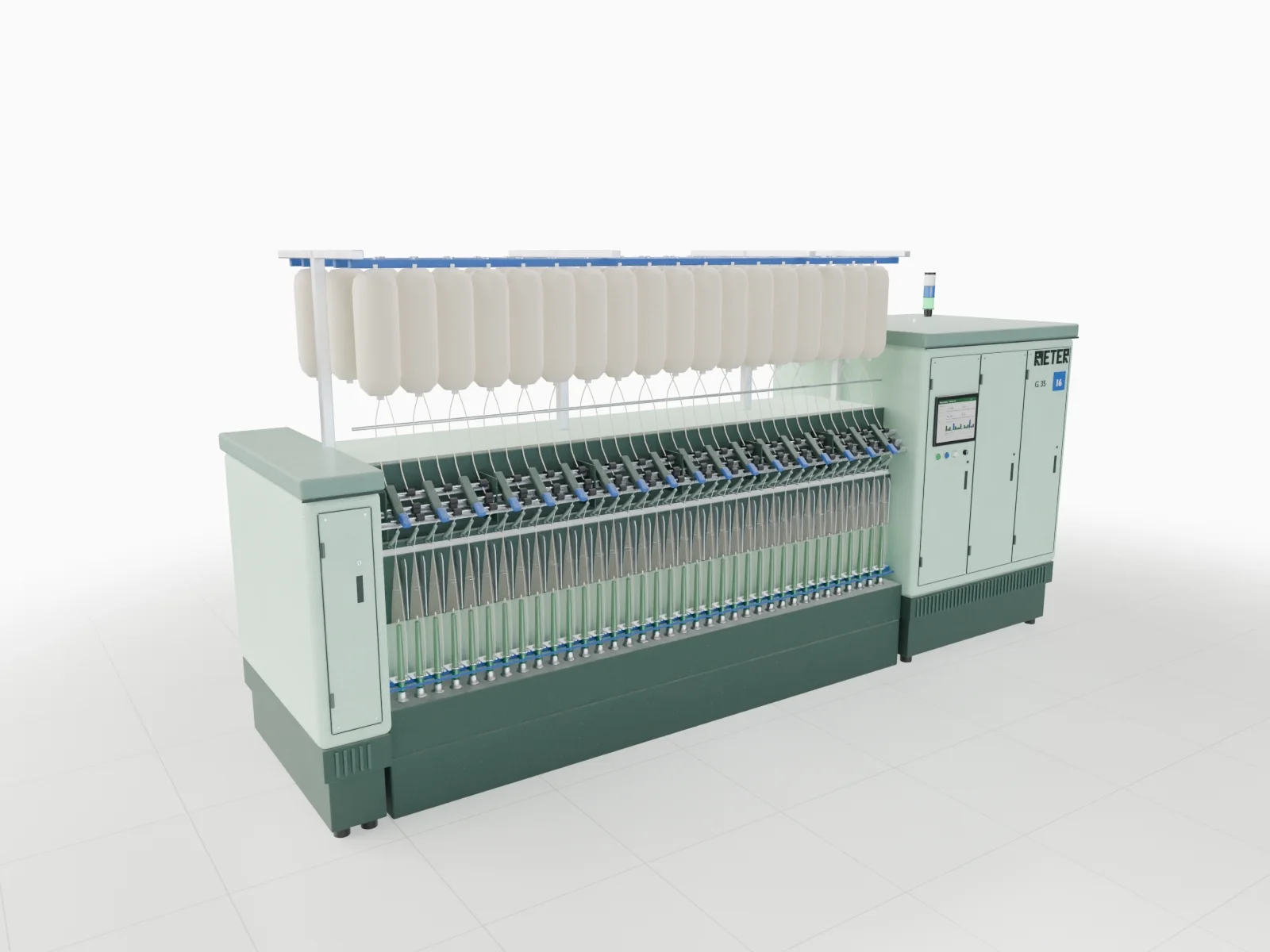
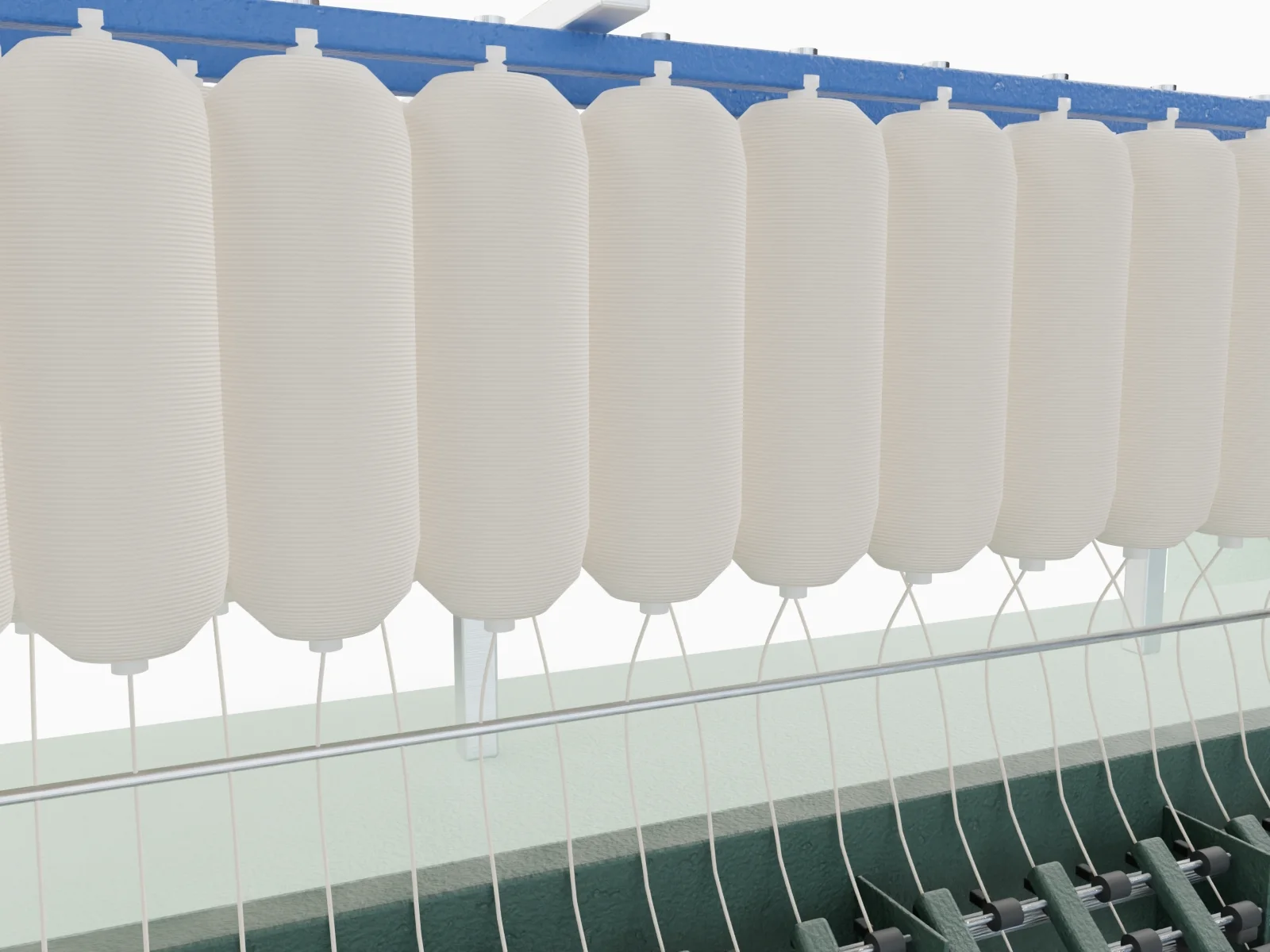
06
 Ring spinningThe roving is drawn to the final count and twisted into yarn.Start here
Stage 6 of 7 · Ring spinning
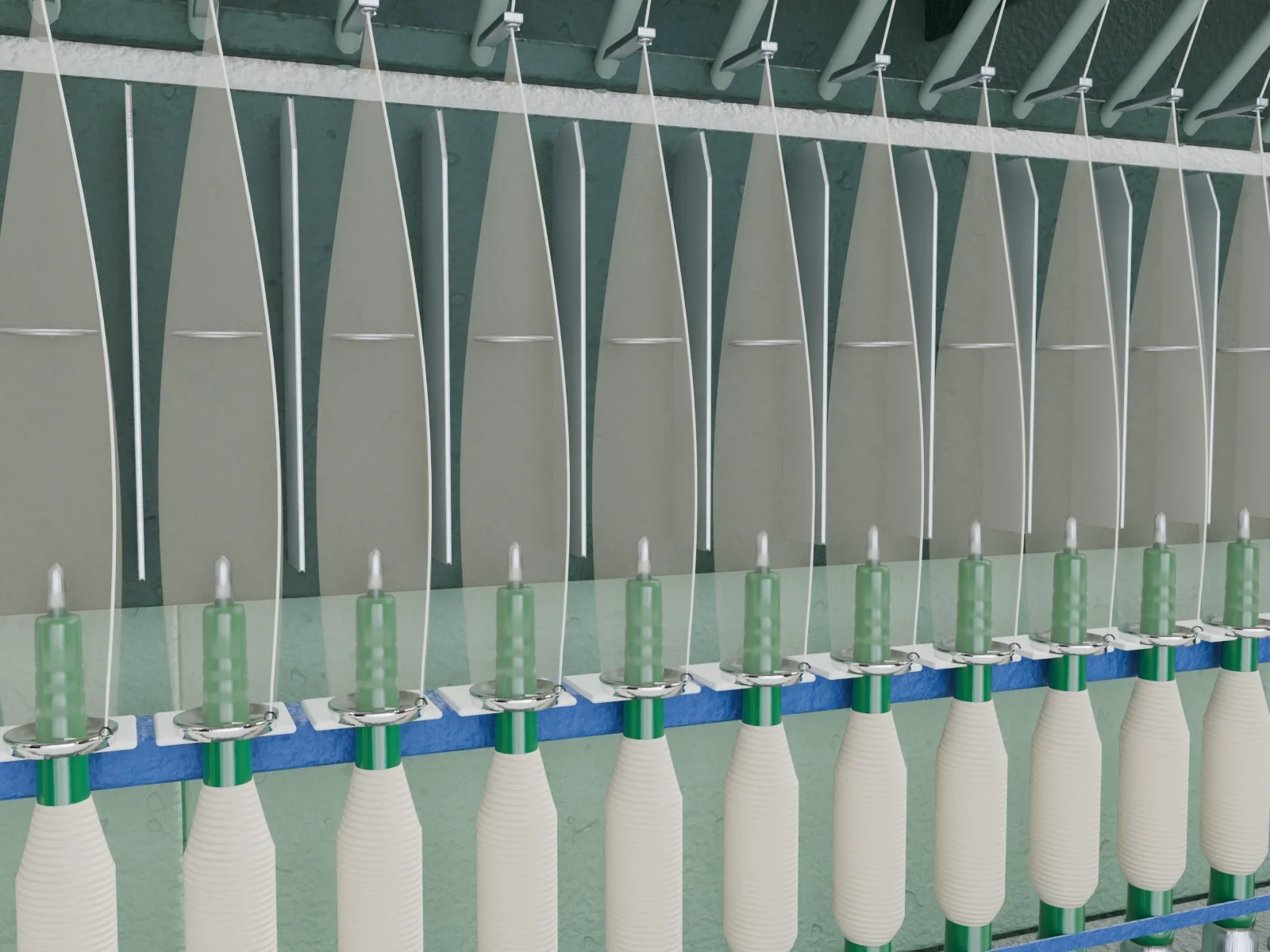
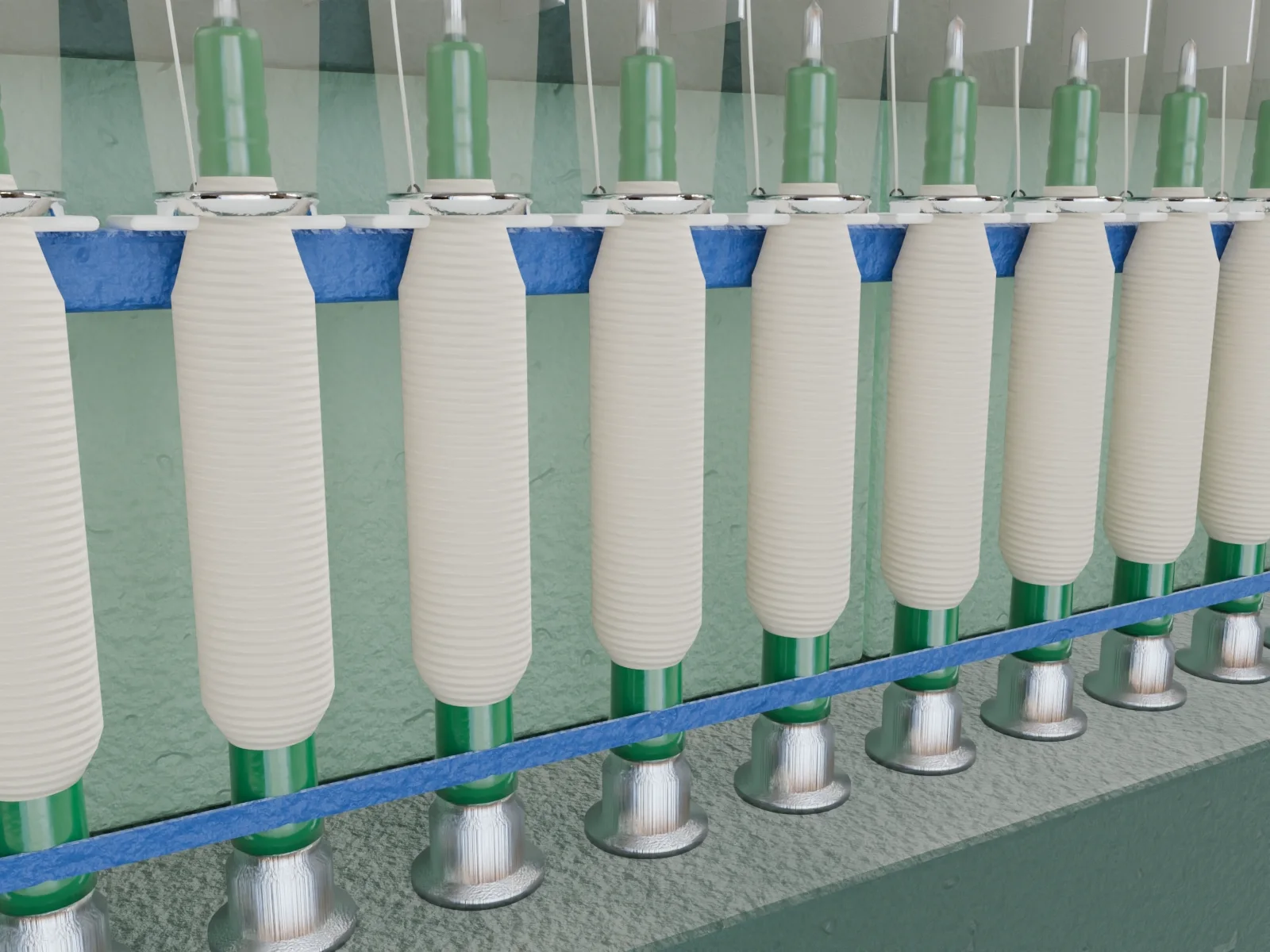
The roving is drawn to the final count and twisted into yarn.
3D illustration
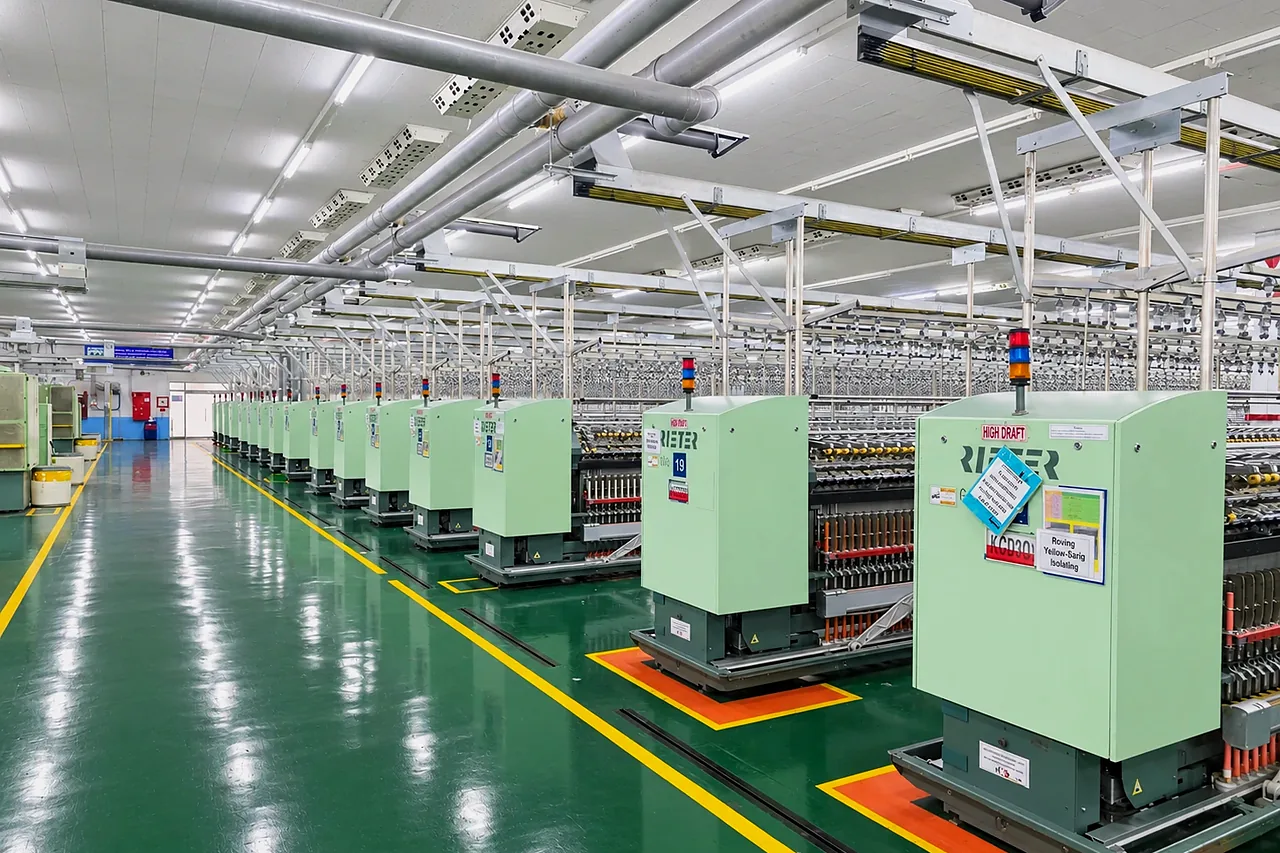
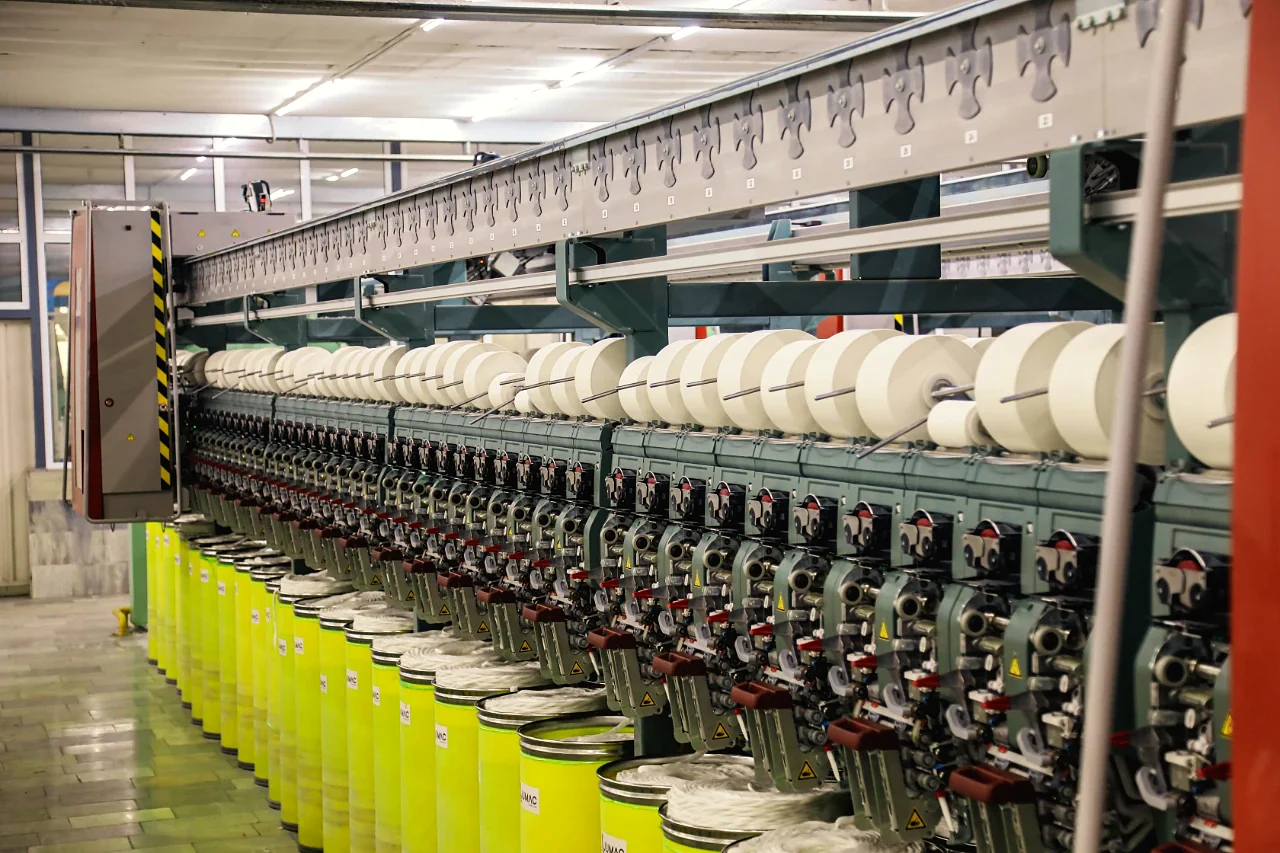
The ring frame
Ring spinning is slower than open-end or air-jet, but its yarn is stronger and can be spun finer.
At BHRRieter G 35 ring frames in Bukhara
Roving in
Roving bobbins from the previous stage supply the spinning positions.
Drafting
A double-apron drafting system draws the roving out to the fineness of the yarn.
Twist
The spindle and traveller insert the twist that binds the fibres into yarn and gives it strength.
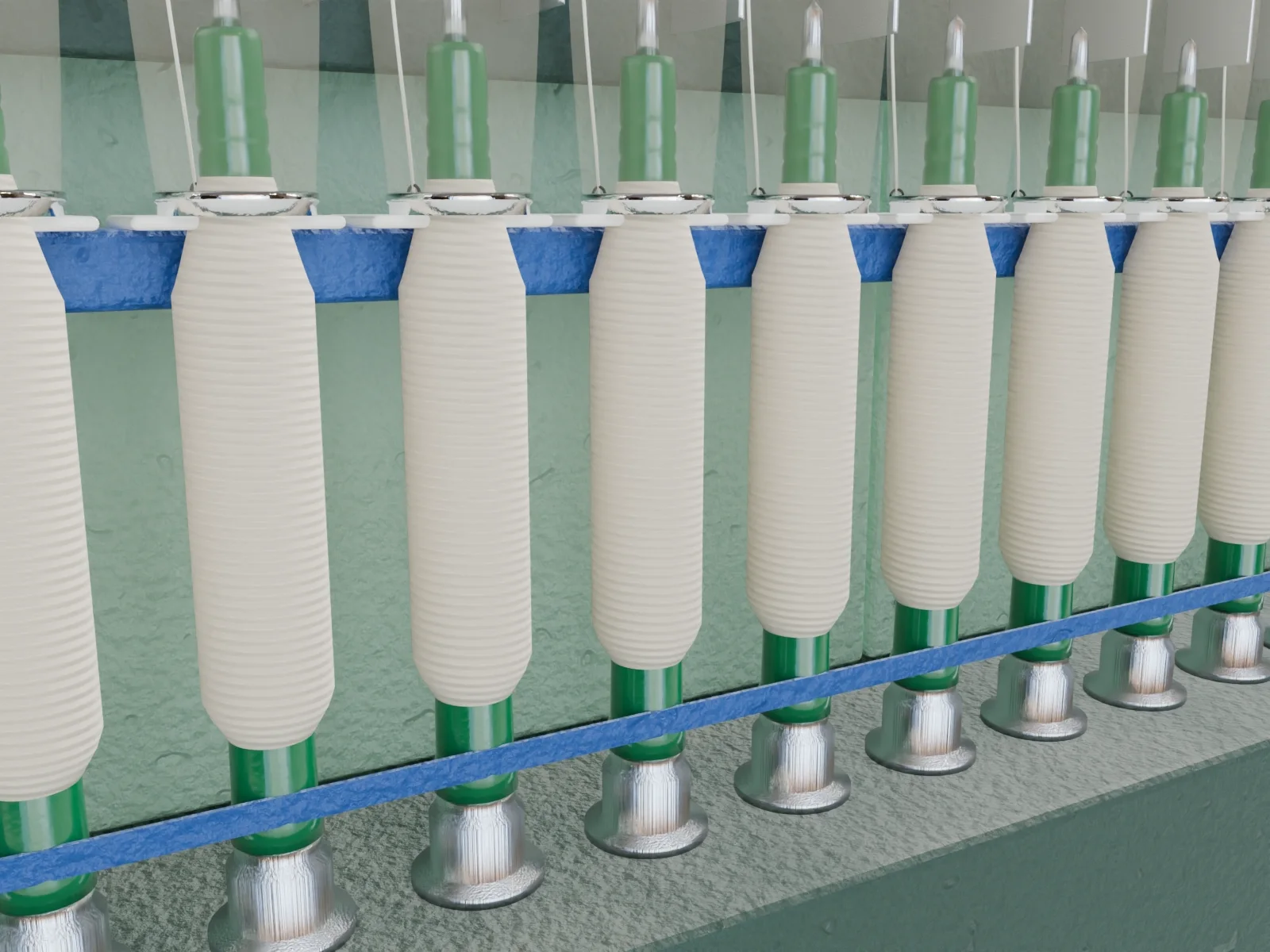
Full cops
Full cops are doffed automatically and sent to winding.
Open-end and air-jet
Open-end spinning is much faster and suits coarser counts; air-jet yarn has low hairiness and resists pilling.
07
 Winding and packingThe yarn is rewound onto cones, cleared of faults, tested and packed.Start here
Stage 7 of 7 · Winding and packing
The yarn is rewound onto cones, cleared of faults, tested and packed.
3D illustration
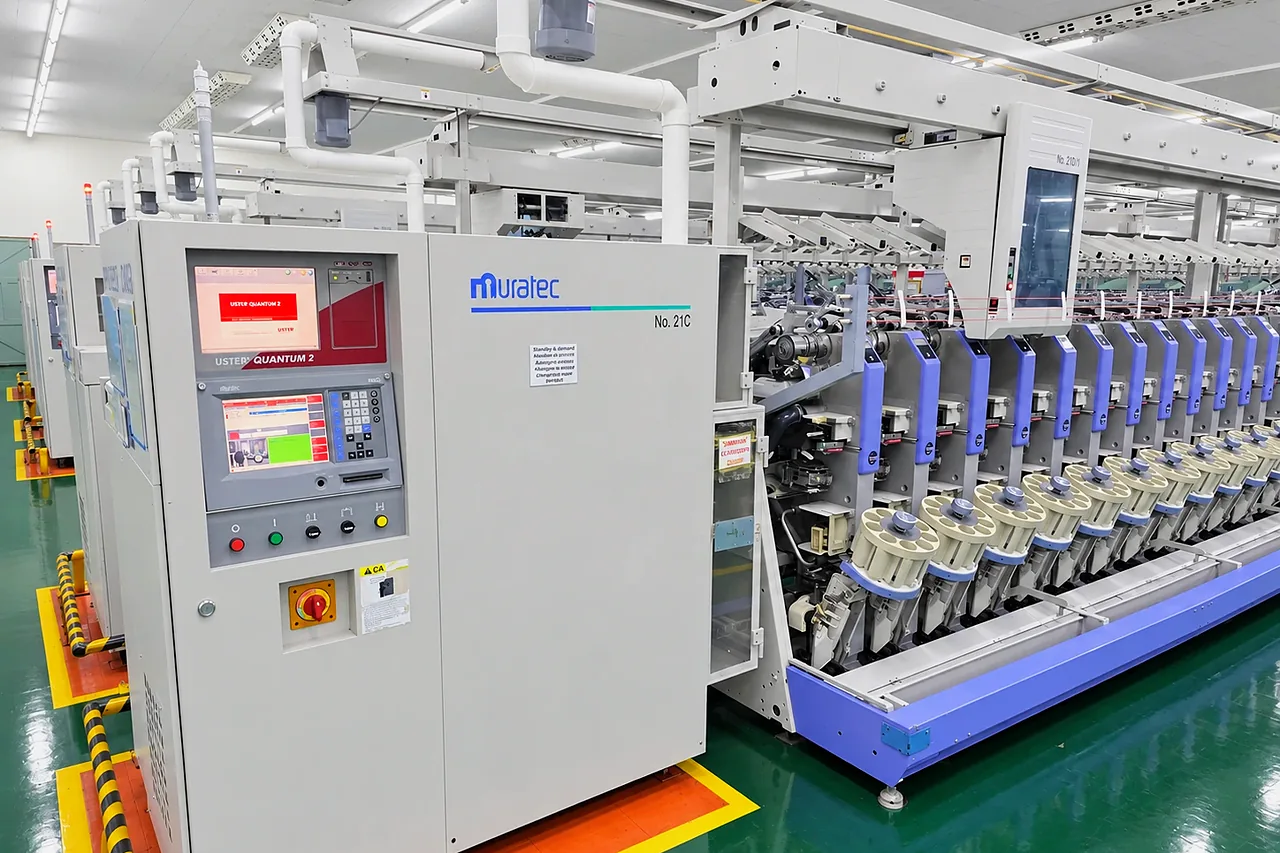
Winding
Ring yarn is rewound from small cops onto large cones, the form in which it is shipped.
At BHRMurata No. 21C PROCESS CONER winders
The magazine
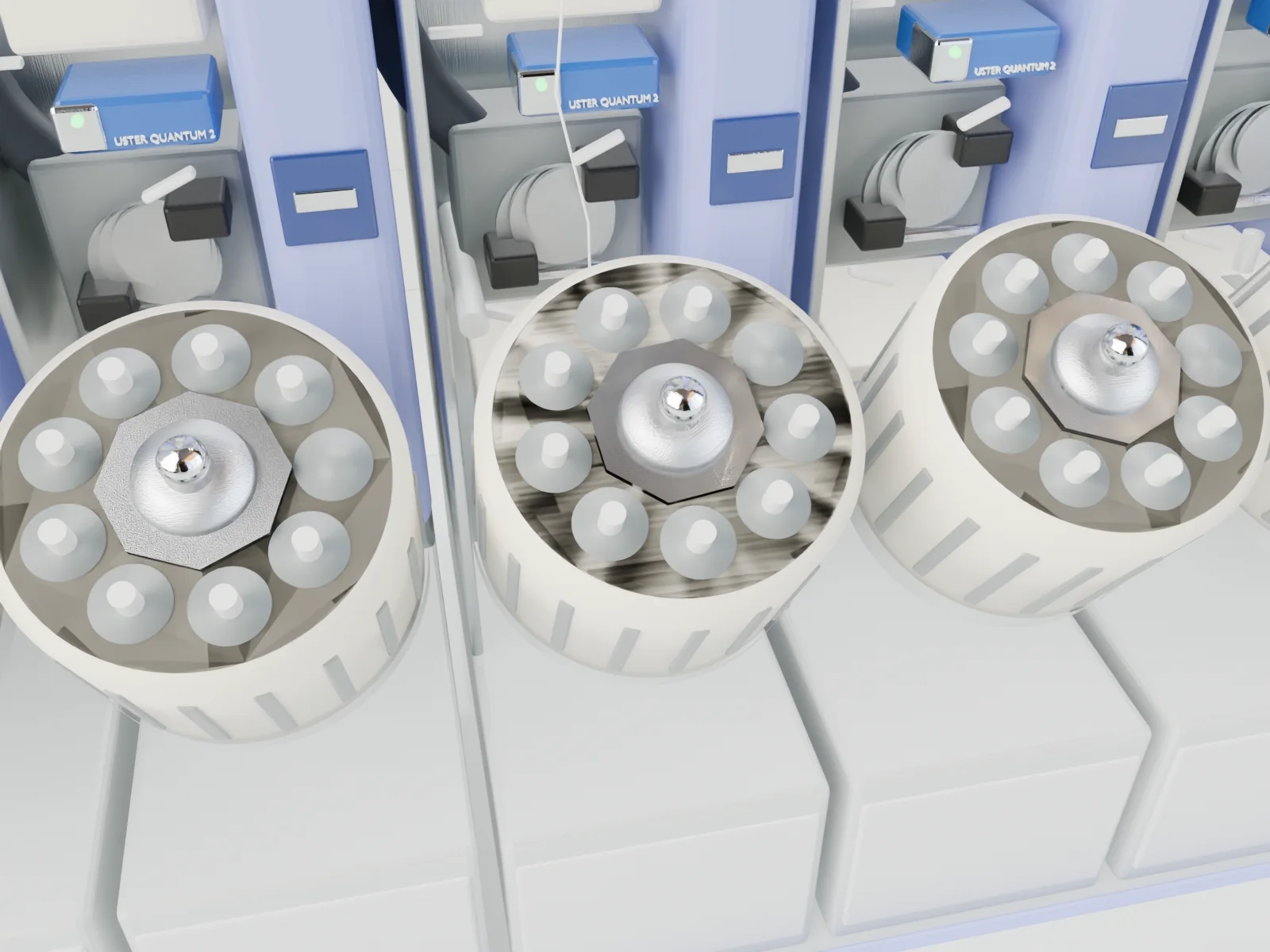
Each winding head is supplied from a magazine of cops, so it does not wait for an operator.
Clearing
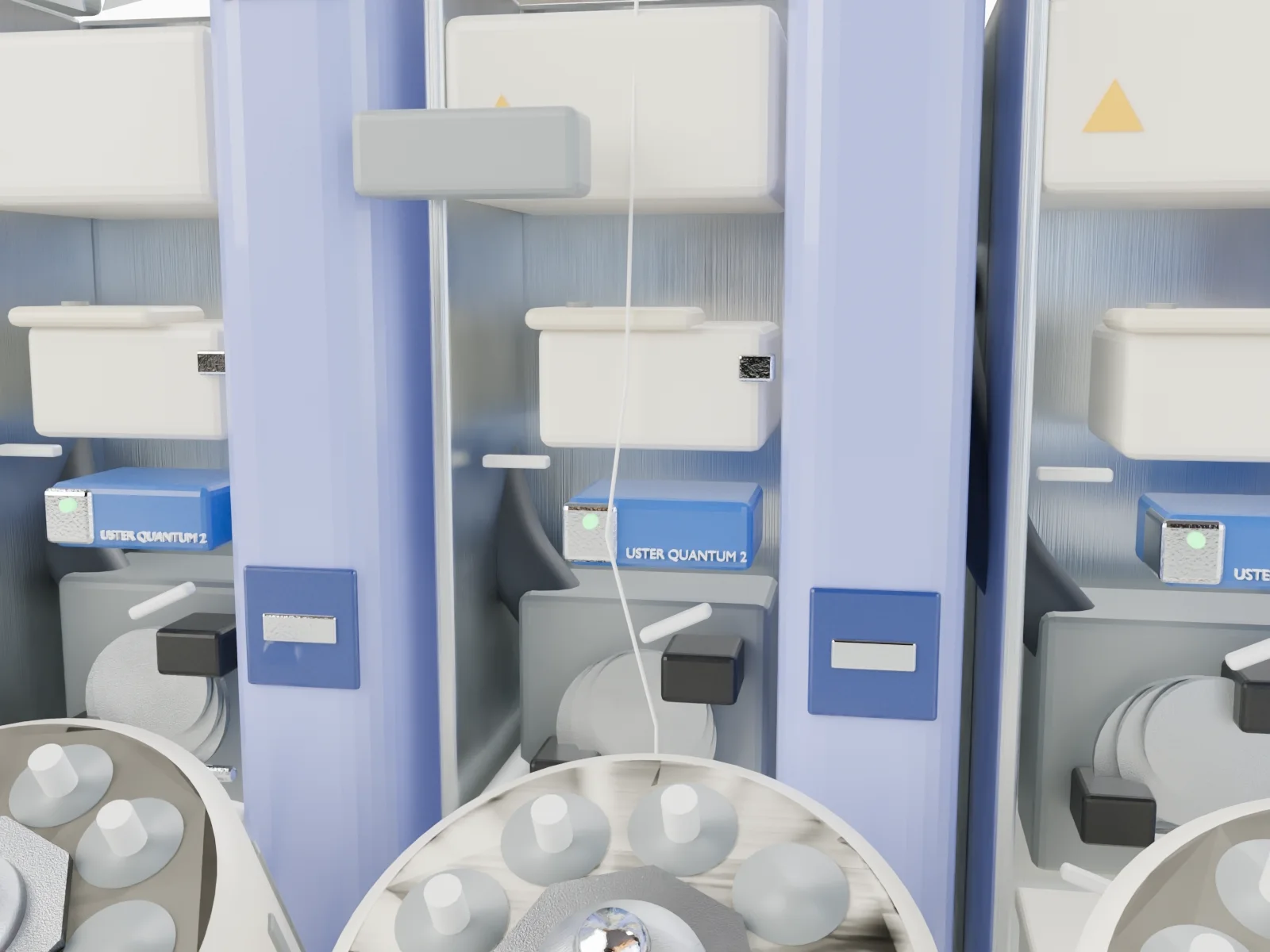
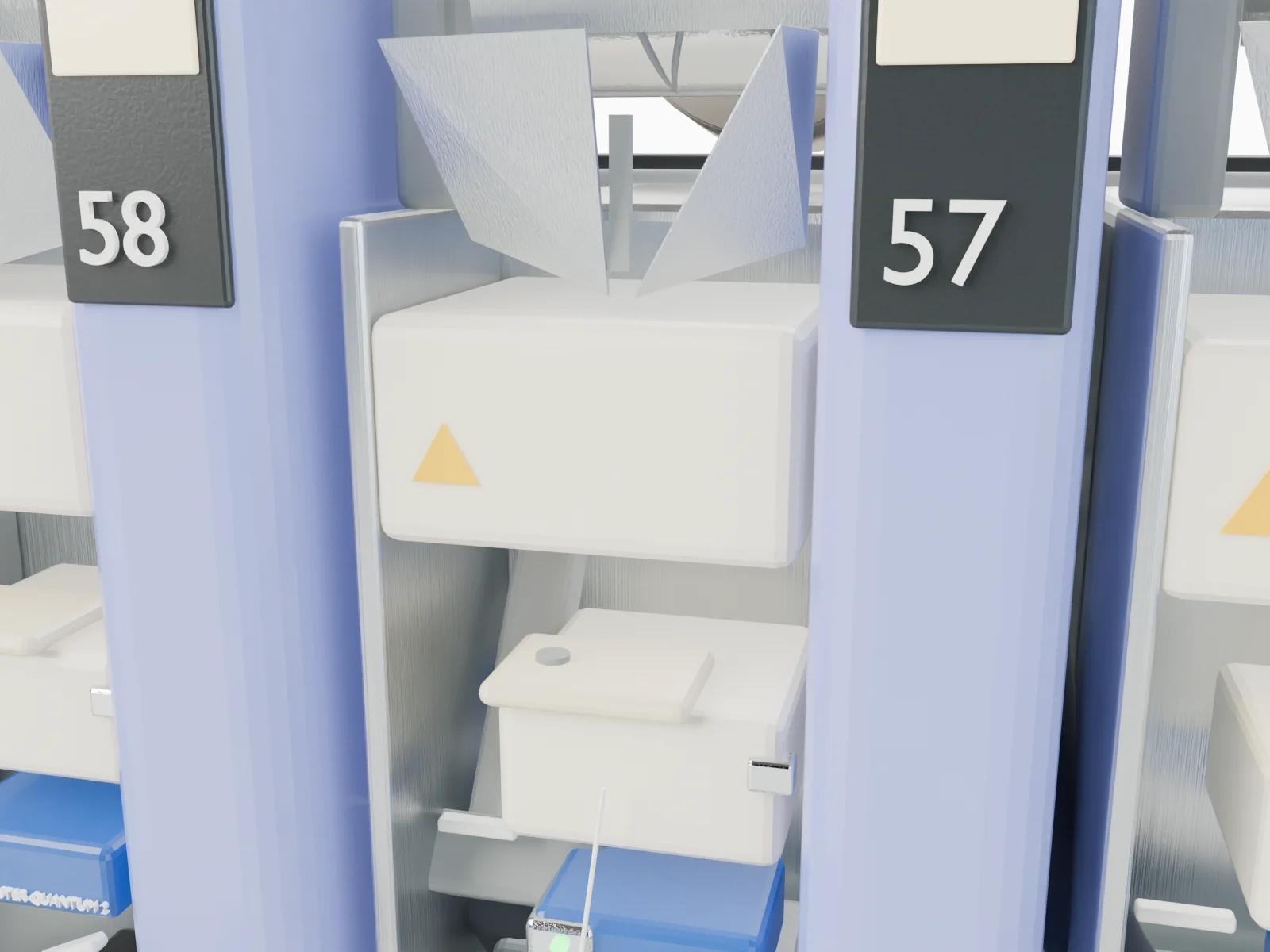
An electronic clearer checks every metre of yarn and cuts out thick and thin places and foreign fibres.
Splicing
The cut ends are joined by air, without a knot; a sound splice keeps at least 70% of the yarn’s strength.
Doffing
Full cones are removed automatically and replaced with empty tubes.
Tested
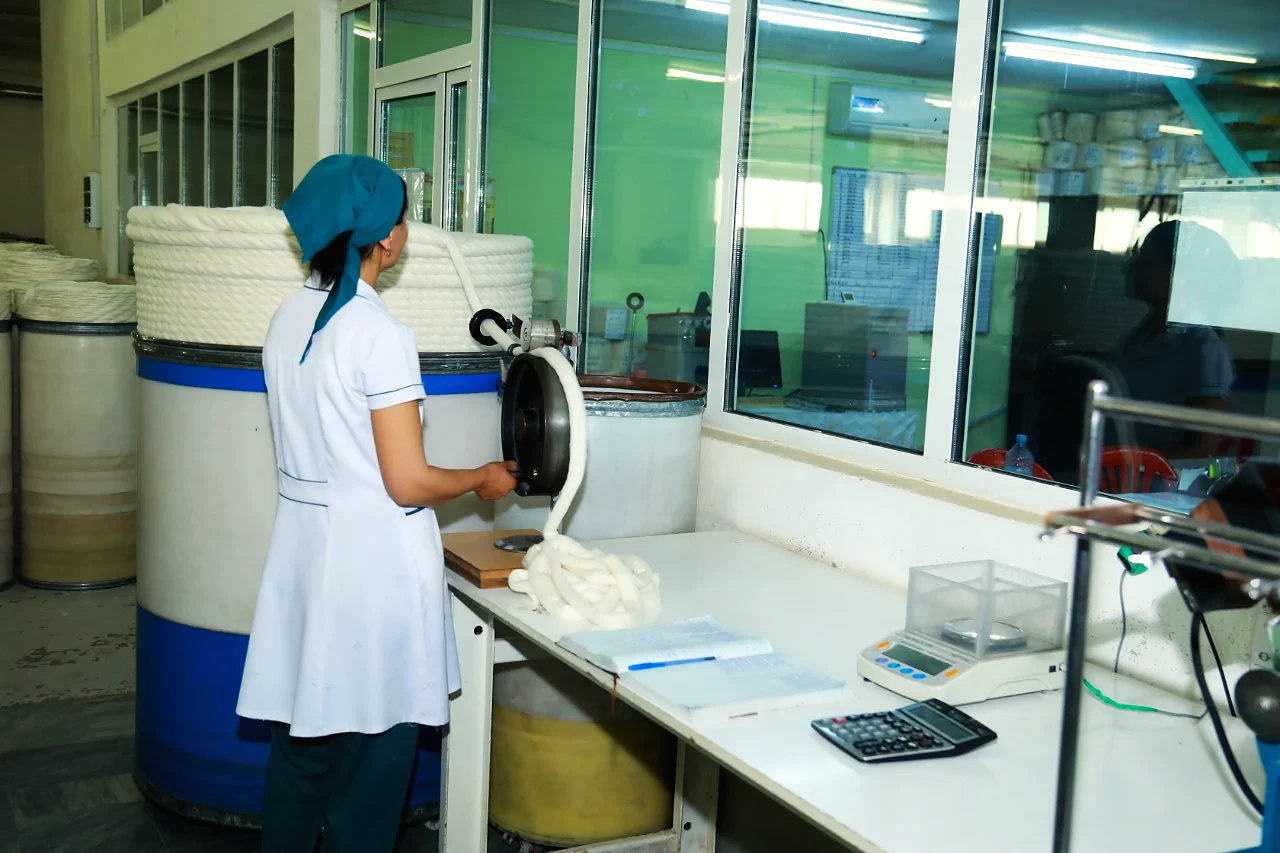
Before the yarn is packed, samples are taken for the laboratory.
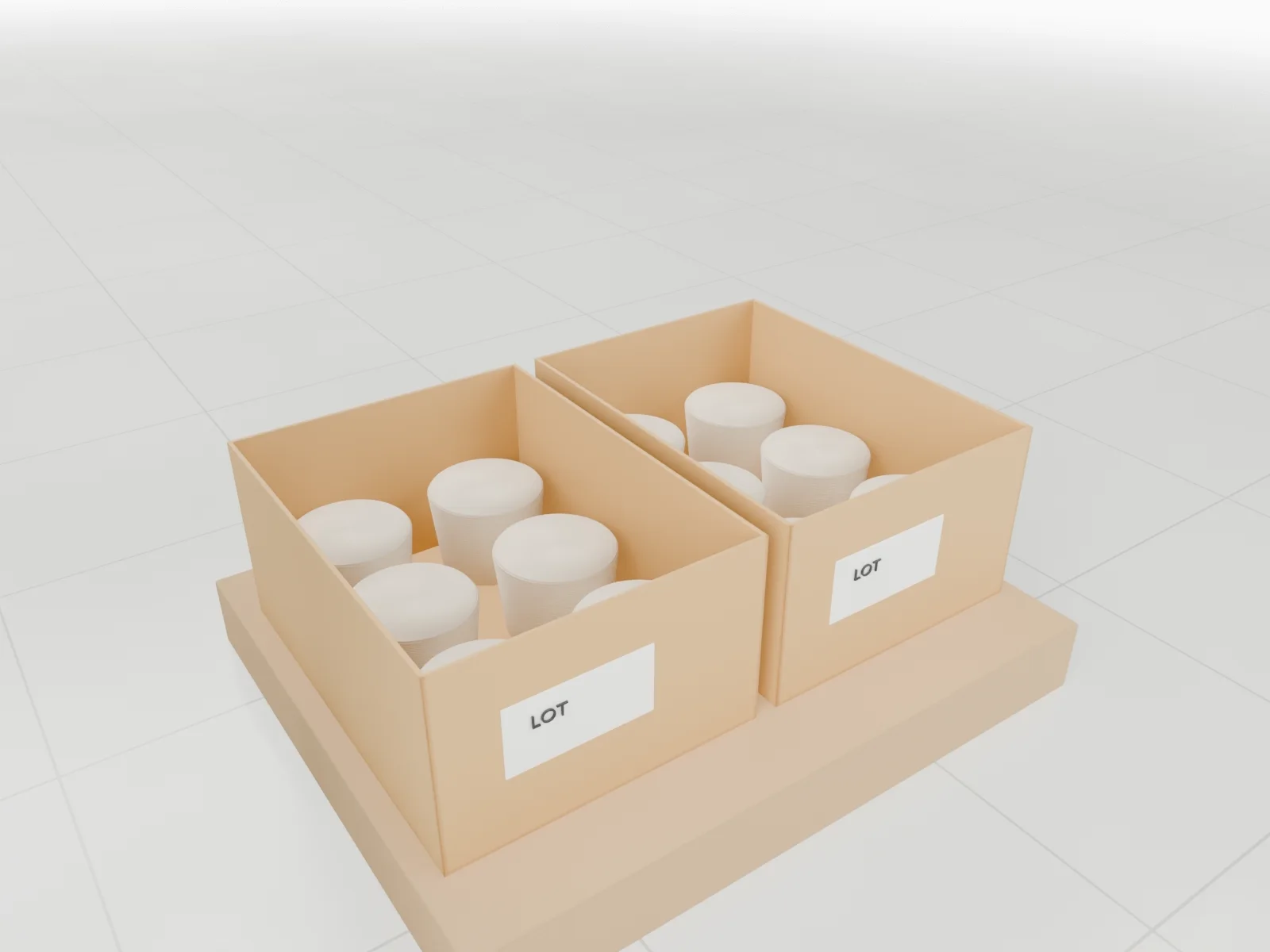
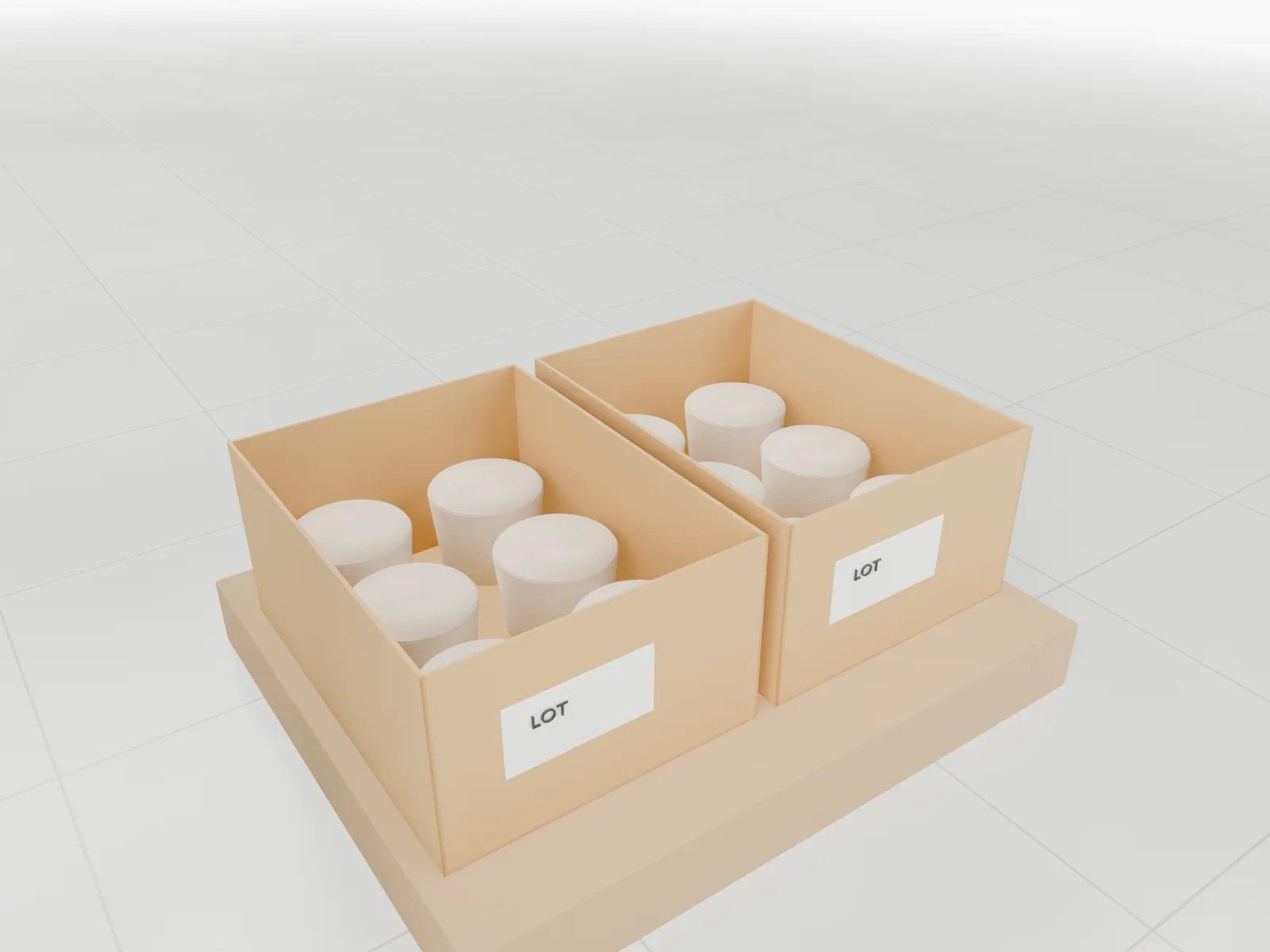
Packed
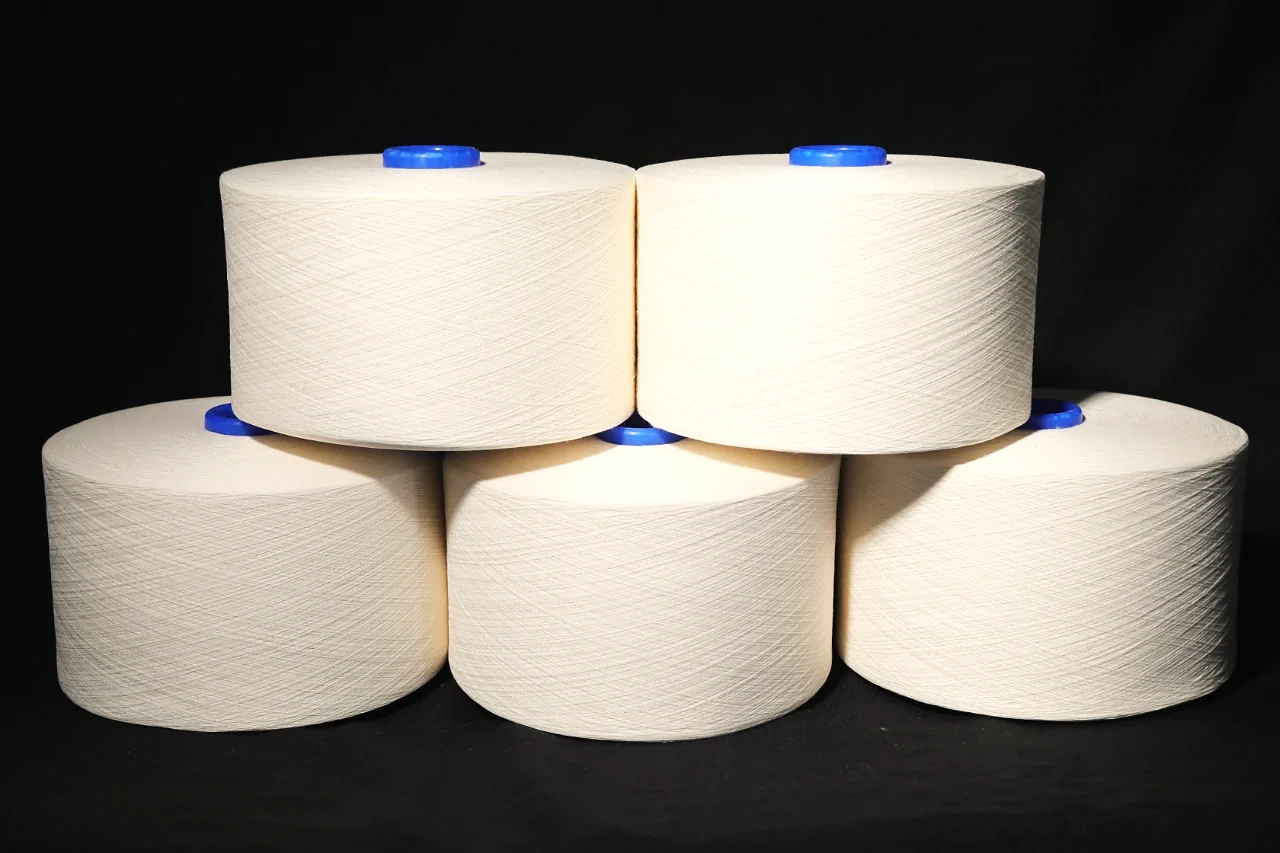
The cones are packed and labelled for shipment.
Terms 11
- Laydown
- A planned group of bales, chosen by test data, opened together as one mix.
- Neps
- Small tangled knots of fibre that show as specks or thick spots in fabric.
- Barré
- Repeating stripes along the yarn direction in fabric, often revealed after dyeing.
- Micronaire
- A standard laboratory reading of how fine cotton fibres are.
- Sliver
- A soft, untwisted rope of loosely aligned fibres made by carding and drawing.
- Noil
- Short fibres, neps and trash removed by the comber, given as a percentage.
- Autoleveller
- A device that measures sliver and adjusts the stretch to keep its weight constant.
- Yarn count (Ne)
- Number of 840-yard lengths in one pound of yarn; higher means finer.
- CVm%
- Coefficient of variation of yarn mass along its length; lower means more even.
- Uster Statistics Percentile (USP)
- Share of mills worldwide making equal or better yarn; lower is better.
- Skew
- Fabric distortion that makes T-shirt side seams twist after washing.
Quality control
Tested on USTER instruments, from cotton to yarn.
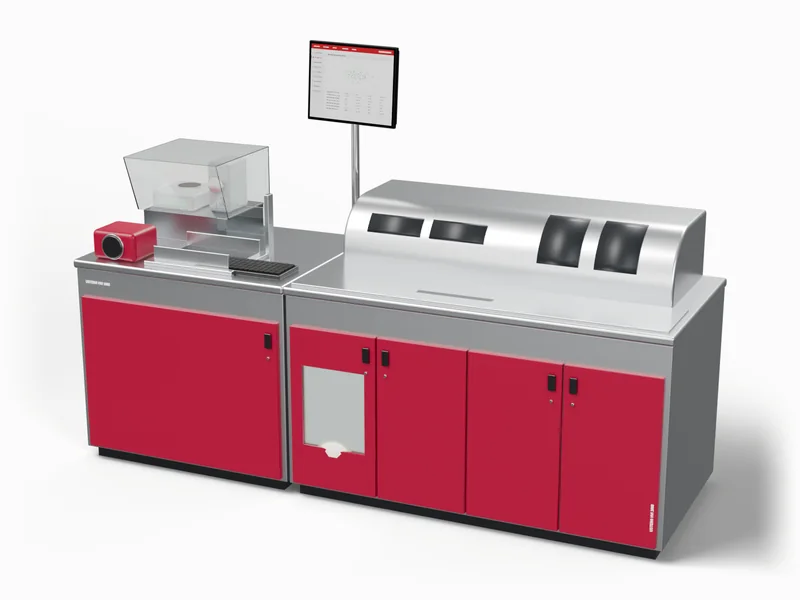
Yarn quality is described worldwide in USTER terms. Our laboratory has the full USTER set, which follows the fibre from the bale to the finished yarn.
Fibre
USTER HVI
Cotton is classed for length, strength, micronaire and colour, so that bales can be blended into even mixes.
Source uster.com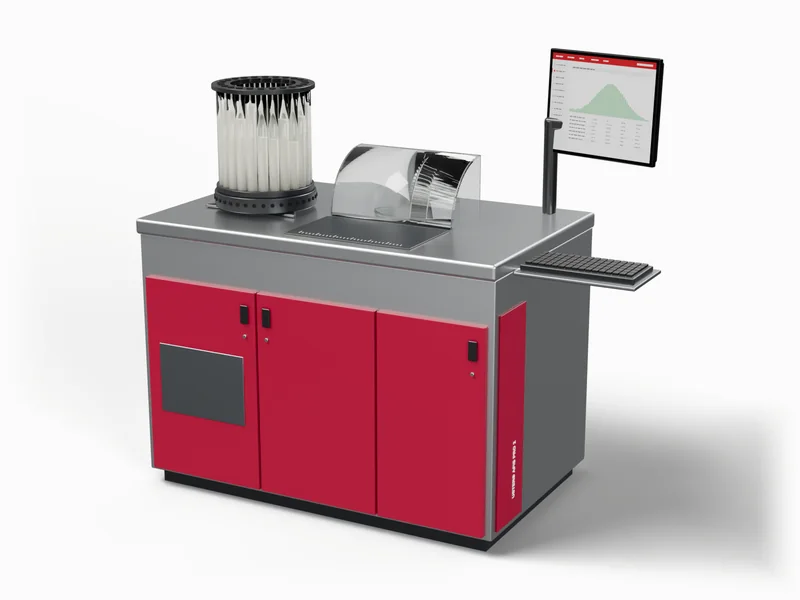
Neps
USTER AFIS
Neps, short fibres and trash are counted from the blowroom to the roving frame, showing where a machine harms the fibre.
Source uster.com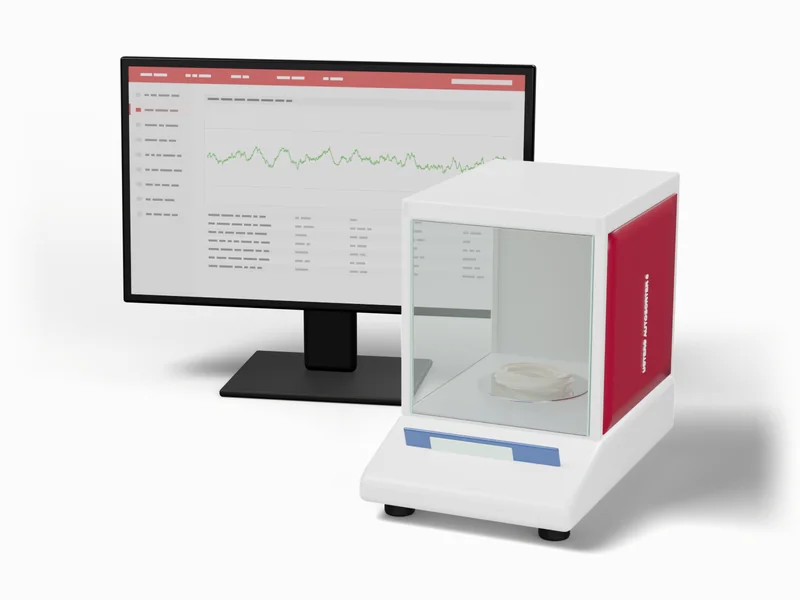
Count
USTER AUTOSORTER
Sliver, roving and yarn are checked for count and its variation, so that the yarn is spun to the count ordered.
Source uster.com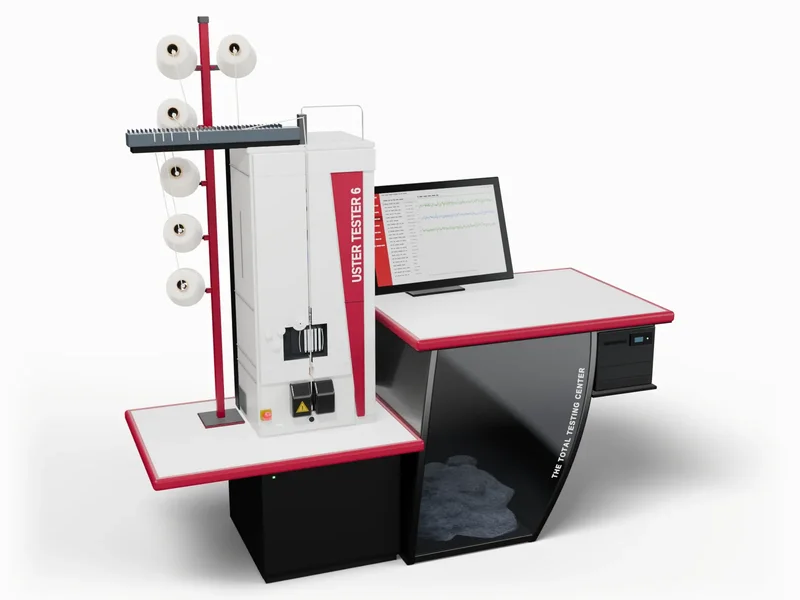
Evenness
USTER TESTER 6
Yarn is measured for evenness and for thin and thick places; uneven yarn makes fabric look cloudy or streaky.
Source uster.com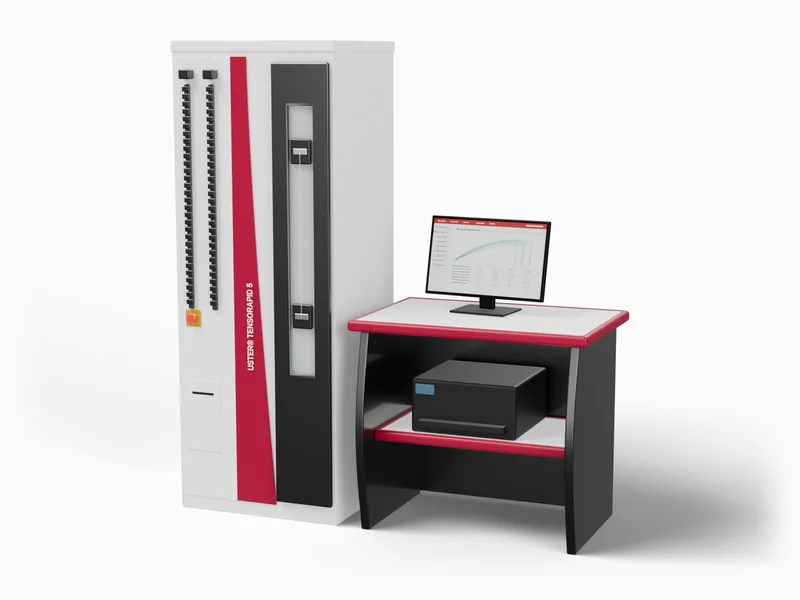
Strength
USTER TENSORAPID
Yarn is pulled until it breaks, to measure its strength and elongation; weak places break on knitting and weaving machines.
Source uster.com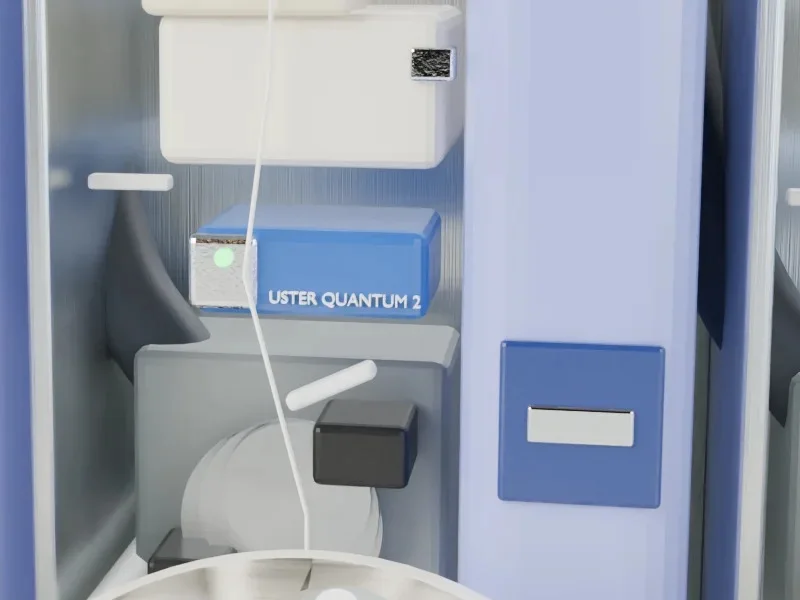
Faults
USTER QUANTUM 2
On the winders, electronic clearers cut faults out before the yarn reaches the cone; left in, a fault is costly, often impossible, to remove from the fabric.
Source uster.com
The instruments are shown as 3D illustrations.
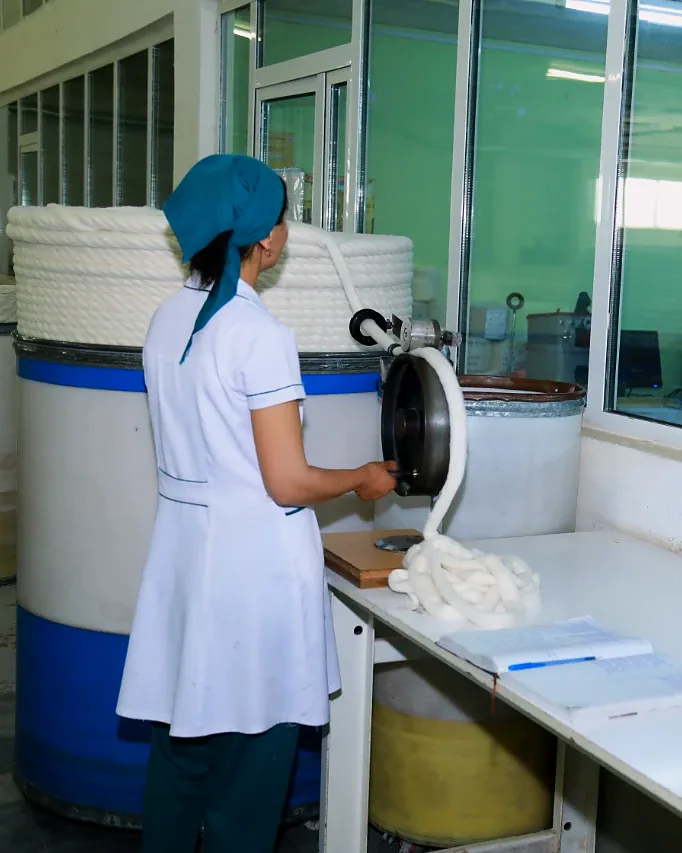
Sliver checked in the laboratory. 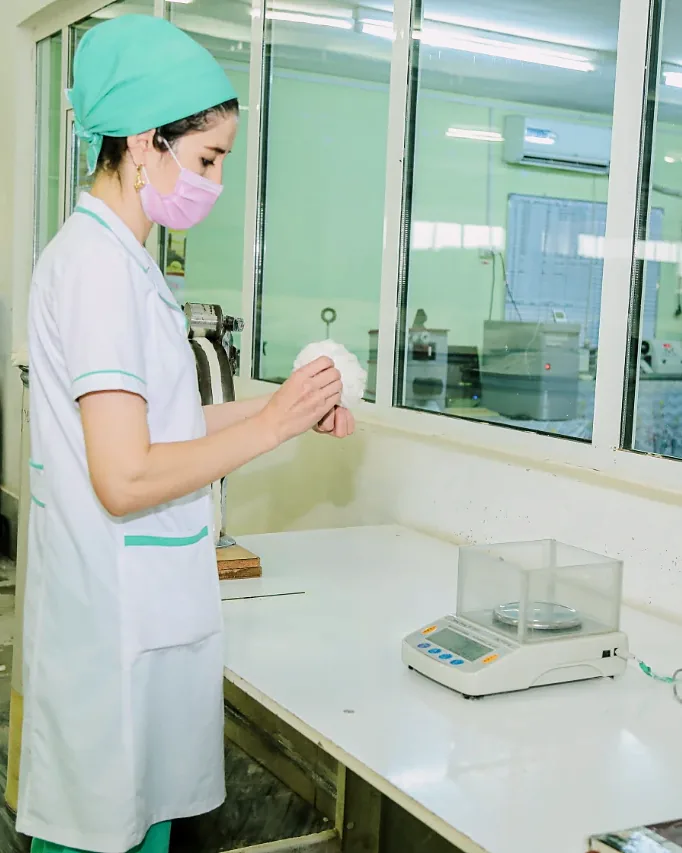
A sample at the laboratory scales.
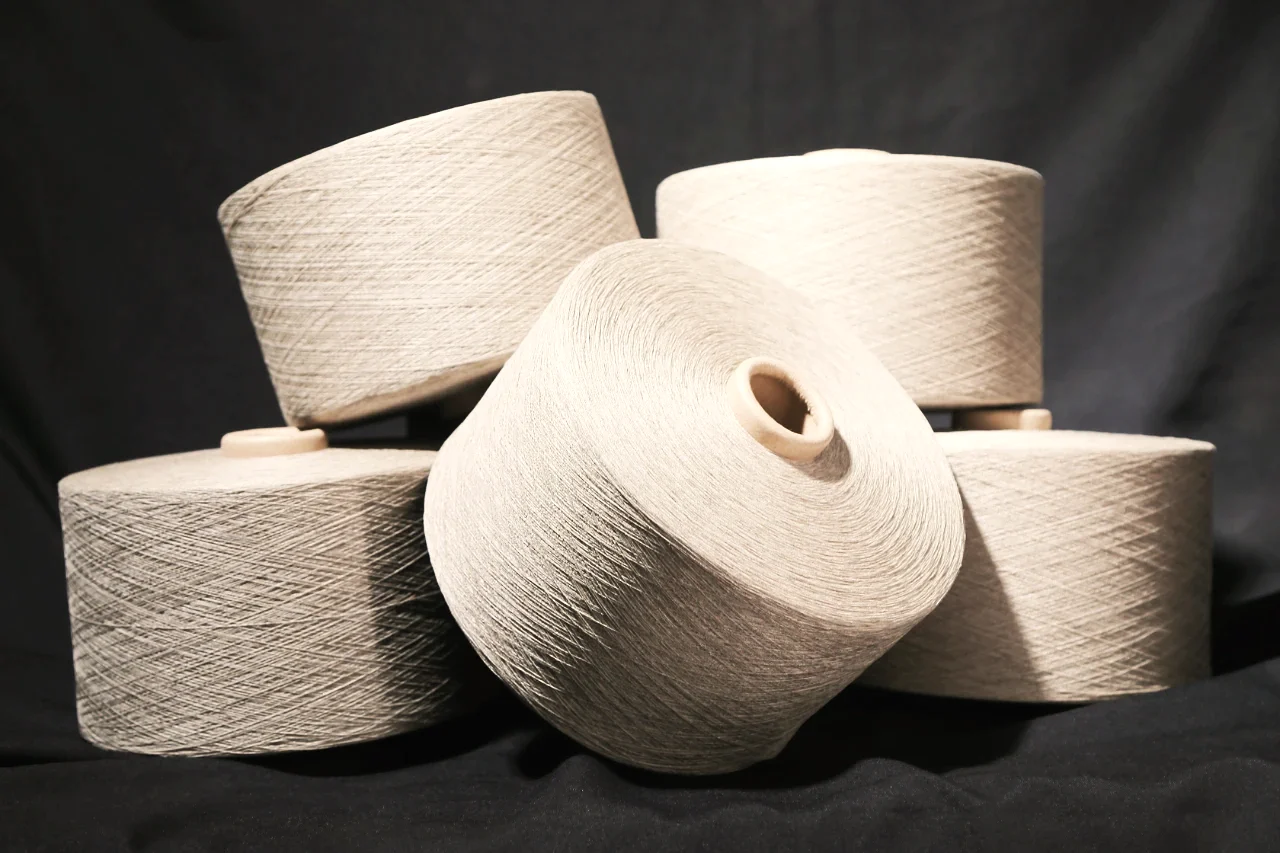
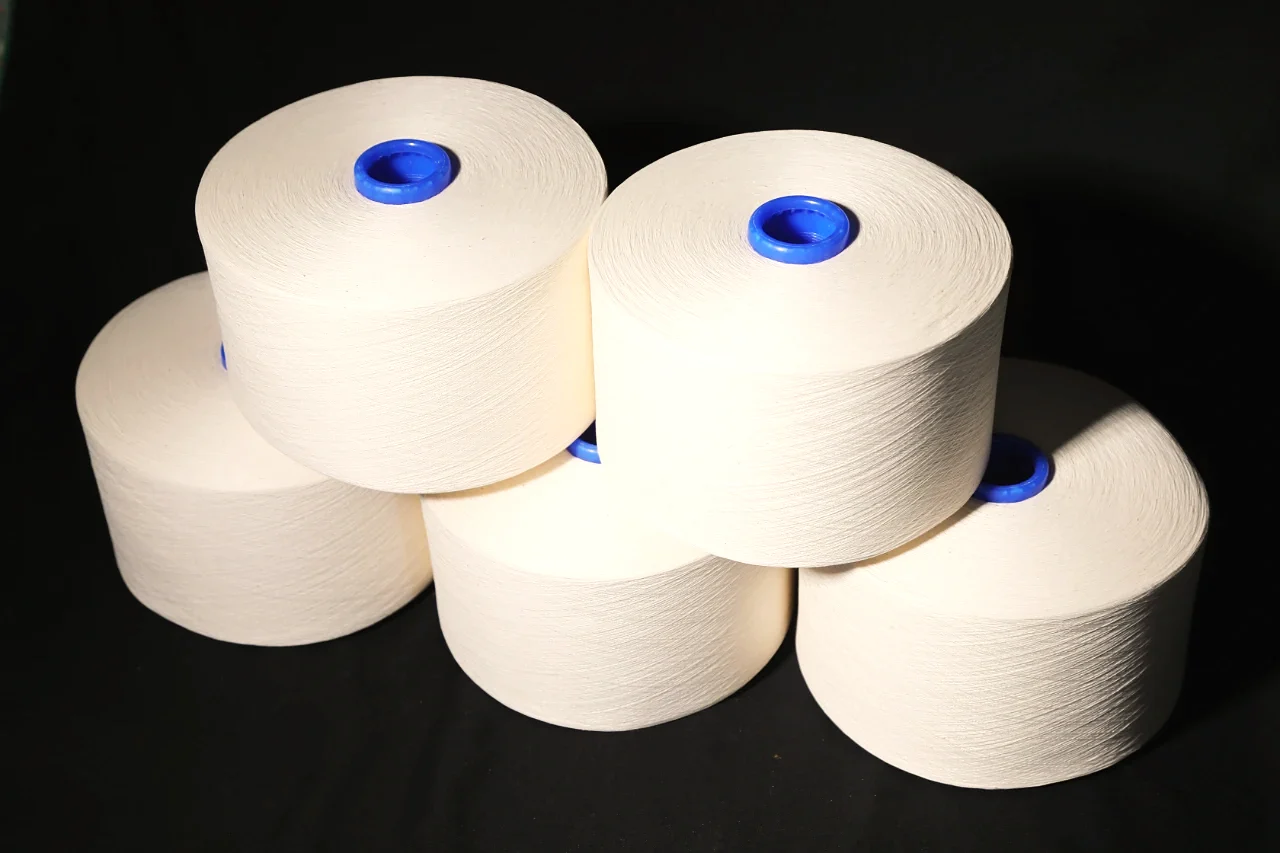
Our yarn
The yarn we spin.
The catalogue lists our yarn in 11 series by composition, with their counts and the BHR Spinning colour card of 155 colours.
A question, or an order?
The sales contact for this line answers.
Send a request