ProductionKnitting and dyeing
Knitting and dyeing
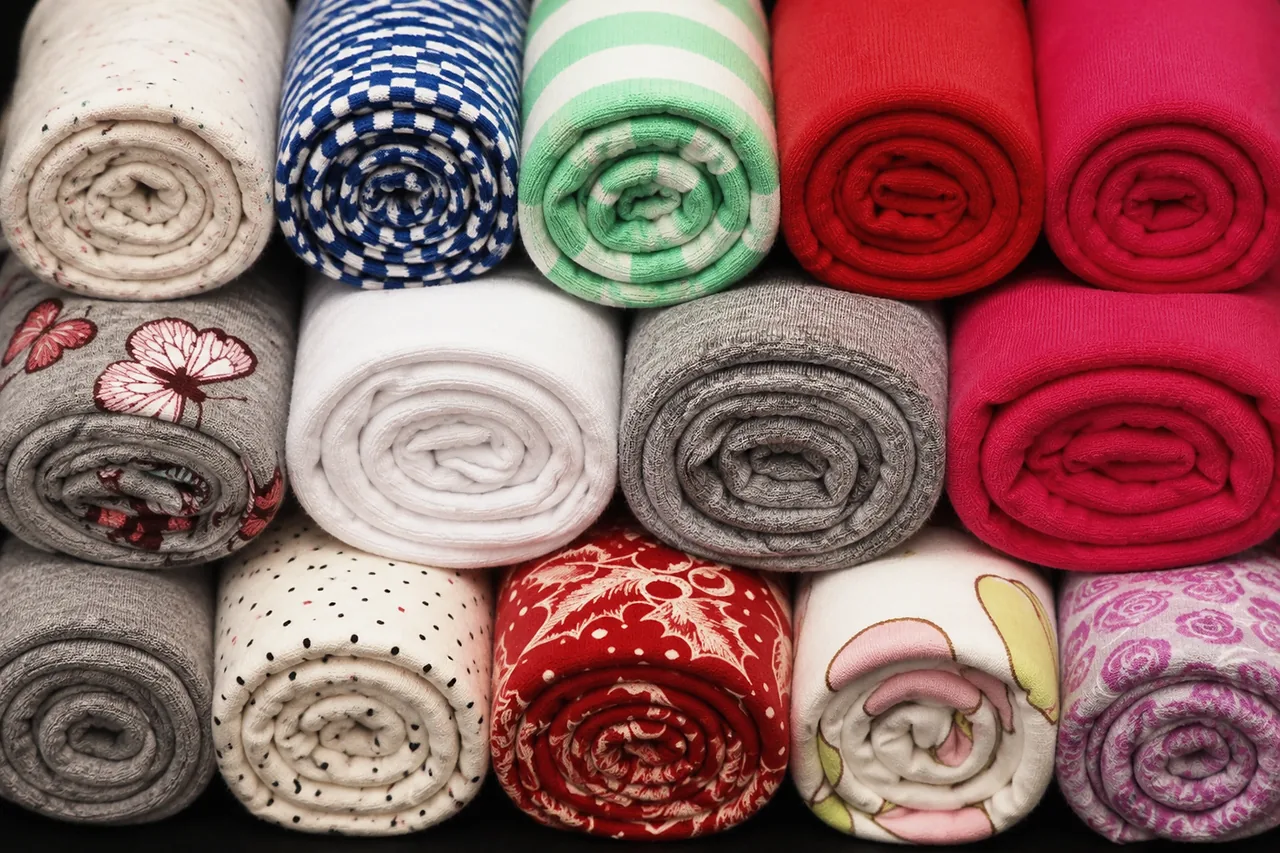
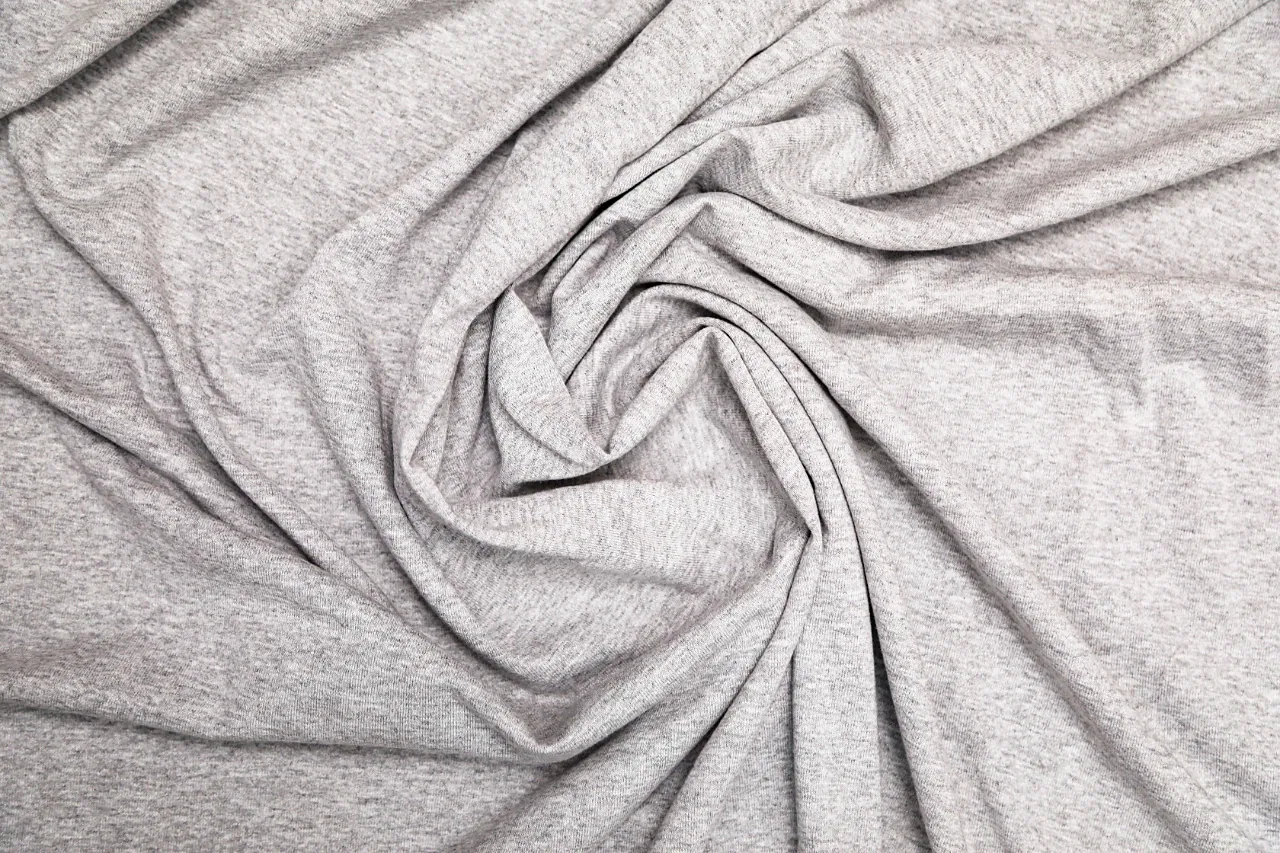
Single jersey, rib, piqué, fleece and kashkorse — weight, width and colour to the customer’s specification.
1,200 t of fabric a year
Step 8 of 12
Knitting and weaving
Where yarn becomes knitted fabric and terry cloth.
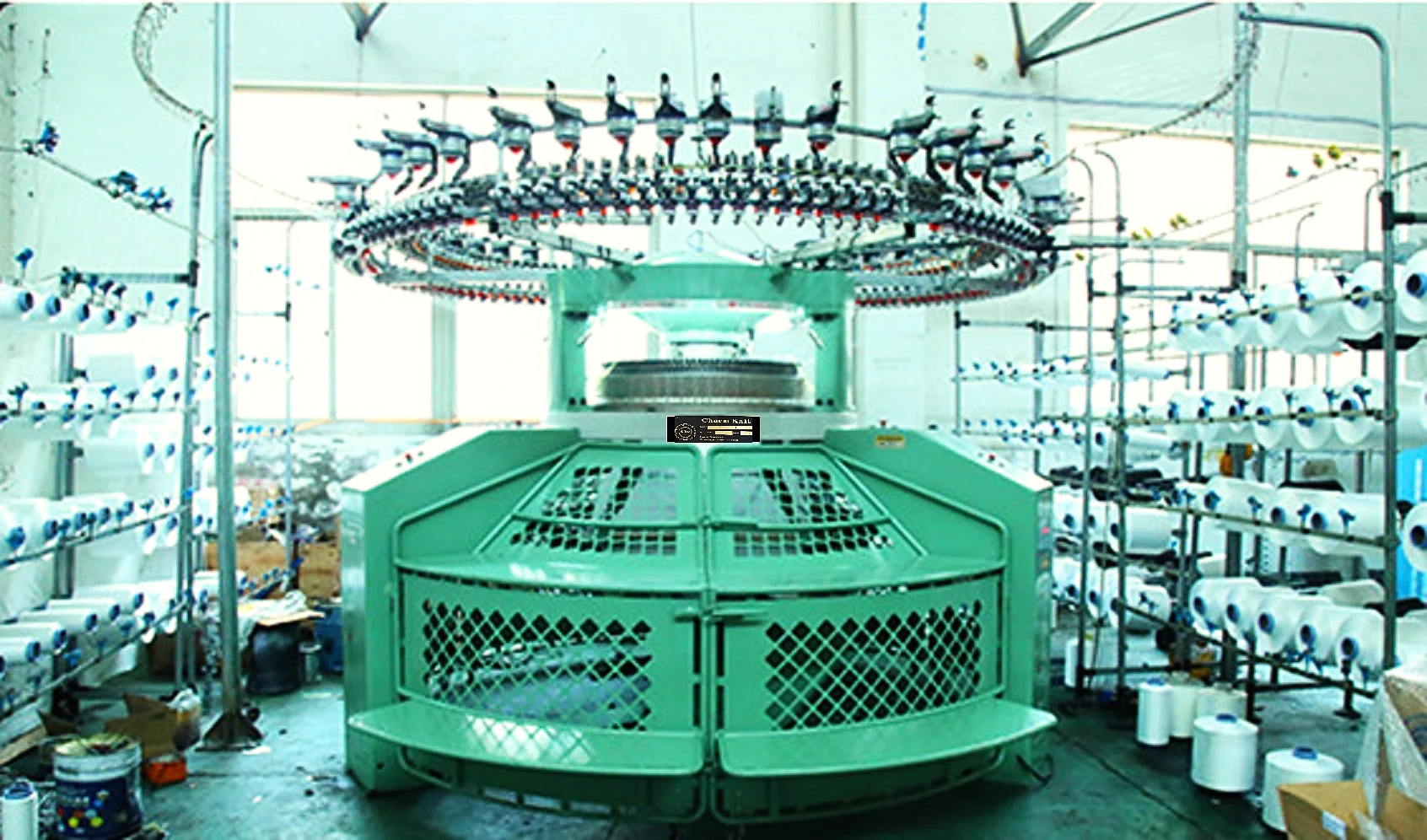
Yarn becomes cloth in one of two ways. For T-shirts, polos and sweatshirts, circular knitting machines draw yarn from dozens of cones and form interlocking loops, producing a continuous tube of fabric. Needle spacing (gauge) and the length of yarn in each loop largely decide the fabric's weight, width and shrinkage. Different set-ups give single jersey, rib, interlock or fleece. For towels and bathrobes, terry looms use two sets of lengthwise yarns (warps): a tightly tensioned ground warp forms the base, and a loosely tensioned pile warp is pushed up into loops. Rolls are then weighed and inspected for defects.
At BHR
- 1 200
- tonnes of knitted fabric a year (about 4 t a day) at the Navoiy knitting mill
- 7
- knit structures: single jersey, rib, interlock, piqué, fleece, velour, kashkorse
- Mayer & Cie
- knitting machines, alongside Terrot, Jumberca and Monarch
Step 9 of 12
Dyeing and finishing
Where fabric gets its colour and final size.
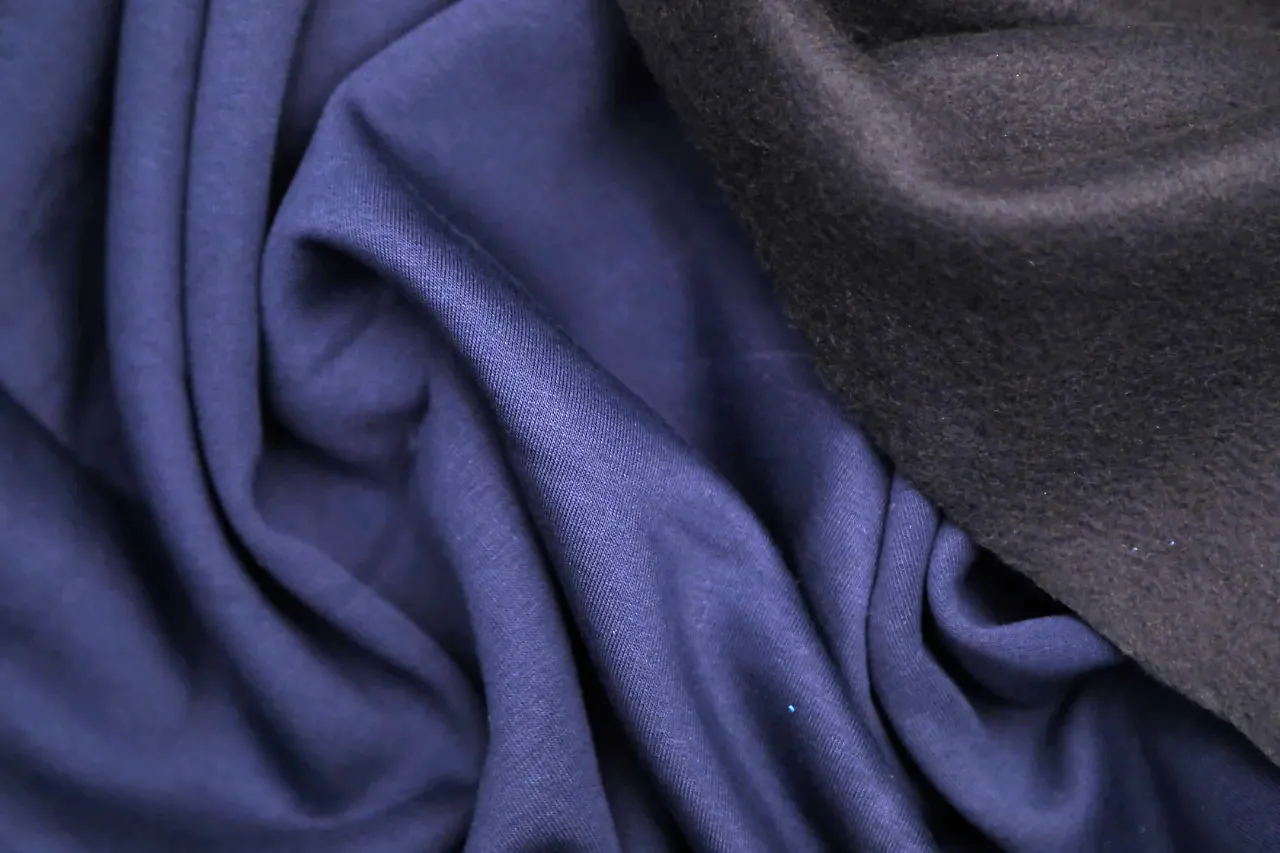
Unfinished fabric arrives waxy, off-white and slow to absorb water. Woven fabric is first desized, stripping the coating added for weaving. Scouring in hot alkali removes waxes, pectins and processing oils; bleaching, usually with hydrogen peroxide, lets the fabric take dye evenly. Most cotton is dyed with reactive dyes, which bond chemically to the fibre. Hot rinses and soap washes remove unbonded dye. The shade is checked against the buyer's standard by instrument and by eye. Finally the fabric is dried under low tension, compacted (knits) or compressively shrunk (wovens), and tested for colourfastness, shrinkage and restricted chemicals.
Why it matters
What this step decides further down the chain.
- Preparation decides whether colour comes out even. Raw cotton is about 88–96% cellulose; the wax, pectin, protein and minerals must be scoured out so fabric wets evenly.
- Peroxide bleaching must be controlled to keep the fibre strong. Traces of iron, manganese or copper speed up the formation of radicals that break down cellulose.
- Washing off decides whether a garment bleeds. Only about 60% of conventional reactive dye bonds; unfixed dye left in fabric stains other clothes in the wash.
- Finishing decides whether a garment keeps its size. In a Cotton Incorporated trial, relaxation drying and compaction cut a cotton knit's length shrinkage from 20% to 5%.
- Chemistry decides whether garments are safe and legal. For textiles worn against skin, the EU bans azo dyes releasing any of 22 carcinogenic amines above 30 mg/kg.
Where it is made
Our own plant.
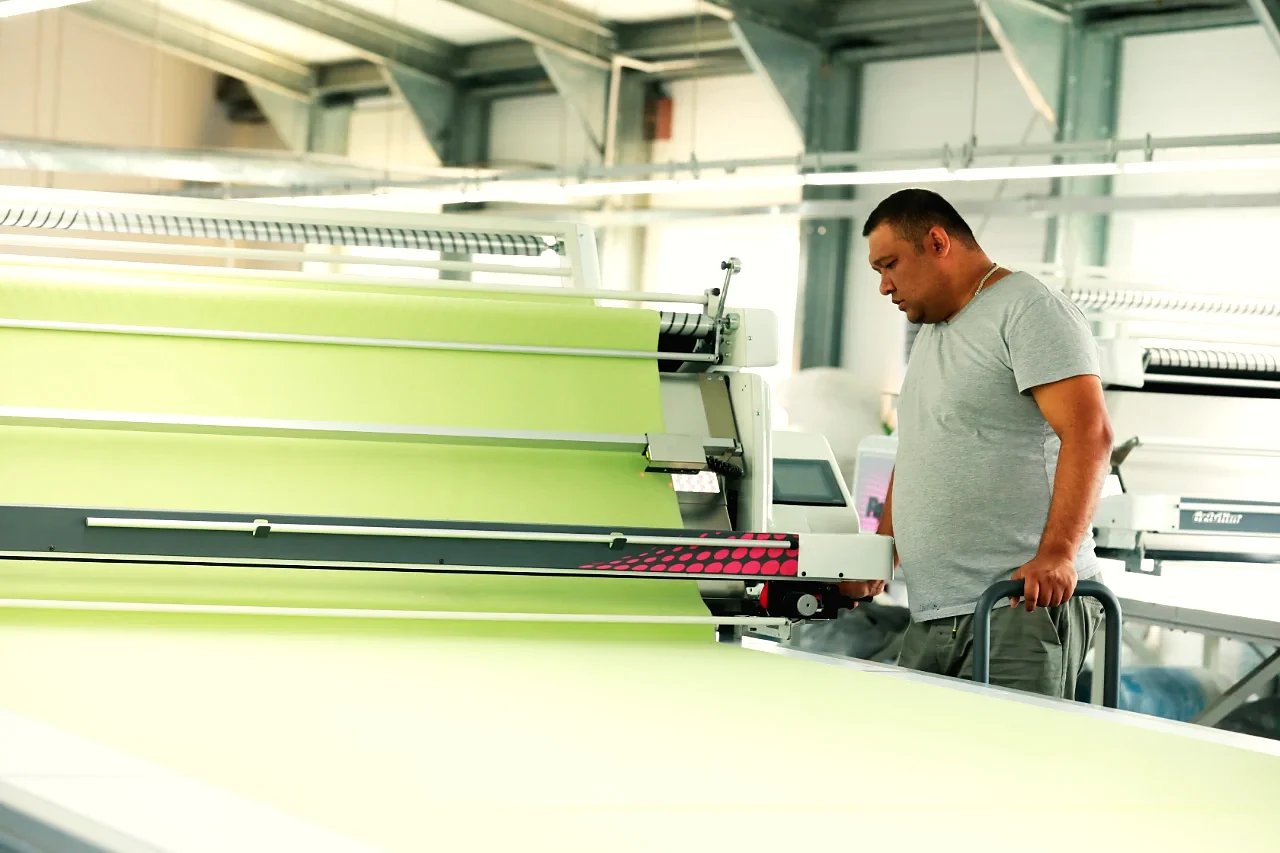
Knitting mill
Sadriddin Ayniy St., Navoiy city
- Floor area
- 2 000 m²
- Capacity
- 1,200 t a year
- Equipment
- Jumberca, Terrot, Mayer & Cie, Monarch
Good practice
How it is done well.
Engineer the knit to the finished specification: choose yarn count, machine gauge, needle count and stitch length together to reach the agreed weight, width and shrinkage, rather than correcting later in finishing.
Source cottoninc.comPrevent barré: label and separate yarn lots; never mix counts, suppliers or twist on one machine; keep stitch length and tension equal at every feed; dye a trial sample before bulk runs.
Source cottoninc.comControl spirality at the source: match yarn twist direction to cylinder rotation, alternate S- and Z-twist feeds or use plied yarn, and measure skew after washing (AATCC TM179 or ISO 16322-2).
Source cottoninc.comOn terry looms, keep pile-warp tension constant and set pile height electronically so loops stay even along the roll. Test towel absorbency with a recognised method such as ASTM D4772.
Source picanol.beGrade rolls by visual inspection to ASTM D5430, usually its 4-point system: each defect scores 1–4 points by length, per 100 square yards, against a limit agreed with the buyer.
Source store.astm.orgTest weight (ASTM D3776) and wash shrinkage (ISO 6330 with ISO 5077) on samples first conditioned at 20 ± 2 °C and 65 ± 4% relative humidity (ISO 139).
Source store.astm.orgScour with alkali, surfactants and metal-binding agents; bleach with stabilised hydrogen peroxide at about pH 10.5–12, so the fibre whitens without damage. Pastel shades need bleaching; dark shades often do not.
Source eippcb.jrc.ec.europa.euUse high-fixation dyes and get the shade right first time, with no re-dyes. Bifunctional reactive dyes fix about 80%, monofunctional about 60%. Automated dye dispensing improves lot-to-lot consistency.
Source eippcb.jrc.ec.europa.euMeasure each batch against the approved standard by spectrophotometer, within a buyer-agreed CMC colour-difference tolerance, then check under several lights: colours matching in daylight can differ under shop lighting (metamerism).
Source iso.orgTest colourfastness to ISO 105: washing (C06), dry and wet rubbing (X12), perspiration (E04) and light (B02). Grades run 1–5, where 5 means no change or staining; light is graded 1–8.
Source iso.orgControl shrinkage at every stage: low tension in wet processing, relaxation drying and compaction for knits, compressive shrinking for wovens. Measure after each step; test finished fabric to ISO 5077.
Source cottonworks.com
Terms 10
- Stitch length
- The length of yarn in one knitted loop; shorter loops make denser fabric.
- GSM
- Fabric mass in grams per square metre; higher usually means thicker, denser cloth.
- Gauge
- Needles per inch of a knitting machine's cylinder; also called 'cut'.
- Pile warp
- Loosely tensioned lengthwise yarn in terry cloth that forms the towel's loops.
- Spirality (skew)
- Slanting of knitted fabric after washing that twists garment side seams.
- Reactive dye
- A dye that forms a chemical (covalent) bond with cotton's cellulose.
- Colourfastness
- How well colour resists washing, rubbing, sweat and light without fading or staining.
- Compaction
- Mechanically pressing knit loops together so fabric shrinks in the factory, not at home.
- Scouring
- Hot alkaline washing that removes cotton's natural waxes and pectins.
- Metamerism
- When two colours match under one light but differ under another.
A question, or an order?
The sales contact for this line answers.
Send a request