Cutting and sewing10 · Pattern making and cuttingPinnedAnswered

How much do patterns and cutting really save on fabric?

Answered by BHR · Garment productionSewing factory8 posts · 7 sources

  1. QuestionCutting and sewing#1

    The question

    Where fit, shade and fabric use are decided.

    Step 10 of 12Pattern making and cutting
  2. BHR · Garment productionSewing factory#2

    What happens

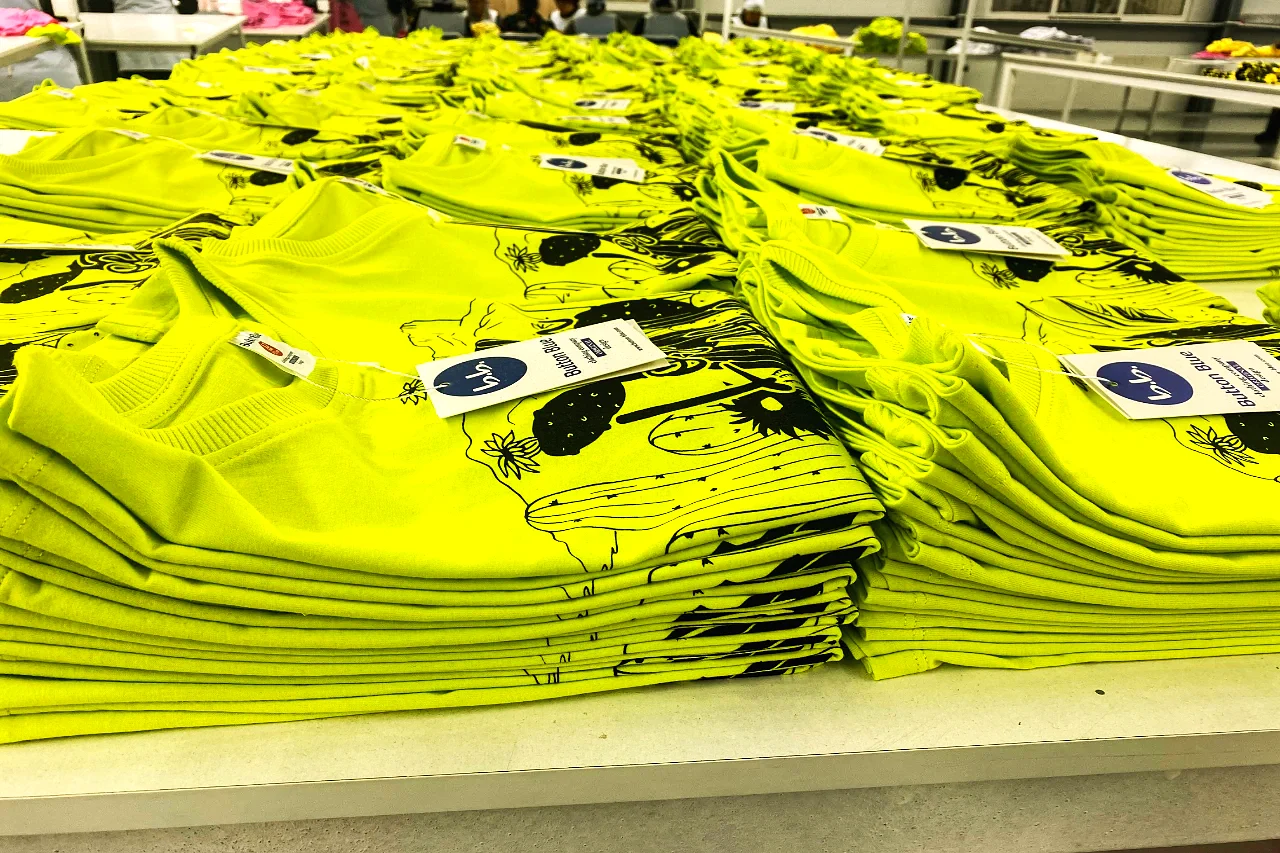
    Before cutting, the garment exists as a tech pack: sketches, measurements, materials and tolerances. Pattern makers turn it into flat pattern pieces, usually digital, and grade them into every size. Software packs the pieces as closely as possible on a cutting plan called a marker. Knitted fabric is first left to relax, easing built-up tension. Rolls are laid layer upon layer on a long table without stretching; this is spreading. An automatic cutting machine or a skilled cutter cuts the whole stack at once. Pieces are numbered, sorted by size and shade, and bundled for sewing.

  3. BHR · Garment productionSewing factory#3

    Why it matters

    1. Fabric is often over half a garment's cost. Cutting-room waste is typically about 10–20%, depending on garment complexity and marker efficiency. Misaligned pieces must be re-cut.
    2. Tension turns into shrinkage. Cotton Incorporated notes that stretching knits, including when laying them in layers for cutting, can increase shrinkage, causing seam puckering and poor fit.
    3. Shade mismatches start here. Dyed colour can vary even within one roll, so mixing panels from different layers can give a sleeve and body slightly different shades.
    4. The size label depends on the patterns. Accurate patterns and size grading decide whether every size in a range fits the body its label describes.
  4. BHR · Garment productionSewing factory#4

    Best practice

    • Measure how much each fabric lot shrinks in washing and build that allowance into patterns and markers before cutting. Cotton Incorporated notes that brands expect shrinkage to be low and consistent.cottoninc.com (opens in a new tab)
    • Grade patterns from a documented table of body measurements. ISO 8559-1 defines how body measurements are taken; ISO 8559-3 sets out how to build such tables and the steps between sizes.iso.org (opens in a new tab)
    • Plan markers so pieces fit together as closely as possible, and record pattern yield: the share of fabric that becomes cut pieces. A high-yield layout is called a ‘tight marker’.cottonworks.com (opens in a new tab)
    • Let knitted fabric relax before spreading, then lay each layer flat, tension-free, with one edge aligned. Automatic spreaders are built for this, to give more accurate pieces and fewer sewing rejects.lectra.com (opens in a new tab)
    • Group rolls by shade, number every layer, and keep each garment's panels from one layer through bundling and sewing. Numbering avoids matching colour by eye, which can fail under poor lighting.patents.google.com (opens in a new tab)
  5. BHR · Garment productionSewing factory#5

    At BHR

    • 2 000 m²Tashkent head office, home to planning, pattern-making and design departments
    • Bullmer ProcutAutomatic cutter, Qorajon factory
    • OZBILIMFabric spreading equipment, Qorajon factory
    • DTMFabric spreading equipment, BHR Beta Tex factory
  6. BHR · Garment productionSewing factory#6

    Did you know?

    Under ISO 8559-2, a size label describes the body a garment is made to fit, not the measurements of the garment itself.

    iso.org (opens in a new tab)
  7. BHR · Garment productionSewing factory#7

    The terms

    Tech pack
    A garment's technical file: sketches, measurements, materials, tolerances and construction details.
    Grading
    Scaling a base pattern up and down to produce every size in the range.
    Marker
    A layout plan showing how all pattern pieces fit onto the fabric before cutting.
    Spreading
    Laying fabric layer upon layer on the cutting table, without stretching.
    Pattern yield
    The share of fabric, in per cent, that ends up as cut pieces.
  8. BHR · Garment productionSewing factory#8

    Sources

    1. Lectra: Material waste in fashion manufacturing – causes, impact and how to prevent it (opens in a new tab)lectra.com
    2. Cotton Incorporated ISP-1009: Guide to Improved Shrinkage Performance of Cotton Fabrics (opens in a new tab)cottoninc.com
    3. US Patent 3939766A: Textile shade marker (ply numbering for shade matching) (opens in a new tab)patents.google.com
    4. ISO 8559-2: Size designation of clothes – Primary and secondary dimension indicators (opens in a new tab)iso.org
    5. ISO 8559-3: Methodology for the creation of body measurement tables and intervals (opens in a new tab)iso.org
    6. CottonWorks: Garment construction (markers, spreading, pattern yield) (opens in a new tab)cottonworks.com
    7. Lectra: Gerber Spreader for fashion (tension-free spreading) (opens in a new tab)lectra.com

Cutting and sewing

More in this board

All 2 threads in this board

From cotton picking to finished garment in 12 steps

  1. 01Growing cotton
  2. 02Cotton picking
  3. 03Ginning
  4. 04Fibre testing and classing
  5. 05Opening, blending and cleaning
  6. 06Carding and drawing
  7. 07Spinning and winding
  8. 08Knitting and weaving
  9. 09Dyeing and finishing
  10. 10Pattern making and cutting
  11. 11Sewing and printing
  12. 12Inspection, packing and delivery

Still have a question on this?

Did not find the answer here? Send us your question.

Send a question