Quality, certification, export12 · Inspection, packing and deliveryPinnedAnswered

What does AQL 2.5 mean, and how does the inspection run?

Answered by BHR · Quality controlQuality department8 posts · 8 sources

  1. QuestionQuality, certification, export#1

    The question

    Final checks before garments leave the factory.

    Step 12 of 12Inspection, packing and delivery
  2. BHR · Quality controlQuality department#2

    What happens

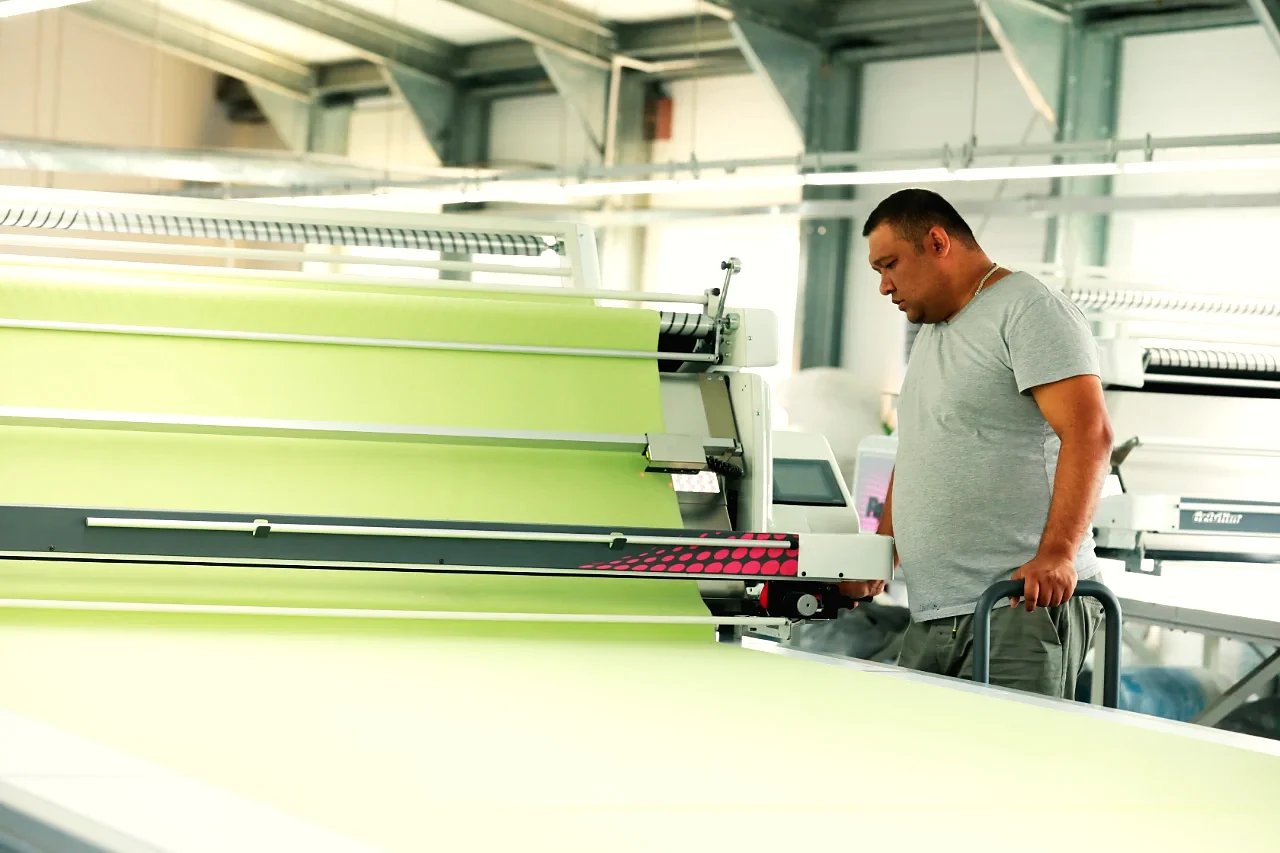
    Garments are usually checked at two stages. Inline inspection on the sewing lines catches faults during production. Final inspection takes a random sample from each finished lot, sized by statistical tables (ISO 2859-1), and checks sewing and fabric faults, colour shade, labels and measurements against the buyer's specification. If faults exceed the agreed limit, the lot is rejected and usually sorted, reworked and re-inspected. Many buyers require a needle detector for childrenswear; separate social audits check working conditions. Garments are then folded, bagged, packed into marked cartons and shipped with a packing list, invoice and origin documents.

  3. BHR · Quality controlQuality department#3

    Why it matters

    1. Between 1985 and 2019, US regulators recorded 26 deaths involving hood and neck drawstrings on children's outerwear. US rules and EU standard EN 14682 restrict such cords.
    2. In 2015 Bonds recalled three baby clothing styles in Australia because they might contain a broken needle from manufacturing, a cut or puncture hazard.
    3. From 14 December 2027, Regulation (EU) 2024/3015 bans placing forced-labour products on the EU market or exporting them. Buyers can expect requests for evidence about production sites.
    4. Cotton garments readily absorb moisture and odours. German marine insurers warn that high humidity or condensation in transit can cause mustiness, mildew stains and mould.
  4. BHR · Quality controlQuality department#4

    Best practice

    • Use ISO 2859-1 sampling tables. At the usual inspection level (II), a lot of 3 200 pieces is judged on 125; at a buyer-agreed AQL of 2.5, 8 defective pieces reject it.itl.nist.gov (opens in a new tab)
    • Control every needle. Primark's 2011 supplier policy: one needle out, one in; broken pieces taped to a record sheet; all childrenswear through a metal detector calibrated at least four times daily.primark.a.bigcontent.io (opens in a new tab)
    • Make every product traceable. Since 13 December 2024, EU Regulation 2023/988 requires an identifier such as a batch number, plus the manufacturer's name, postal and electronic address, on the product or packaging.gov.uk (opens in a new tab)
    • Use a shareable social audit such as Sedex SMETA, done by Sedex-approved auditors against ILO conventions and local law. It is not a certificate; its value lies in fixing recorded issues.sedex.com (opens in a new tab)
    • Pack and ship dry. Marine insurers advise 45–70% relative humidity and 10–30 °C for garments, moisture absorbers in airtight packs, clean leak-proof containers, and no stowage with food or odorous cargo.tis-gdv.de (opens in a new tab)
  5. BHR · Quality controlQuality department#5

    At BHR

    • SMETASedex social audits by TÜV SÜD, August 2022, at Navbahor Tekstil LLC and Qorajon Textile LLC
    • ISO 9001With ISO 14001 and 45001: integrated management system for yarn production (CERT International), December 2022 – December 2025
    • QCQuality control departments at every stage, from cotton seed to finished product
  6. BHR · Quality controlQuality department#6

    Did you know?

    The sampling tables still used to pass or fail garment lots began as US Army Ordnance tables in the early 1940s, became MIL-STD-105A in 1950 and ISO 2859 in 1974.

    itl.nist.gov (opens in a new tab)
  7. BHR · Quality controlQuality department#7

    The terms

    AQL (Acceptance Quality Limit)
    The worst average defect rate a sampling plan still accepts most of the time.
    Critical defect
    A fault that could make the garment unsafe, such as a broken needle.
    Needle detector
    Conveyor that stops and sounds an alarm on sensing iron-based metal in garments.
    SMETA
    Sedex Members Ethical Trade Audit: an independent check of working conditions.
  8. BHR · Quality controlQuality department#8

    Sources

    1. US CPSC – Drawstrings in children's upper outerwear: FAQs (opens in a new tab)cpsc.gov
    2. Product Safety Australia – Bonds baby clothing recall (2015) (opens in a new tab)productsafety.gov.au
    3. EUR-Lex – Regulation (EU) 2024/3015 on products made with forced labour (opens in a new tab)eur-lex.europa.eu
    4. TIS-GDV – Ready-made garments: cargo transport guidance (opens in a new tab)tis-gdv.de
    5. NIST/SEMATECH e-Handbook – Acceptance sampling and MIL-STD-105 history (opens in a new tab)itl.nist.gov
    6. Primark Metal Control Policy (April 2011) (opens in a new tab)primark.a.bigcontent.io
    7. GOV.UK – EU Regulation 2023/988 on general product safety: detailed guidance (opens in a new tab)gov.uk
    8. Sedex – SMETA audit (opens in a new tab)sedex.com

From cotton picking to finished garment in 12 steps

  1. 01Growing cotton
  2. 02Cotton picking
  3. 03Ginning
  4. 04Fibre testing and classing
  5. 05Opening, blending and cleaning
  6. 06Carding and drawing
  7. 07Spinning and winding
  8. 08Knitting and weaving
  9. 09Dyeing and finishing
  10. 10Pattern making and cutting
  11. 11Sewing and printing
  12. 12Inspection, packing and delivery

Still have a question on this?

Did not find the answer here? Send us your question.

Send a question