How to specify and order
What a complete request for yarn, knitted fabric or garments contains, the approvals between request and bulk, and the commercial terms and documents that come with a shipment.
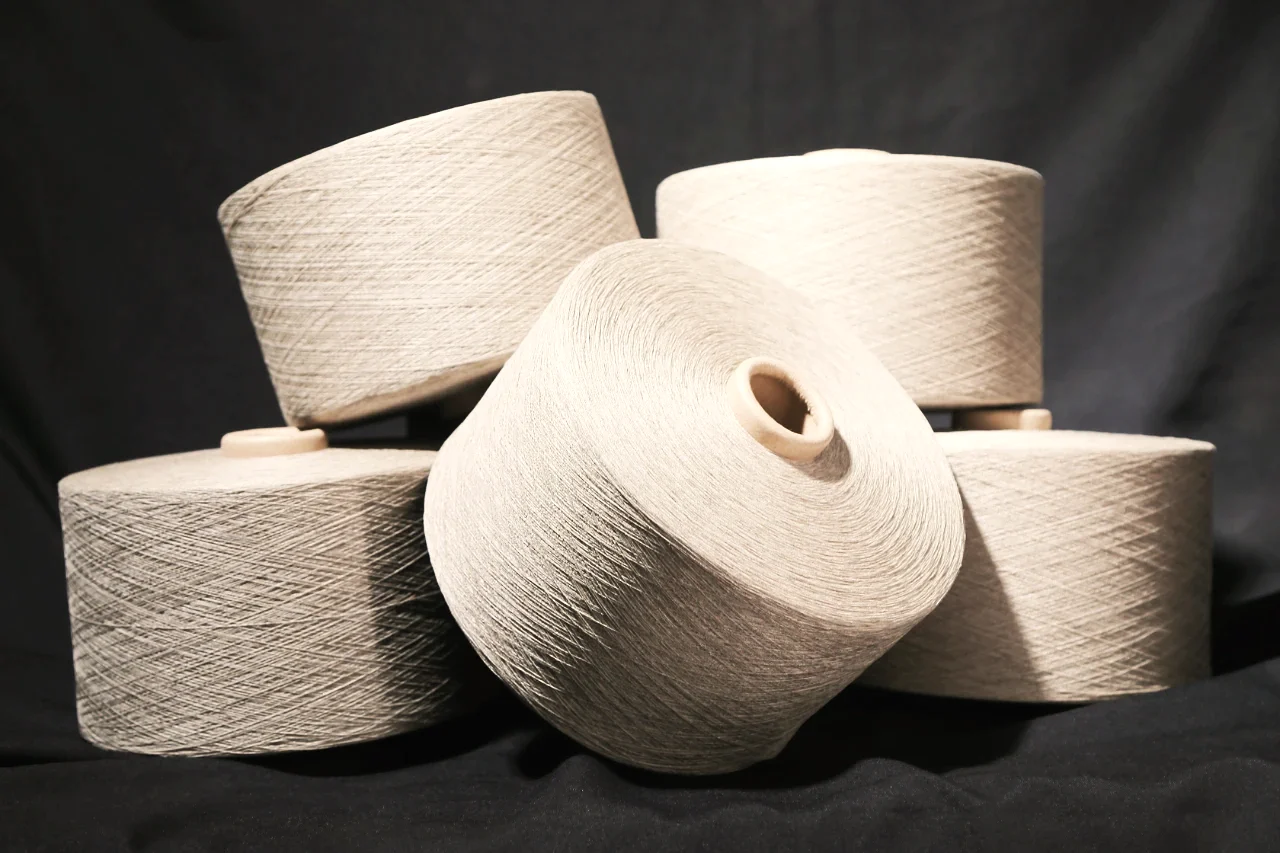
A request for yarn
A complete request for yarn states:
- Fibre and blend, such as 100% cotton or 60/40 cotton/polyester, and any certified-fibre claim.
- Count and system (Ne, Nm or tex), single or plied: Ne 30/1, Ne 30/2.
- Ring, compact, open-end or air-jet; carded or combed.
- Twist and direction (Z or S), or the end use: circular knitting, warp or weft, machine gauge.
- Quality limits, such as CVm and imperfections at a USTER STATISTICS level.
- Raw (ecru), dyed (colour card code or lab dip) or mélange.
- Package: cone or cheese, net weight, waxed or not, bags, cartons or pallets.
- Quantity per count and colour, date, Incoterm and place.
A request for fabric or garments
For knitted fabric:
- Structure: single jersey, interlock, rib, piqué or fleece; brushed or not.
- Composition and yarn: count, ring or open-end, combed or carded, elastane share.
- GSM after finishing and width (flat tube or usable open width), with tolerances.
- Colour: lab dip or standard, and the light source for approval.
- Finish, and limits for shrinkage, spirality, fastness and pilling with their test methods.
- Roll size, quantity per colour, delivery.
For garments:
- The tech pack, with size chart, tolerances and BOM.
- Sizes and the size ratio per colour.
- Fabric and trims: thread, labels, tapes, elastic, buttons.
- Print or embroidery: artwork, technique, position, size, colours.
- Labels: brand, composition and care, size, origin, barcode.
- AQL levels, tests and packing: fold, polybag, solid or assortment pack, carton marks.
Approvals, MOQ and lead time
- Lab dipDyed swatches matched to the standard; the buyer approves one under the agreed light.
- Strike-offA trial print or embroidery on bulk fabric: colours, registration, hand.
- ProtoThe first garment: style and construction.
- PP sampleBulk fabric, trims and print together: the production reference.
- TOP sampleThe first bulk garments, checked against the PP sample.
Yarn and fabric orders stop after the lab dip and a bulk swatch; garments pass all five. Each round of comments adds days.
MOQ, the minimum order quantity, follows the equipment: a dyeing machine takes a fixed load per batch, a new count or blend needs a spinning changeover, and a sewing line must repay its setting up. Lead time adds up yarn availability, approvals, production, testing and transport; stock colours and counts already running shorten both.
Delivery and payment terms
The Incoterms® 2020 rules of the International Chamber of Commerce fix who pays for transport, who clears customs and where risk passes. Name the rule, place and edition: “FCA seller’s warehouse, Incoterms® 2020”.
| Rule | Risk passes to the buyer | Main freight paid by |
|---|---|---|
| EXW (Ex Works) | At the seller’s premises, not loaded | Buyer, who also clears export |
| FCA (Free Carrier) | Handed to the buyer’s carrier at the named place | Buyer |
| FOB (Free On Board), sea and inland waterway only | On board the ship at the port of shipment | Buyer |
| CPT (Carriage Paid To) | Handed to the first carrier | Seller, to the destination |
| CIF (Cost, Insurance and Freight), sea and inland waterway only | On board the ship at the port of shipment | Seller, with minimum insurance |
| DAP (Delivered At Place) | At the destination, ready for unloading | Seller; the buyer clears import |
| DDP (Delivered Duty Paid) | At the destination, cleared for import | Seller, including duties |
Under CPT and CIF the seller pays freight to the destination, but risk passes at the start. For road or rail shipments from a landlocked country such as Uzbekistan, use FCA, CPT or DAP rather than FOB or CIF.
Payment terms are separate. Advance payment protects the seller; open account, paid after delivery, protects the buyer. Between them, a letter of credit (ICC UCP 600) has a bank pay against complying documents, and documentary collection releases the documents only against payment. A part advance with the balance before shipment is a common compromise.
Documents and a final check
- Proforma invoice: the seller’s offer; the basis for an advance payment or a letter of credit.
- Commercial invoice and packing list: contents per package, net and gross weights, lot numbers.
- Certificate of origin; within the CIS free-trade area, form CT-1.
- Transport document: CMR (road), SMGS consignment note (rail), bill of lading (sea), air waybill.
- Test reports and the conformity documents the market requires, such as an EAEU declaration.
Before sending, check that:
- Every limit has a test method.
- The colour standard and light source are agreed.
- Quantities are split by colour and size.
- Incoterm, place, edition and payment documents are named.
- Labels, packing and carton marks are confirmed.
Terms in this chapter
See it in our production
Sources
- International Chamber of Commerce: Incoterms® 2020 (opens in a new tab)iccwbo.org
- US International Trade Administration: Know Your Incoterms (opens in a new tab)trade.gov
- US International Trade Administration: Methods of Payment (opens in a new tab)trade.gov
- US International Trade Administration: Letter of Credit (opens in a new tab)trade.gov
- US International Trade Administration: Common Export Documents (opens in a new tab)trade.gov
Ask your own question
Did not find the answer here? Send us your question.